
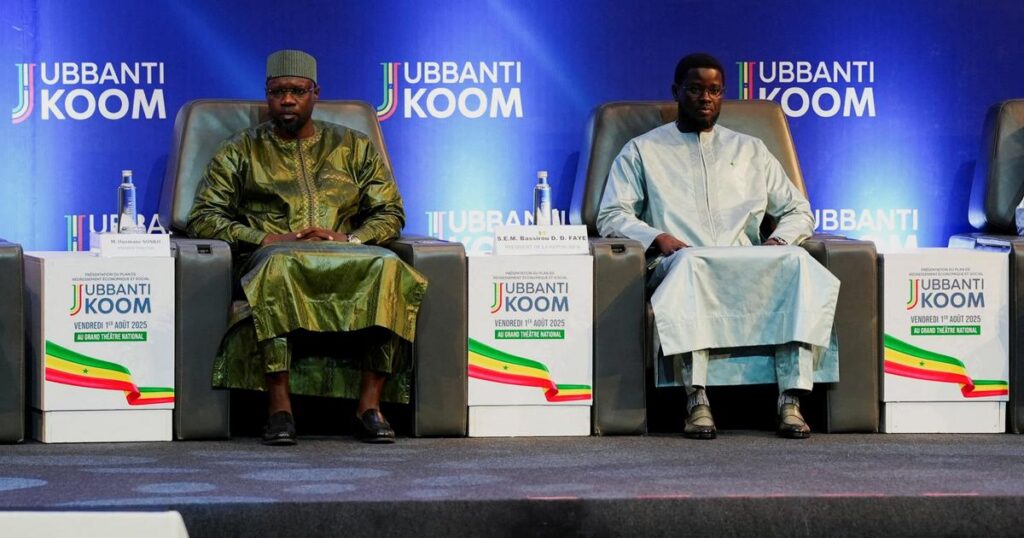
In Senegal, the political landscape has shifted dramatically following the abrupt dismissal of Prime Minister Ousmane Sonko by President Bassirou Diomaye Faye on May 22. This decisive move, long anticipated amid escalating tensions, marks a definitive break between the two leaders who once stood united in their political ambitions.
Within hours, the Speaker of the National Assembly, Malick Ndiaye, announced his resignation, a move widely seen as a strategic concession to allow Sonko to reclaim his parliamentary seat. This political maneuver sets the stage for a high-stakes showdown when the legislature convenes in an extraordinary session on May 26 to elect a new president.
a strategic shift in Senegal’s power dynamics
The upcoming parliamentary vote is expected to solidify Sonko’s return to the political forefront, potentially elevating him to the presidency of the National Assembly. With the ruling Pastef party holding a commanding majority of 130 out of 165 seats, his election appears all but certain. This position would not only restore his influence but also position him as the constitutional successor to the president, creating a direct power rival within the executive branch.
The stakes couldn’t be higher. Should Sonko secure the Assembly presidency, he would gain significant leverage to obstruct government initiatives through legislative control. The question on everyone’s mind remains: how far will this clash of ambitions extend between two former allies who once shared a common vision for Senegal?
the constitutional implications of a fractured leadership
The unfolding drama raises serious concerns about institutional stability. As the second-highest state official, Sonko’s potential election would fundamentally alter the balance of power. His ability to block legislative agendas could paralyze governance, particularly if tensions escalate into outright obstructionism.
Analysts warn that this power struggle risks fracturing the ruling party from within. The Pastef, founded by Sonko himself, now faces the paradox of having its two most prominent leaders locked in a bitter rivalry that threatens its cohesion. The party’s future electoral prospects hang in the balance, with the possibility of voters punishing it for the infighting.
ambitions and legal shadows
Sonko’s political future remains clouded by legal uncertainties. While the recent electoral code reform has opened new pathways for candidates previously barred from running, his eligibility for the 2029 presidential election remains uncertain until the Constitutional Council weighs in. The new law, which eliminates politically motivated disqualifications, has ironically become a double-edged sword—while it may pave the way for Sonko’s return to politics, it also exposes him to potential legal challenges.
Meanwhile, President Faye seeks to carve out his own legacy, distancing himself from his former mentor’s shadow. The president’s determination to assert independent authority has collided with Sonko’s impatience to reclaim the leadership he believes is rightfully his. This tit-for-tat dynamic threatens to consume both leaders and, by extension, the nation they govern.
As Senegal watches this political chess game unfold, citizens can only hope cooler heads will prevail. The country’s stability depends on whether these two leaders, who promised transformative change, will prioritize national unity over personal ambition.
More Stories
Waly Diouf Bodian responds to Mary Teuw Niang: ‘we do not respect those who do not respect Ousmane Sonko’
Ousmane Sonko’s firm stance on Senegal’s FMI agreement demands full transparency
Senegal’s institutional crossroads: the unfolding dynamic between Ousmane Sonko and Bassirou Diomaye Faye