
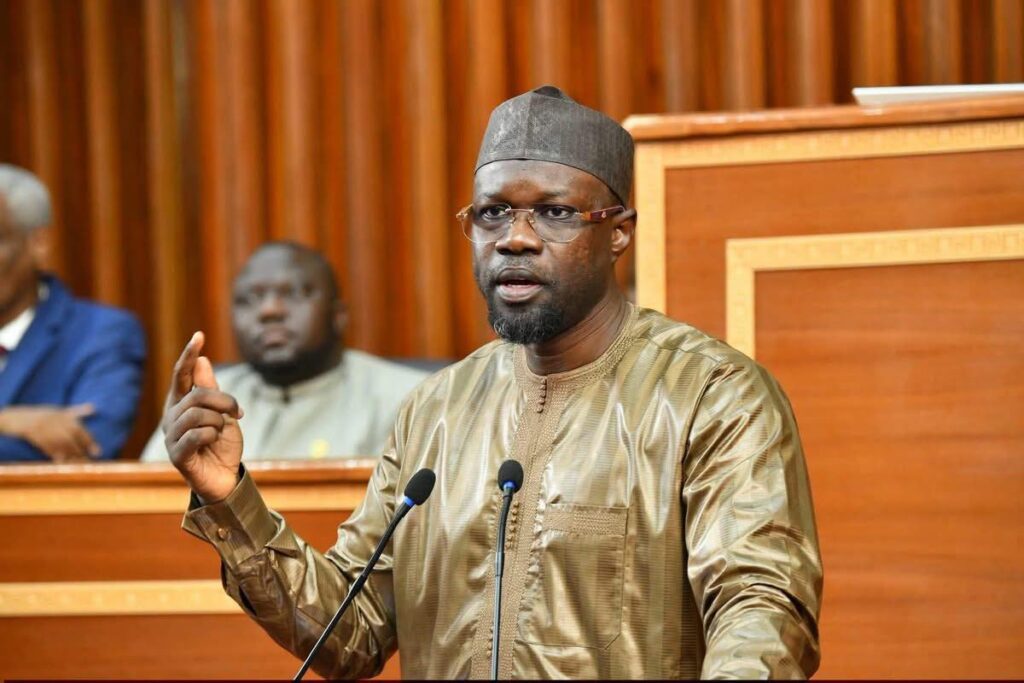
Political observers in Senegal are grappling with an unprecedented sequence of events that has reshaped the balance of power at the highest levels of government. Within days of his removal from a prior position, Ousmane Sonko assumed the presidency of the National Assembly, a move that has intensified debates about the intentions behind his rapid ascent.
The circumstances surrounding his installation raise significant questions. The outgoing Assembly President resigned abruptly, creating a vacuum that Sonko filled with remarkable efficiency. For critics, this transition was far from coincidental, suggesting a calculated strategy to secure a pivotal legislative role.
By securing the chairmanship of the National Assembly, Sonko now wields considerable influence over the legislative agenda, budget approvals, and the passage of laws. This development has intensified speculation about a potential institutional standoff between the executive and legislative branches, with Sonko positioned as a direct rival to the President.
A calculated bid for institutional dominance
Analysts describe Sonko’s new role as a potential catalyst for systemic gridlock. His control over legislative procedures grants him the ability to obstruct government initiatives, raising concerns about the efficacy of policymaking in the coming months. This dynamic has led some to characterize the situation as a deliberate attempt to paralyze state functions.
« This is no longer standard political maneuvering; it represents an institutional stranglehold designed to undermine executive authority, » remarked a political commentator who requested anonymity.
From opposition firebrand to institutional power broker
While Sonko’s supporters view his rise as a triumph for democratic accountability, detractors accuse him of prioritizing personal ambition over national interests. Critics argue that his rhetoric of systemic reform has given way to a more pragmatic—and allegedly opportunistic—pursuit of power, culminating in his unexpected consolidation of influence.
The shift in his public image has been striking. Once a vocal critic of the establishment, Sonko now occupies a position traditionally held by those he previously challenged. This transformation has fueled accusations that his actions are driven by a desire to dominate the political landscape rather than serve the public good.
The road ahead: confrontation or collaboration?
The implications of Sonko’s new role remain uncertain. Will his leadership facilitate constructive governance, or will it deepen political divisions and hinder progress? The coming months will reveal whether his ascent serves the broader interests of Senegalese citizens or merely marks the beginning of a protracted struggle for control over the state apparatus.
More Stories
Niger: Tiani faces fallout from special forces anger after Russian intervention
Crisis in Niger, IMF agreement in Sénégal, and Moroccan elections: Five essential stories
RDC-Israël : un rapprochement aux enjeux multiples