
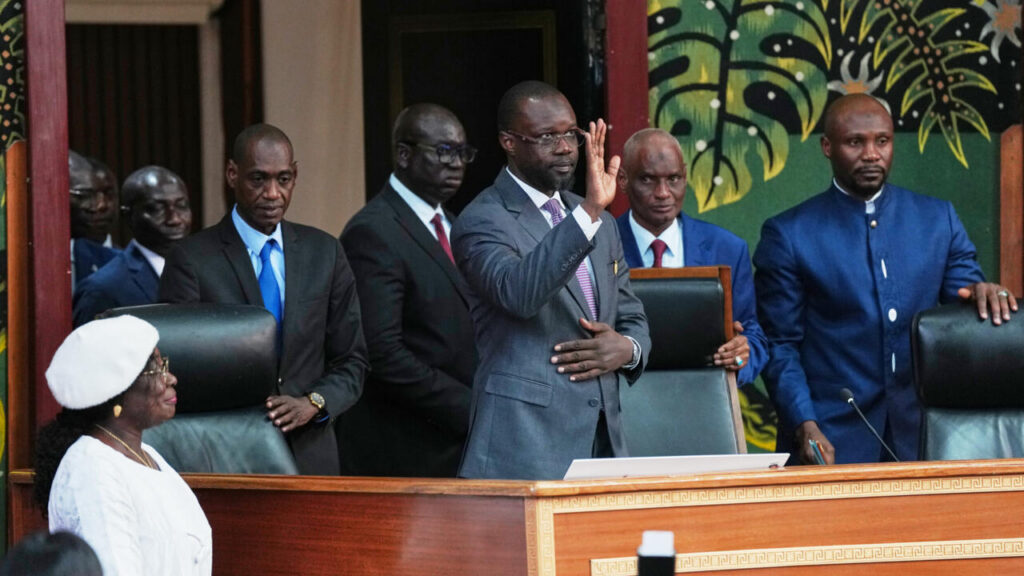
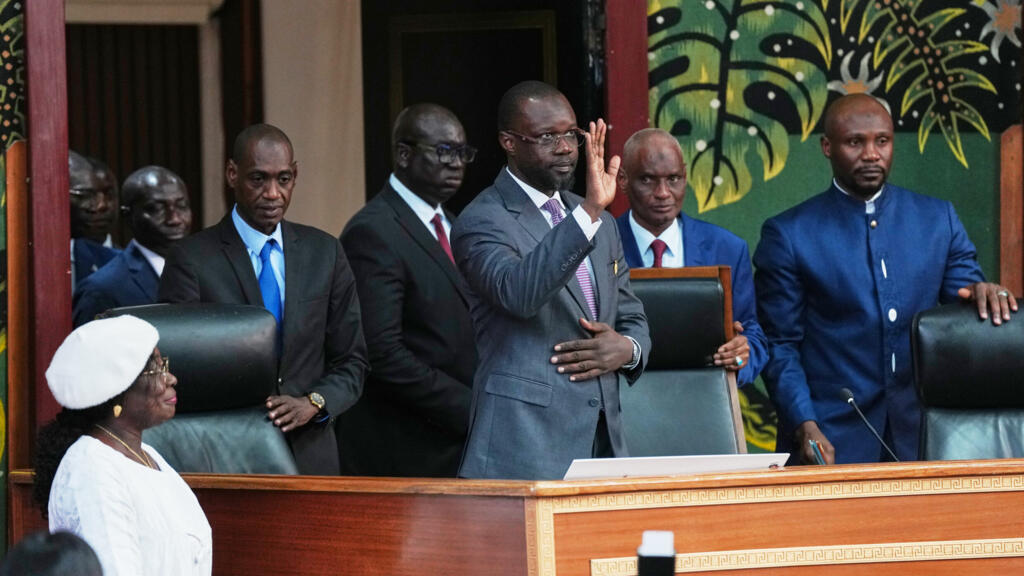
In a significant turn of events in Dakar, Senegal’s political arena has witnessed a dramatic shift with the election of Ousmane Sonko as President of the National Assembly. This development raises critical questions about the future governance of the country, particularly as President Diomaye Faye finds himself facing a potentially hostile legislative body.
Sonko, a prominent opposition figure, has taken office with a clear message: while he intends to avoid creating an institutional crisis, he also made it unequivocally clear that the Assembly will not serve as a mere rubber stamp for government policies. His stance suggests a period of cautious cohabitation ahead, where legislative scrutiny could become more rigorous.
What does this mean for Senegal’s political future?
Political observers are closely monitoring the situation, especially given the broader context of Senegal’s democratic evolution. Ousmane Sonko’s election as Assembly President introduces a new dynamic in the relationship between the executive and legislative branches. His declaration that the Assembly will not function as a mere recording chamber signals a potential increase in legislative oversight and challenges to government proposals.
With Sonko’s leadership, the Assembly may adopt a more assertive role in shaping national policies. This could lead to intensified debates, amendments, and possibly even legislative gridlock if tensions escalate. The possibility of early legislative elections and a dissolution of the Assembly looms as a strategic option, though Sonko has yet to indicate whether he would pursue such a move.
Potential scenarios for Senegal’s governance
- A cooperative cohabitation: If both the President and the Assembly President prioritize national stability, they could establish a working relationship that fosters constructive dialogue and policy implementation.
- Institutional friction: Alternatively, Sonko’s leadership might lead to heightened scrutiny of government actions, resulting in delays or blockages in legislative processes. This could force President Faye to reconsider his governance strategies.
- Early elections: Should the cohabitation prove too challenging, the possibility of dissolving the Assembly and holding early legislative elections remains on the table. This would reset the political landscape and potentially realign the Assembly with the President’s agenda.
The coming weeks will be pivotal in determining whether Senegal can navigate this period of political transition smoothly or if it will face further disruptions in its governance.




More Stories
Niger: Tiani faces fallout from special forces anger after Russian intervention
Mali : 17 morts dans les rangs des dozos, le JNIM accentue sa pression
Sahel : le pari des juntes tourne-t-il à l’échec sécuritaire ?