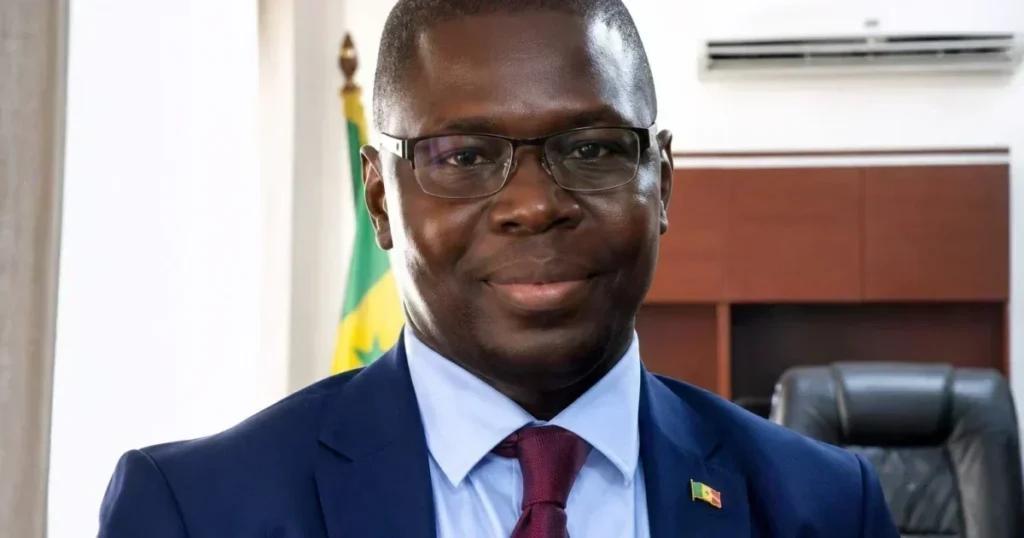
The political landscape of Senegal has long been defined by shifting loyalties and evolving alliances, a trend that gained unprecedented momentum in the early 2000s. What began as occasional realignments among traditional parties has since transformed into a defining feature of the country’s democratic experience, reshaping governance and power dynamics in ways previously unimaginable.
The birth of a new political era
The 2000 presidential election marked a turning point for Senegal, ending four decades of uninterrupted Socialist Party rule under Abdou Diouf. While political fluidity was not new, the scale and frequency of alliance changes post-2000 became far more visible and consequential. The Socialist Party, once a monolithic force, began to fracture under internal pressures. Figures like Djibo Ka and Moustapha Niasse broke away, forming new movements such as the Union for Democratic Renewal (URD) and the African Party of Progress (AFP). These shifts demonstrated that ideological purity was no longer a prerequisite for political success in Senegal.
By the time Abdoulaye Wade assumed the presidency, the practice of political fluidity had already taken root. His first government, formed in April 2000, was a coalition of leaders from diverse political backgrounds, including the AFP, the Independent Labor Party (PIT), and the African Party for Democracy and Socialism (AJ/PADS). Some of these figures held views starkly different from Wade’s liberal Democratic Party of Senegal (PDS). This inclusive approach set a precedent, proving that governance could thrive beyond narrow ideological boundaries.
The evolution of political fluidity under Wade and Sall
Under Wade, the phenomenon of political fluidity evolved into a strategic tool for consolidating power. The Coalition Sopi, dominated by the PDS, absorbed a growing number of parties and individuals, blurring the lines between opposition and ruling factions. The term “transhumance politique”—political transhumance—emerged to describe this rapid pivoting of elected officials and administrators toward the ruling party, often overnight. Figures like Djibo Ka, who initially supported Wade before reverting to Diouf in 2000, later rejoined Wade’s government in 2004, illustrating the fluid nature of political allegiance.
Macky Sall’s presidency took this trend to new heights. His coalition, Benno Bokk Yaakaar, united former adversaries under a shared banner, while his administration actively encouraged broader political integration. Sall publicly defended the concept of open political rallies, rejecting the stigma attached to “transhumants” and framing such shifts as a natural evolution of democratic engagement. This approach, though controversial within his own camp, contributed to an even more permeable boundary between majority and opposition.
PASTEF and the reversal of political currents
The rise of the African Patriots of Senegal for Work, Ethics, and Fraternity (PASTEF) introduced a counter-trend. As opposition to Macky Sall’s administration grew, particularly after 2019, some political figures began distancing themselves from the ruling coalition to align with Ousmane Sonko and later Bassirou Diomaye Faye. While not all such shifts fit the traditional definition of political transhumance—some were strategic electoral alliances or ideological realignments—the phenomenon highlighted a broader trend: the constant reshaping of Senegal’s political map.
The 2024 election, where Bassirou Diomaye Faye won decisively with PASTEF’s backing, marked another milestone. Faye’s subsequent launch of KIIRAAY—Les Patriotes Républicains—represented an ambitious effort to consolidate diverse political forces into a single, cohesive movement. With hundreds of parties and movements merging into KIIRAAY, the challenge now lies in managing this influx without diluting the movement’s core values.
The challenge ahead: building unity without losing purpose
The real test for KIIRAAY will be whether it can transform political rallies into genuine ideological commitments. History shows that absorbing diverse figures is easier than fostering a shared vision. Will KIIRAAY succeed where previous coalitions failed, or will it become yet another political vehicle defined by expediency over principle? The answer will shape Senegal’s political future in profound ways.

More Stories
Senegal’s electoral system: can a bold overhaul make every vote count?
Can Senegal’s President really dissolve a parliament led by his rival?
Can Sadio Mané really beat Ousmane Sonko in Bambali in 2029?