Coordinating efforts for sustainable health financing in Niger
As a landlocked nation in West Africa, Niger has faced numerous challenges, including armed instability and persistent droughts. These factors have severely impacted the national medical infrastructure, contributing to maternal and child mortality rates that are among the highest in the world. In response, the Government of Niger has committed to achieving Universal Health Coverage (UHC), building on lessons learned from previous attempts to expand access to vital medical services.
In 2006, to combat poor health outcomes, authorities introduced a bold policy offering free reproductive health and family planning for women, alongside various services for children under five. While initially successful, the initiative struggled with a lack of consistent funding. By 2011, only half of the necessary budget had been secured, leading to a backlog of unpaid medical bills and hindering the ability of clinics to operate. Furthermore, because the policy was restricted to specific demographics, other citizens faced high out-of-pocket costs. The WHO estimates that direct payments still account for more than 40% of total health expenditure in Niger.
Overall, the Government of Niger has found it difficult to significantly increase health sector investments. Spending fluctuated from 5.4% of GDP in 2007 to 4.9% in 2011, eventually stabilizing at approximately 5.7% between 2018 and 2020.
Even before the free healthcare policy, Niger recognized the necessity of financial coordination. In 2006, the Ministry of Health, the World Bank, and the Agence française de développement (AFD) established the Common Health Fund (FCS) to support national development plans. By 2020, the partnership grew to include UNICEF, UNFPA, Gavi, and the Spanish Agency for International Development Cooperation (AECID). Past financial struggles highlight the urgent need for structural reforms to ensure sustainable funding for UHC and other SDG 3 targets.

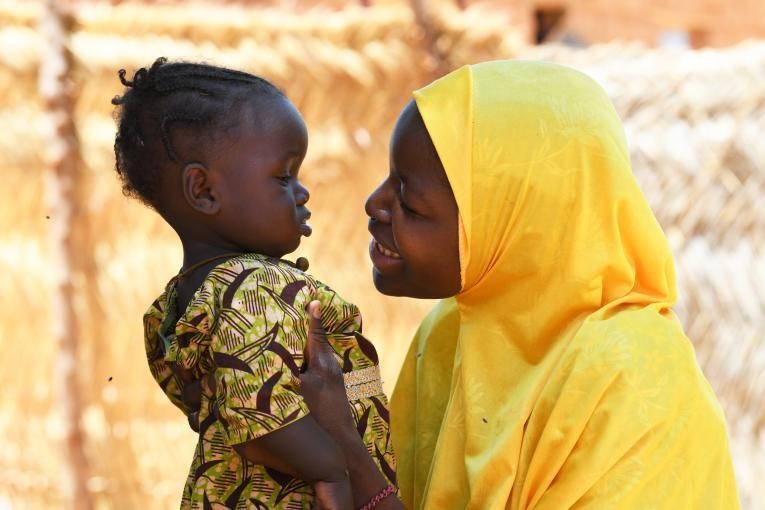
A mother holding her infant in Soki, a village in central Niger. ©UNICEF/Dejongh
Leveraging collaboration for long-term health stability
To address the fragmentation of external aid, the Government of Niger has launched ambitious reforms to harmonize technical and financial support. Since 2018, the country has utilized the Providing for Health (P4H) network to improve social protection and health financing. In 2021, P4H members and signatories of the Global Action Plan for Healthy Lives and Well-being for All (GAP SDG 3) collaborated to appoint a national focal point. This role is designed to facilitate coordination and research under government leadership.
The recruitment process for this focal point was led by Gavi in partnership with other health donors. In January 2022, the P4H and GAP SDG 3 national focal point took over the role of “co-rapporteur” for financial partners. Based within the Ministry of Health, this individual acts as a vital link, ensuring that partner support aligns with national priorities rather than individual agency goals. Funding for this position, originally managed by the WHO with AFD support, has transitioned to the World Bank via the Global Financing Facility, with plans for a more predictable co-financing model in the future.
The pillars of health financing reform in Niger
Before 2020, fragmented resources often led to either redundant or insufficient funding for various projects. Experts note that the partnership between P4H and the GAP financing accelerator has encouraged diverse partners to commit more effectively to the government’s vision. This collaboration allows health discussions to be integrated into broader social protection programs, such as those benefiting women and children.
In recent years, partners have prioritized support for COVID-19 recovery, domestic resource mobilization, and development cooperation. The government has identified several key areas for reform:
- Aligning budget support with standardized health expenditure indicators.
- Transforming the FCS from a management tool into a comprehensive financing system.
- Advancing strategic purchasing through the Institut national d’assistance médicale (INAM).
- Improving the predictability of partner contributions and annual planning.
Specific targets have been established to achieve these goals, including mapping donor flows, analyzing technical assistance, and developing tools to simulate the costs of peripheral healthcare. Furthermore, the government is working with the IMF to include health spending, such as nutrition and immunization, as indicative targets in financial programs.
Impact and future outlook
While the strategy is still being fully implemented, this collaborative approach is expected to enhance service delivery. By mapping resources, the Global Financing Facility helps avoid duplication, allowing for more targeted interventions. This efficiency benefits programs for HIV, tuberculosis, malaria, and vaccinations, which are covered under the free healthcare policy. Ultimately, these reforms help INAM function better, reducing the financial burden on Niger’s most vulnerable populations.
The integration of focal points within the Ministry of Health provides significant value, especially in a country where external aid is a major component of the health budget. However, challenges remain, such as the heavy workload on partner staff and the need for long-term funding for the focal point position. Gavi and other partners are currently discussing ways to ensure the sustainability of these efforts.
What is the GAP SDG 3?
The Global Action Plan for Healthy Lives and Well-being for All is a commitment by 13 major health and humanitarian agencies to help countries reach health-related Sustainable Development Goals. By fostering closer collaboration and following country-led strategies, the plan aims to support an equitable and sustainable recovery from the COVID-19 pandemic. Case studies like the one in Niger serve to monitor the progress of this global initiative at the national level.

More Stories
Côte d’Ivoire’s coffee and cocoa sector prepares for new campaign with crucial price announcements
Ebola and conflict: a deadly combination in eastern DRC
Morocco azrou college that shaped berber elite