
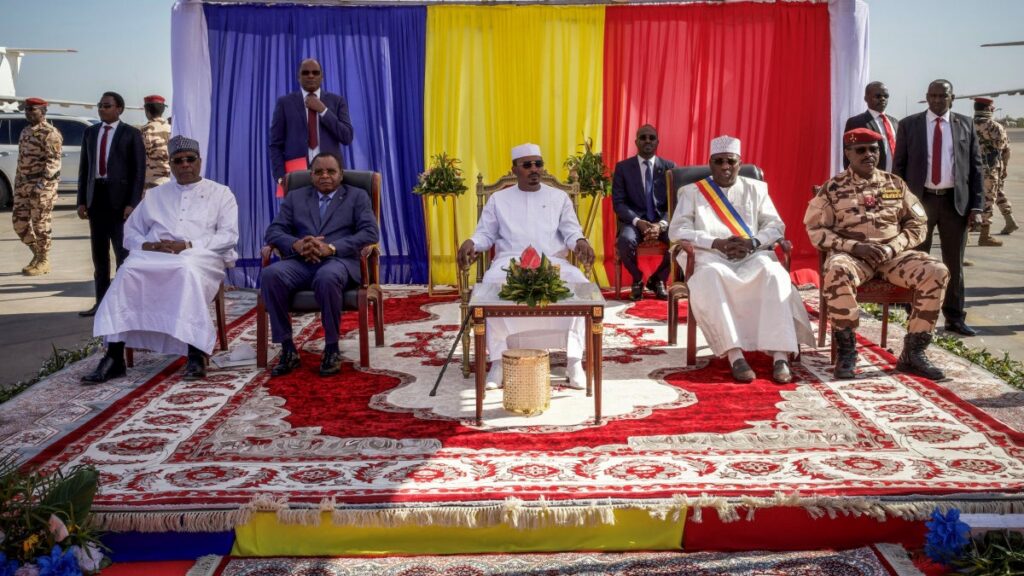
Political consolidation and democratic backsliding
Mahamat Idriss Déby, who secured the presidency in the 2024 election amid widespread allegations of irregularities, further tightened his grip on power in 2025 through constitutional amendments that extend presidential terms from five to seven years and abolish term limits entirely. This move effectively allows him to remain in office indefinitely, pending periodic elections every seven years. The changes were swiftly approved by the National Assembly, with the opposition largely boycotting the vote, which passed with 171 votes in favor, one abstention, and none against.
The crackdown on dissent has been unrelenting. Succès Masra, leader of the opposition party Les Transformateurs and a vocal critic of the 2024 election, was arrested in May 2025 on charges of incitement to hatred and complicity in murder, allegedly linked to intercommunal violence in Mandakao. Following a rushed trial, he was sentenced to 20 years in prison and fined 1 billion CFA francs (approximately $1.8 million). His co-defendants received identical sentences. This verdict not only silenced a key opposition voice but also contravened the Kinshasa Agreement of October 2023, which had suspended an arrest warrant against Masra and guaranteed his safe return from exile to resume political activities.
Escalating intercommunal violence and humanitarian strain
Violence between nomadic Fulani herders and sedentary farming communities surged in 2025, particularly in the south and east of Chad. Tensions over land disputes, exacerbated by climate change, population pressure, and the absence of clear land titles or cattle migration routes, led to deadly clashes. In Mandakao (Logone-Occidental), 41 people were killed and six injured in May over contested grazing and farmland boundaries. The following month, in Orégomel (Mayo-Kebbi Ouest), machete attacks between herders and farmers resulted in 17 deaths, including women and children, and multiple injuries. Mid-June saw further bloodshed in Molou (Ouaddaï), where intertribal clashes left around 20 dead and 16 injured.
These conflicts have stretched Chad’s humanitarian resources to the limit, compounded by mass displacement due to ongoing violence in neighboring Sudan and severe flooding at the end of 2024 and early 2025—which made Chad one of the hardest-hit countries in the region, worsening food insecurity.
Erosion of judicial accountability and political freedoms
The government’s failure to address impunity was starkly evident in 2025. Despite calls for investigations into the 2024 post-election violence, where at least 11 people were killed and many more injured by stray bullets and rockets fired by security forces, no meaningful inquiry or reparations were initiated. Similarly, the death of opposition leader Yaya Dillo during a security force raid on his party’s headquarters shortly before the election remained uninvestigated. In a rare gesture, 24 of Dillo’s relatives were released from Koro Toro high-security prison in December 2024, though two had been acquitted earlier in July. Robert Gam, leader of Dillo’s party, was also freed in June after eight months of detention without charge.
Censorship and repression extended beyond politics. In September, the Ministry of Territorial Administration and Decentralization revoked the citizenship of Makaila Nguebla, a blogger and former presidential human rights advisor, and Charfadine Galmaye Saleh, a journalist and activist, both now living in exile abroad. Earlier in March, journalists Olivier Monodji and Mahamat Saleh Alhissein were detained on espionage and conspiracy charges linked to alleged ties with the Wagner Group, a Russian mercenary outfit active in Central Africa and the Sahel. They were released in July after prolonged detention without trial, violating international norms on arbitrary detention.
Human rights under threat: LGBTQ+ persecution and unresolved injustices
Chad’s legal framework continues to criminalize same-sex relations under Article 354 of the 2017 Penal Code, which imposes up to two years in prison and fines ranging from 50,000 to 500,000 CFA francs (about $75 to $750) on those convicted. The unresolved issue of reparations for victims of abuses during the rule of former President Hissène Habré also saw minimal progress in 2025, despite partial payments made in 2024 that fell far short of court-ordered amounts. Survivors of Habré-era atrocities continue to await full justice and compensation.

More Stories
Niger: Tiani faces fallout from special forces anger after Russian intervention
Crisis in Niger, IMF agreement in Sénégal, and Moroccan elections: Five essential stories
RDC-Israël : un rapprochement aux enjeux multiples