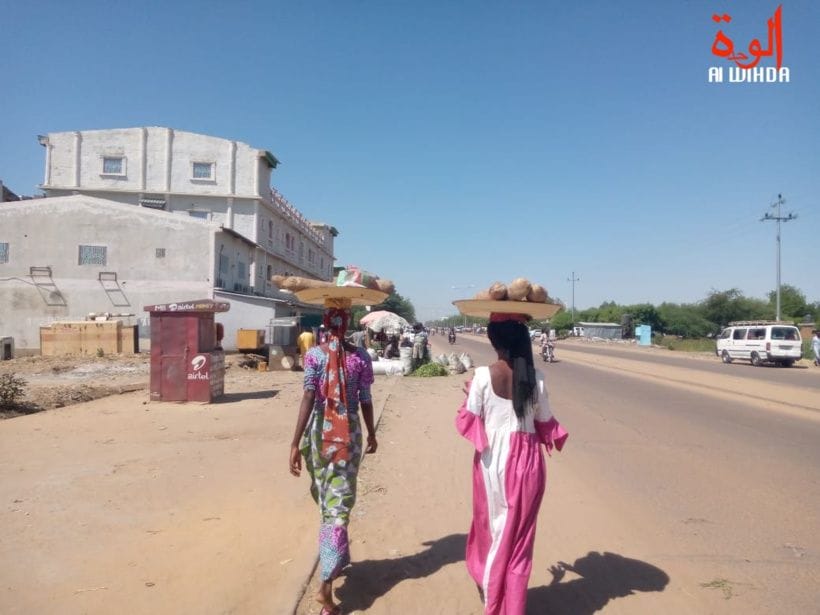
In the heart of Chad’s bustling cities, a quiet revolution is unfolding on the dusty streets. Women, their heads crowned with steaming basins of ripe mangoes, crispy doughnuts, or vibrantly patterned fabrics, weave through the crowded alleys. Their voices rise above the hum of motorcycles and the shuffle of pedestrians, each call a rhythm in the daily symphony of survival. This image is no longer a rarity—it has become the new normal in N’Djamena, Moundou, and Abéché.
Women claim the streets, but at what cost?
Aïcha, a determined woman in her early thirties, balances a toddler on her back as she hawks roasted peanuts. The sun beats down on her colorful headscarf, but her focus never wavers. “The road is hard, but it’s mine to walk,” she says, offering a handful of nuts to a passing customer. Nearby, Fanta tends to a sizzling pan of flatbreads, her five-year-old son squatting in the dirt, playing with a plastic bottle. These women, once confined to the walls of their homes, now command the streets with unwavering resolve.
Yet, a stark contrast shadows their newfound independence. For every woman who strides forward, a child lingers behind, coughing in the acrid smoke of makeshift stoves, dragging oversized sacks, or begging for shade in the relentless heat. The story of a seven-year-old boy in Abéché, hauling a bucket of water across the market while shouting “one franc!” to passersby, is not an isolated tale. Schoolbooks gather dust in homes across the country, replaced by the harsh reality of the marketplace.
School or survival: the impossible choice
The rise of street vendors is a testament to the resilience of Chadian women, who are carving out paths of autonomy in a society where opportunities are scarce. But as these mothers shoulder the weight of their families’ survival, their children are left to navigate a world that demands too much too soon. The question lingers: Is this the price of progress, or a cycle of sacrifice with no end in sight?
Every day, the streets of Chad’s cities bear witness to this dual narrative—women rising, children stumbling. What future awaits the youngest in this dance of resilience and hardship?