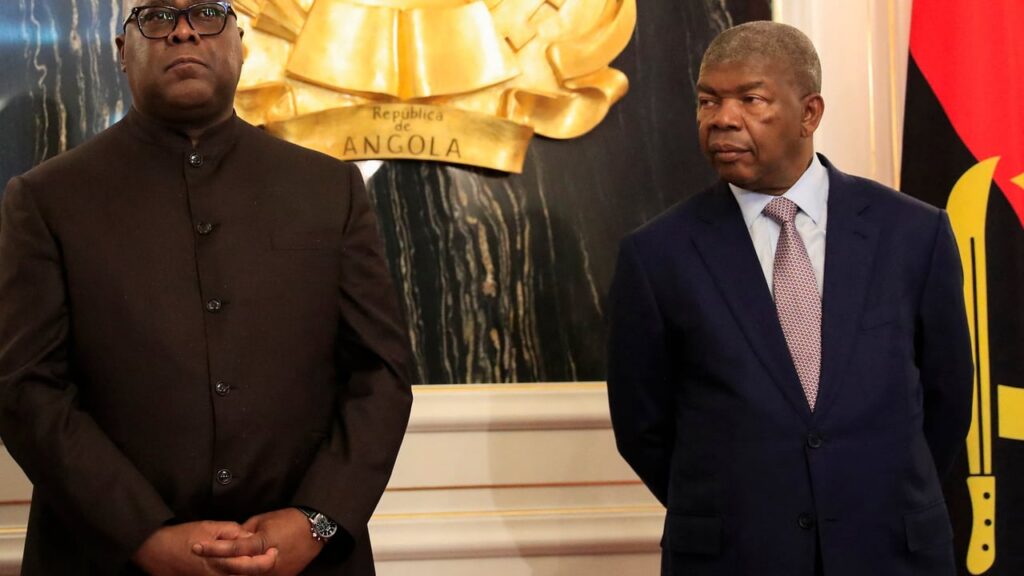
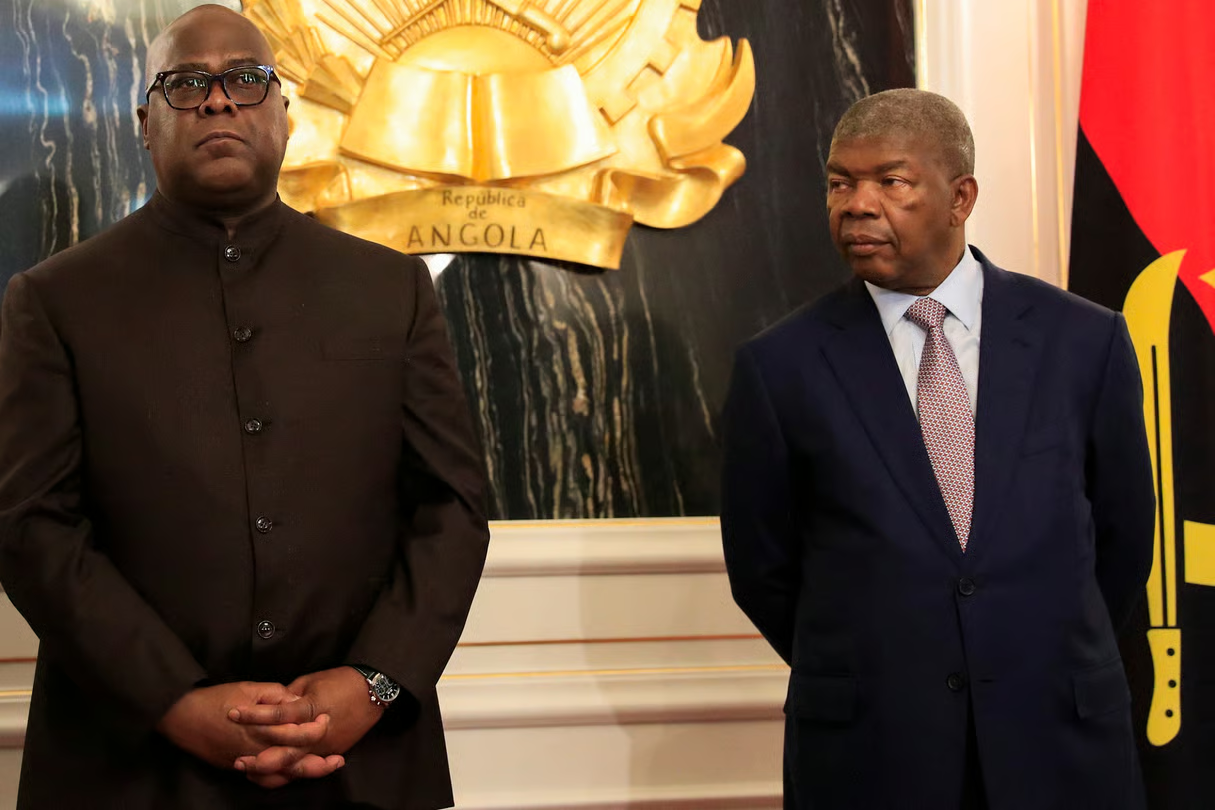
Behind the scenes of the Democratic Republic of the Congo’s diplomatic chessboard, a high-stakes power struggle is unfolding. At the heart of the tension lies a fragile dialogue between President Félix Tshisekedi and his Angolan counterpart, João Lourenço, whose mediation efforts are increasingly under scrutiny.
As the two leaders exchange sharp words over regional stability and security challenges, the stakes couldn’t be higher. The African Union’s endorsement of Angola’s mediation role has thrust Luanda into a central position, but the growing friction threatens to derail progress before it even begins.
What’s driving the impasse?
The roots of this confrontation trace back to differing visions on how to address the persistent instability in eastern DRC. While President Tshisekedi pushes for a robust military response against armed groups, President Lourenço advocates for a negotiated settlement, prioritizing dialogue over confrontation.
Key disagreements have emerged over the role of regional actors and the timeline for implementing peace agreements. Angola’s insistence on a phased approach clashes with Kinshasa’s demand for immediate action, leaving both sides at loggerheads.
The role of regional alliances
This dispute isn’t happening in isolation. The M23 rebel group, which has regained momentum in recent months, remains a critical factor. International observers warn that the lack of unity among neighboring countries could embolden militant factions and further destabilize the region.
Tshisekedi’s alignment with Uganda and Burundi contrasts sharply with Lourenço’s preference for diplomatic engagement with Rwanda and Tanzania. These diverging strategies highlight the deep divisions within Africa’s Great Lakes region, complicating efforts to forge a unified response.
What’s next for DRC and Angola?
The coming weeks will be decisive. A proposed summit in Luanda, aimed at breaking the deadlock, faces skepticism from both sides. Meanwhile, President Tshisekedi’s recent reshuffling of his security team suggests a hardening stance, while João Lourenço’s diplomatic overtures signal a determination to salvage the process.
As the clock ticks, the pressure mounts on both presidents to find common ground. Failure to do so could plunge the DRC deeper into crisis, with ripple effects across Central Africa.