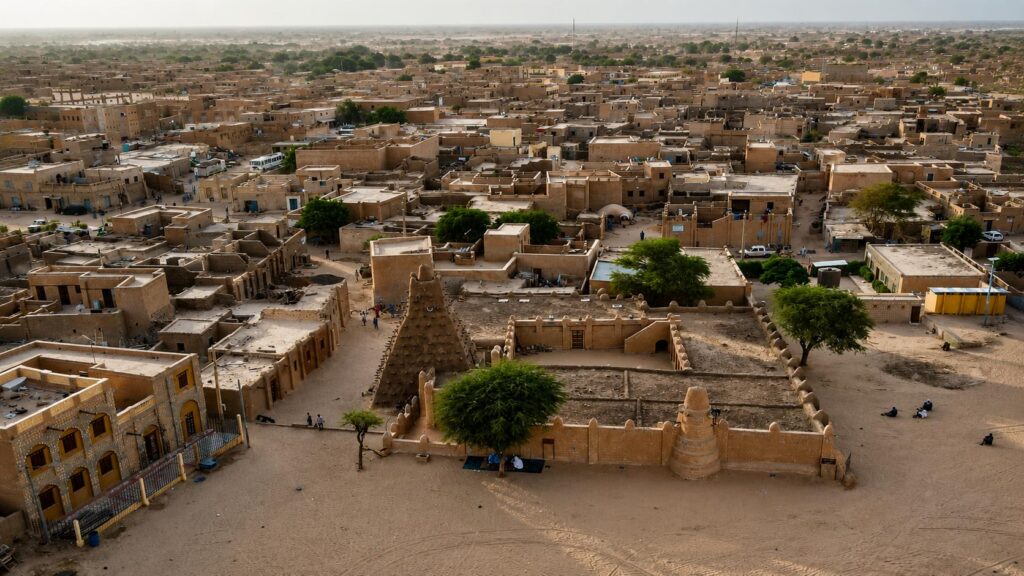
In the historic city of Tombouctou, the heat is relentless, frequently soaring past 40 degrees Celsius. Yet, a heavy silence has replaced the hum of fans and refrigerators. For days, the city has been plunged into darkness, and the taps have run dry. The local thermal power plant, operated by Énergie du Mali (EDM-SA), has completely shut down after running out of fuel. This collapse has triggered a domino effect, paralyzing the Société malienne de gestion de l’eau potable (Somagep) and leaving tens of thousands of residents in a state of technological and biological desperation.
A logistical blockade: fuel as a tool of war
While the capital, Bamako, struggles with intermittent power cuts, Tombouctou is enduring a much harsher reality. The current catastrophe is the culmination of a fuel shortage that has lasted over a month, driven by a tightening vice on the city’s lifelines.
- The JNIM embargo: For months, militants from the Groupe de soutien à l’islam et aux musulmans (JNIM) have maintained a suffocating blockade on the primary transport routes leading north. Fuel tankers are routinely intercepted, destroyed, or forced to wait for rare military escorts.
- The high cost of survival: With official supply lines severed, the city is forced to rely on informal markets or sluggish military convoys. On the black market, fuel prices have skyrocketed, making it impossible for small businesses or residents to run private generators.
Healthcare on the brink
The lack of electricity has immediate and life-threatening consequences. The cold chain required for vaccines and essential medicines has been shattered. At the Tombouctou regional hospital, the situation is critical. Medical staff are forced to perform life-saving procedures using the glow of mobile phones or small solar setups that are insufficient to power the entire facility.
Growing resentment toward state inaction
To address the immediate thirst of the population, local officials have deployed water tankers to various neighborhoods. However, these temporary humanitarian gestures do little to soothe the growing anger. Residents feel increasingly isolated, sensing that their survival is a low priority for the central government in Bamako.
The promise to secure strategic roads and ensure energy independence remains unfulfilled. By prioritizing a purely military response without securing the continuity of basic public services, the state has left companies like EDM-SA and Somagep unable to function in the face of persistent insurgent pressure.
A city on life support
Tombouctou cannot survive indefinitely on empty promises and dry generators. If the current administration intends to demonstrate its control over the national territory, restoring basic services is as vital as any military victory. Until the roads are safe and fuel can reach the North reliably, the “Pearl of the Desert” will continue to fade into the darkness, one neighborhood at a time.