
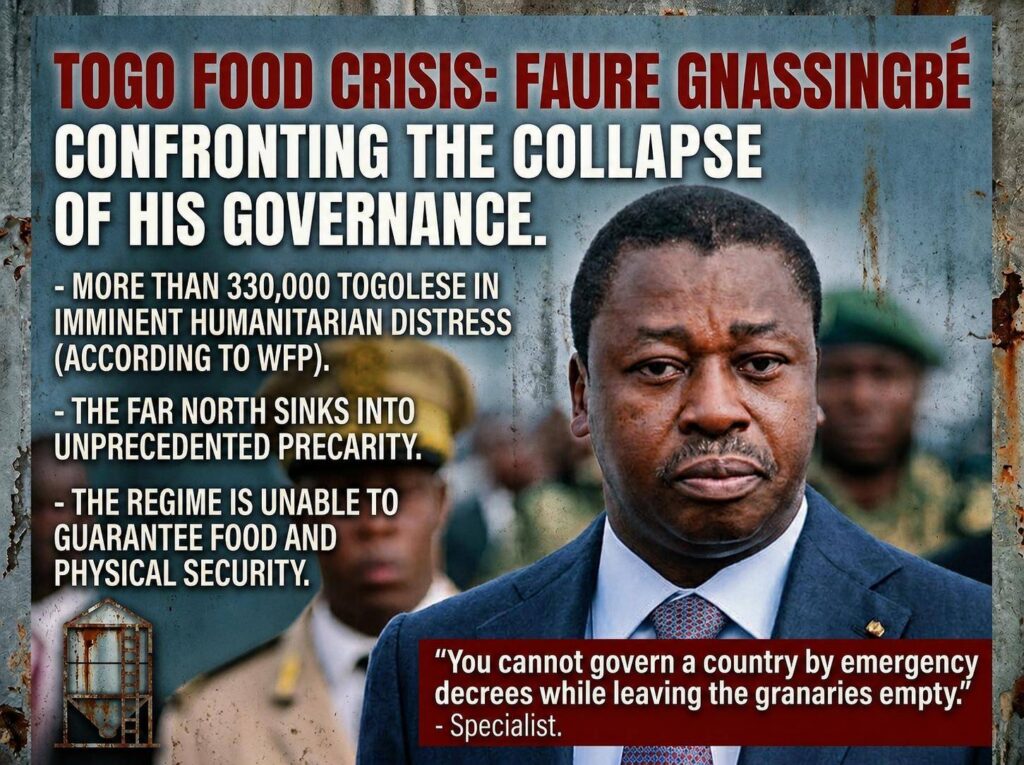
The northern regions of Togo are grappling with an unprecedented humanitarian catastrophe, as the World Food Programme (WFP) warns of an imminent food security collapse. Analysts argue that this dire situation underscores systemic governance failures under President Faure Gnassingbé’s administration, particularly in ensuring the basic needs of citizens are met.
Humanitarian disaster looms
Recent assessments by the WFP reveal that over 330,000 people in Togo face acute food insecurity within the next three months, absent urgent intervention. While these figures are stark, they merely represent the human toll behind a policy failure that has left the northern regions particularly vulnerable.
A region abandoned by state action
The Savanes region, bordering Burkina Faso, bears the brunt of this crisis. Historically susceptible to climate shocks, it now confronts a compounded emergency: a security vacuum exacerbated by prolonged emergency decrees and the encroachment of terrorist threats. Far from stabilizing the area, these measures have crippled local economies by restricting cross-border trade and displacing thousands of civilians, further straining already scarce resources.
With food reserves dwindling ahead of the lean season, the burden on households has become unsustainable. The absence of viable storage infrastructure and the government’s inability to stabilize food prices have left residents of the Savanes with no safety net.
Government inaction fuels the collapse
Critics contend that the current predicament is not an inevitable disaster but a direct consequence of policy missteps. Despite repeated pledges on agricultural resilience and food security, the reality remains bleak: half of households in northern Togo lack access to basic nutritious meals. By outsourcing crisis management to international agencies, the government has abdicated its fundamental duty to protect and provide for its people.
The reliance on emergency decrees alone—without addressing structural economic and security challenges—has proven inadequate. As one West African policy expert noted, “A nation cannot be governed by emergency decrees while leaving granaries empty. What we observe in the North is the outcome of economic neglect and a security impasse.”
Time for decisive action
The coming weeks are critical for averting a full-blown humanitarian disaster. While the WFP’s urgent funding appeals highlight the severity of the situation, they also raise a fundamental question: how long can Togo rely on international aid to compensate for systemic governance failures?
For the 330,000 Togolese teetering on the brink of starvation, the window for promises has closed. Survival now hinges on immediate measures—before the North pays an irreversible price for the state’s inaction and strategic missteps.



More Stories
Niger: Tiani faces fallout from special forces anger after Russian intervention
Crisis in Niger, IMF agreement in Sénégal, and Moroccan elections: Five essential stories
RDC-Israël : un rapprochement aux enjeux multiples