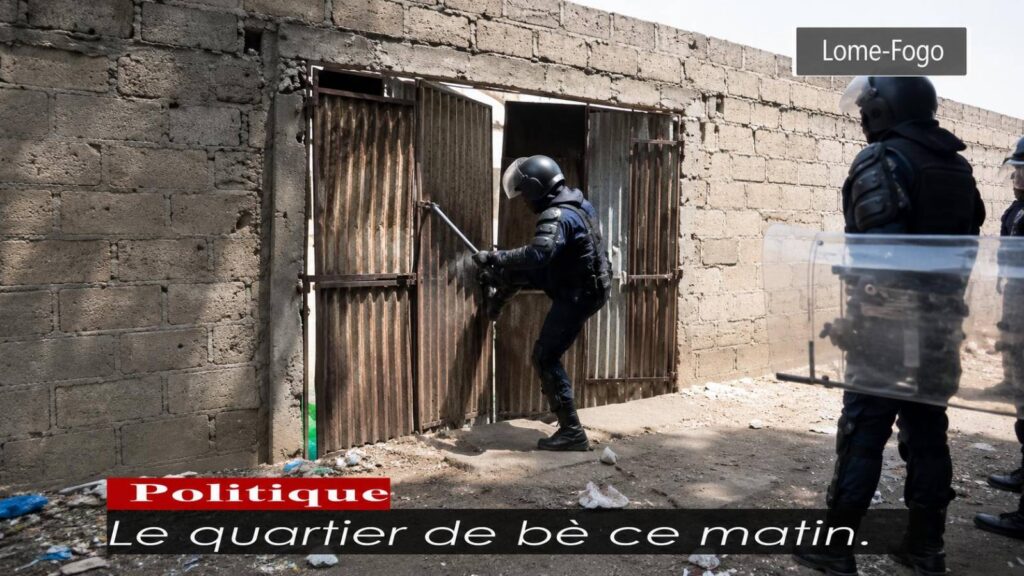
Military forces are meant to serve and protect, to stand as guardians of a nation’s peace. Yet in Togo, this protective role is often overshadowed by a harsh and disturbing reality: soldiers breaking into homes, assaulting unarmed civilians, and leaving behind a trail of fear and distrust.
When the home is no longer a sanctuary
Home is supposed to be the one place where safety is guaranteed. But in Togo, particularly in cities like Lomé and Sokodé, that sense of security is shattered when uniformed soldiers force their way into houses without warrants or justification. These intrusions aren’t about justice—they’re acts of intimidation, humiliation, and violence disguised as discipline.
Witnessing a father beaten in front of his family or seeing young people assaulted in their own courtyards doesn’t just cross ethical lines—it erodes the very foundation of trust between citizens and the state. Such behavior isn’t strength; it’s a failure of leadership and a betrayal of the military’s purpose.
Why leadership silence fuels the crisis
The pattern of abuse isn’t the work of isolated individuals—it reflects a systemic failure. When soldiers act with impunity, it signals that higher command either condones the violence or has lost control over its ranks. The consequences are severe:
- Erosion of trust: A single act of brutality can destroy years of public confidence in the military and the government.
- Fanned resentment: Treating citizens like enemies doesn’t command respect—it breeds anger and fuels resentment toward the state.
- Legal violation: No law in Togo, nor any military regulation, permits soldiers to use violence in private homes. Such actions are not just unprofessional—they are criminal.
Soldiers are not police officers
One root of the problem lies in the military taking on roles meant for law enforcement. Soldiers are trained for combat, not community policing. When they patrol neighborhoods with a combative mindset, homes become battlegrounds and neighbors become targets. This confusion of roles leads to unnecessary confrontation and deepens public distrust.
“An army that instills fear in its own people stops being a national force—it becomes an occupying power within its own borders.”
Restoring honor to the military
The true honor of a soldier lies not in physical dominance over the defenseless, but in upholding the law and protecting every citizen—regardless of political beliefs or social standing. For Togo to move forward, impunity must end. Accountability is not optional; it is essential. Without consequences for abusive soldiers, the divide between the people and their armed forces will only widen.
Togo doesn’t need violence to achieve stability. It needs justice. It needs respect. It needs a military that remembers its duty: to serve, not to terrorize.