Government’s renewed dialogue initiative collides with opposition intransigence
Togo’s political landscape has entered uncharted territory as government-led efforts to revive dialogue have met with unanimous rejection from four major opposition coalitions. The move comes amid escalating tensions over the controversial 2024 constitutional reform and a landmark ruling by the ECOWAS Court of Justice that opposition groups claim demands systemic institutional change.
The standoff threatens to derail months of diplomatic efforts to stabilize the nation’s political trajectory, with opposition leaders warning that anything short of a transitional government and comprehensive national conference would perpetuate democratic deficits that continue to plague the country’s development.
Four key opposition blocs reject government invitation
In a joint declaration issued from Lomé on October 15, 2026, the Dynamique Monseigneur Kpodzro (DMK), Dynamique pour la majorité du peuple (DMP), Lumière pour le Développement dans la Paix (LDP) and the Touche Pas À Ma Constitution movement formally declined an invitation to participate in the government’s renewed political dialogue framework, known as the Permanent Consultation Framework (CPC).
The coalition, operating under the banner of the Manifeste Génération Togo, dismissed the government’s initiative as a meaningless facade that fails to address Togo’s deep-seated democratic crisis. Central to their argument is the contention that any meaningful resolution must begin with a transitional authority capable of overseeing inclusive national consultations – a demand that directly contradicts the government’s insistence on working within existing institutional structures.
Constitutional reform and ECOWAS ruling fuel opposition demands
The opposition’s refusal stems from two parallel grievances that have intensified over recent years. First, the contentious overhaul of Togo’s constitution in March 2024 transformed the nation from a presidential to a parliamentary system, fundamentally altering the balance of executive power. Critics argue the changes were railroaded through without sufficient consultation, undermining the legitimacy of the resulting institutions.
Second, opposition figures point to a January 29, 2026 ruling by the ECOWAS Court of Justice that they interpret as mandating sweeping institutional reforms beyond mere inter-party dialogue. While the exact legal implications of the judgment remain subject to interpretation, the coalition has seized on the decision to demand nothing short of a national transition process, potentially involving regional bodies such as the African Union Peace and Security Council.
Government officials have cautioned against conflating political demands with judicial rulings, noting that court orders require careful legal analysis before implementation. Nonetheless, the opposition’s interpretation has become a rallying cry, framing the current crisis as a struggle for democratic renewal in the face of entrenched institutional resistance.
Executive defends consultation framework amid growing skepticism
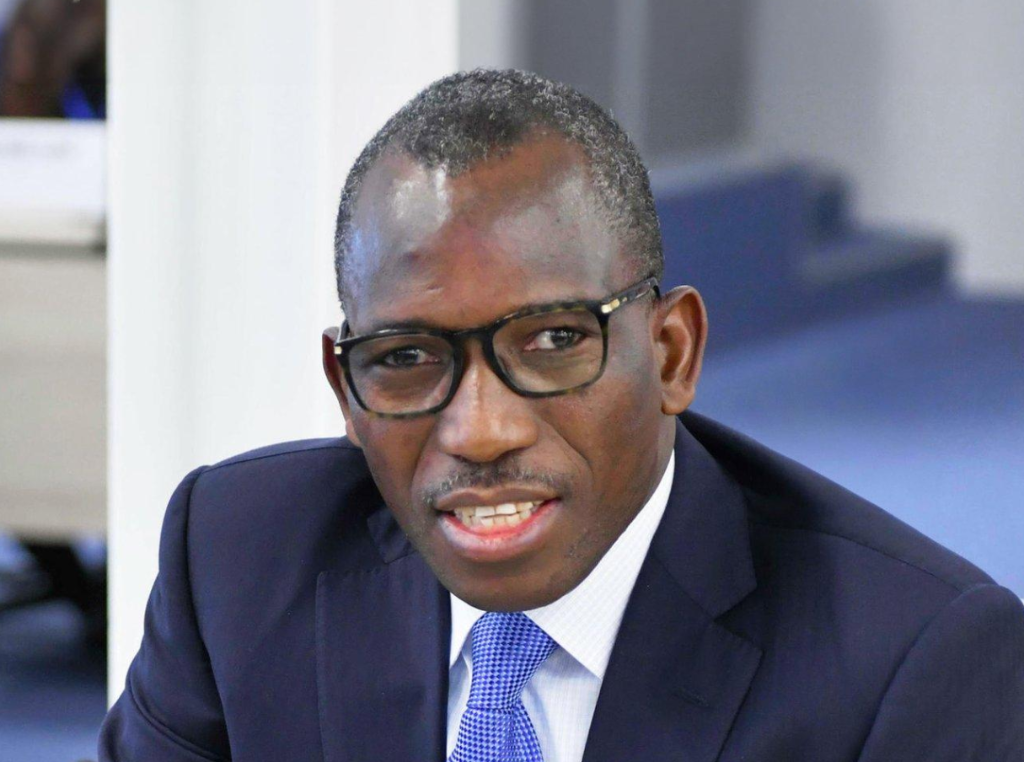
>In a public statement delivered on October 12, 2026, Gilbert Bawara, Togo’s Minister in charge of Relations with Parliament and Institutions, vigorously defended the CPC as the only viable path toward national reconciliation. The minister emphasized that the framework exists precisely to provide a structured environment where political parties can address critical national issues through dialogue and compromise.
Bawara rejected the notion that dialogue should be contingent on prior institutional reforms, arguing that such a position would short-circuit the very process of negotiation that the opposition claims to seek. From the government’s perspective, participation in the existing framework represents the most pragmatic route to achieving incremental progress while maintaining constitutional order.
Political deadlock exposes fragile fault lines in Togolese democracy
The current impasse reveals a fundamental philosophical divide between Togo’s ruling establishment and its opposition forces. While the government views institutional continuity as essential to preserving stability, opposition leaders argue that no stability can endure without first addressing the structural flaws that have long undermined democratic practice. This clash of methodologies has raised concerns about potential long-term consequences for the nation’s political fabric.
Key stakeholders within the opposition movement are not entirely united, with some smaller parties still considering participation in government-led initiatives under carefully defined conditions. However, the four major coalitions that have formally rejected dialogue now command significant public support, amplifying their capacity to shape the national narrative – and potentially mobilize civic action – in ways that could further strain an already tense social climate.
Civil society mobilization adds pressure amid looming national action
Opposition leaders have called for a National Warning Day on November 20, 2026, urging citizens to demonstrate their discontent through peaceful civic action. While the specific tactics remain unspecified, the announcement signals a potential escalation in pressure tactics designed to force concessions from the government. The effectiveness of this mobilization effort will likely depend on its ability to galvanize broader segments of Togolese society beyond the usual political activist circles.
The growing divide between government and opposition perspectives threatens to extend beyond the political sphere, potentially radiating into economic decision-making and investor confidence. Business leaders have privately expressed concern about the prolonged uncertainty, warning that sustained political gridlock could erode Togo’s hard-won reputation as a stable destination for foreign investment in West Africa.
Future hangs in balance: transition or continuation?
At this critical juncture, Togo faces a stark binary: either the government and opposition find a mutually acceptable framework for sustained dialogue, or the country risks descending into prolonged political and economic stagnation. The opposition’s call for transition and inclusive national conferences represents a fundamental challenge to the existing power structure, one that the government has so far refused to accept.
The path forward may depend on whether either side can demonstrate flexibility in defining acceptable parameters for negotiation, clarifying the legal implications of the ECOWAS ruling, and establishing confidence-building measures that could restore trust between political actors. Without such steps, Togo’s political crisis could evolve from a domestic confrontation into a regional concern, with implications for regional stability and economic integration across West Africa.
As the November 20 mobilization date approaches, the pressure mounts on both sides to either find common ground or accept the consequences of a prolonged showdown that risks leaving Togo’s institutions, economy and social fabric permanently scarred.