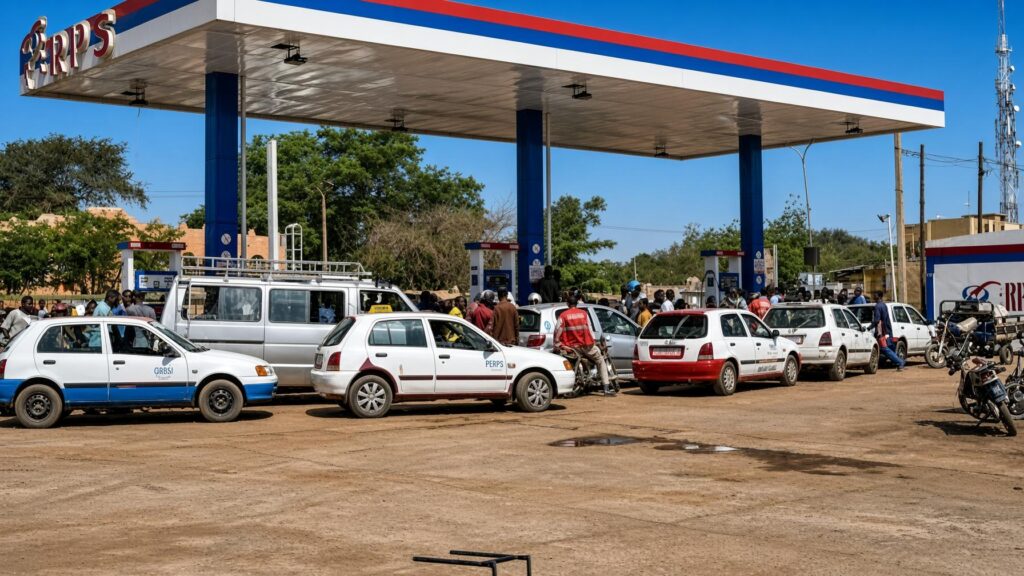
The Nigerien government has implemented sweeping new measures in an attempt to curb the country’s escalating fuel shortages, but the consequences for citizens and businesses are becoming increasingly severe. Starting Monday, October 19, 2026, a joint order from the Ministries of Interior, Petroleum, and Commerce imposes overnight closures on fuel stations and bans the sale of gasoline in jerrycans. While officials frame these steps as a temporary fix to address supply chain bottlenecks, the policies are already deepening the crisis for ordinary Nigeriens.
Night curfews choke daily life while promises of relief remain unfulfilled
The new regulations mandate that nearly all fuel stations shut down between 9:00 PM and 6:00 AM, ostensibly to clear the way for Petro Nigérien (SONIDEP) tanker trucks to refill storage tanks. The unspoken effect is a drastic reduction in operating hours, funneling motorists into congested queues during daylight hours. Critics warn that shifting demand to peak times will create bottlenecks far worse than those the government claims to prevent. Though authorities have pledged to designate emergency service stations in each municipality, neither the allocation criteria nor the capacity of these outlets has been clearly communicated. Residents report long delays under the scorching sun, with no guarantee of receiving fuel by day’s end.
Government crackdown targets informal fuel sellers as shortages persist
In addition to restricting operating hours, the crackdown extends to the thriving informal fuel economy. The sale of gasoline in jerrycans or unregulated containers is now banned in any town with a designated petrol station. Officials argue that black-market operators are deliberately creating artificial scarcity and driving up prices. However, this narrative overlooks the stark reality that official distribution channels often fail to meet demand, leaving many citizens with no alternative but to rely on street vendors. By deploying police and military patrols to enforce the ban, the government is prioritizing punitive action over solutions that would actually improve fuel availability. Small-scale traders and consumers, already struggling with rising costs, now face harassment and fines, adding another layer of hardship to the crisis.
Businesses and households feel the squeeze as emergency plans fall short
The latest restrictions follow emergency consultations between SONIDEP, Niamey city officials, and regional authorities, presented as a rational, interim solution. Yet behind the calls for public “civism” and “discipline” lies a troubling admission: the government has no viable plan to fix the fundamental flaws in the fuel supply chain. Without long-term investments to expand storage capacity, streamline logistics, or increase national stockpiles, the new measures are unlikely to do more than shuffle the chaos from one hour to the next. Entrepreneurs report lost productivity as fleets sit idle for hours, while families struggle to afford fuel prices that have surged beyond their reach. In this environment, the current restrictions risk perpetuating—not resolving—the very shortages they aim to quash.
What’s next for Niger’s fuel crisis?
The government’s hardline approach may buy time in the short term, but without addressing the core issues—namely, insufficient refinery capacity, unreliable import logistics, and weak distribution networks—the crisis will likely worsen before it gets better. For Nigeriens already stretched thin by economic hardship, the coming weeks could prove decisive in determining whether the country’s fuel policies serve the public interest or deepen the burden.