
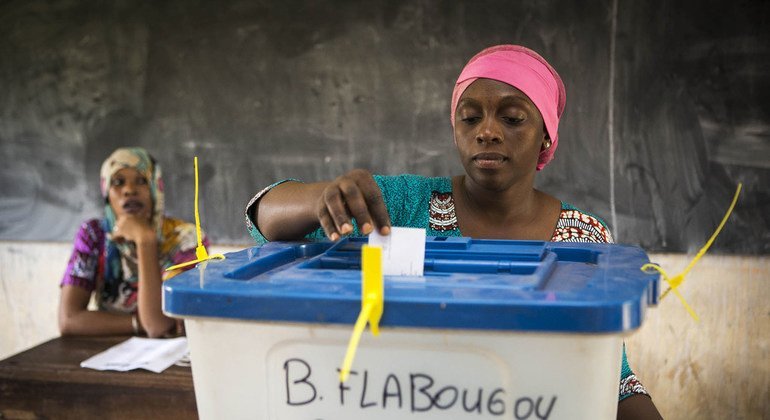
United Nations human rights experts are raising the alarm over recent legal and executive actions in Mali that threaten the fundamental freedoms of political participation and association. These developments, including a draft law and a decree suspending political party activities, are seen as direct violations of Mali’s international human rights obligations.
legal threats to political freedoms in Mali
On May 8, a group of UN independent experts issued a joint statement condemning the Malian government’s adoption of a draft law that would dismantle core protections for political participation. They also criticized a decree suspending all political party activities indefinitely, calling both measures clear breaches of human rights standards.
The experts emphasized that such restrictions undermine Mali’s commitments to upholding freedoms of expression and association, which are essential for a vibrant democratic society. They stressed that these actions could disproportionately exclude smaller political groups, particularly those without significant financial resources.
flaws in the proposed legislation
The draft law, adopted by Mali’s Council of Ministers on April 30, introduces stringent financial requirements for party registration and candidacy—conditions the experts argue will restrict political participation to economically privileged sectors. They pointed out that legitimate electoral rules, rather than financial barriers, should be the primary tool for regulating political party proliferation.
The experts also highlighted contradictions in the government’s claims. While officials argue the reforms stem from national dialogues like the 2021 Assises Nationales de la Refondation and the 2025 Charte des Partis Politiques consultations, they noted that genuine public input is impossible under the current climate of civic space restrictions. Independent journalists and opposition figures face risks of reprisals for expressing dissent, further stifling meaningful debate.
boycotted consultations and alarming proposals
Many political parties boycotted the April 2025 consultations, fearing the process was designed to facilitate their dissolution or suppression. The Council of Ministers also endorsed a controversial proposal to extend the current transitional government’s mandate without elections for five years, beginning in 2025. These actions, the experts warn, contradict Mali’s international human rights commitments.
urgent appeal to the transition council
The draft law is now awaiting approval by the National Transitional Council, led by General Malick Diaw. The UN experts have urged the council to reject the legislation, emphasizing the need for revisions that align with global human rights norms. They offered their support to help Mali amend the law to ensure compliance with international standards.
In response to the government’s actions, political parties have called for public demonstrations on May 3 and 4. However, they reported violent disruptions by purported government supporters during these events. Another round of protests has been planned for May 9, with human rights experts stressing the importance of peaceful assembly as a cornerstone of democratic governance.
The experts cautioned that Mali’s transitional authorities must respect the right to peaceful protest and refrain from intimidation or repression that could endanger participants’ safety and rights. They reiterated their commitment to assisting the government in reforming the draft law to protect fundamental freedoms.
voices from the un human rights community
The statement was co-signed by three prominent UN experts:
- Eduardo Gonzalez, Independent Expert on human rights in Mali;
- Irene Khan, Special Rapporteur on freedom of opinion and expression;
- Gina Romero, Special Rapporteur on the rights to freedom of peaceful assembly and association.
Note: The experts are part of the UN Special Procedures, independent mechanisms that investigate and monitor human rights violations worldwide. They serve in an unpaid, voluntary capacity and operate independently of governments and organizations.

More Stories
Burkina Faso: Ibrahim Traoré’s military seizure of power and its consequences
Gabon’s strategic pivot: balancing sovereignty and French partnership
Côte d’Ivoire growth: government highlights economic progress under Diarrassouba