
unprecedented coordinated attacks in Mali: how the junta faces a new threat
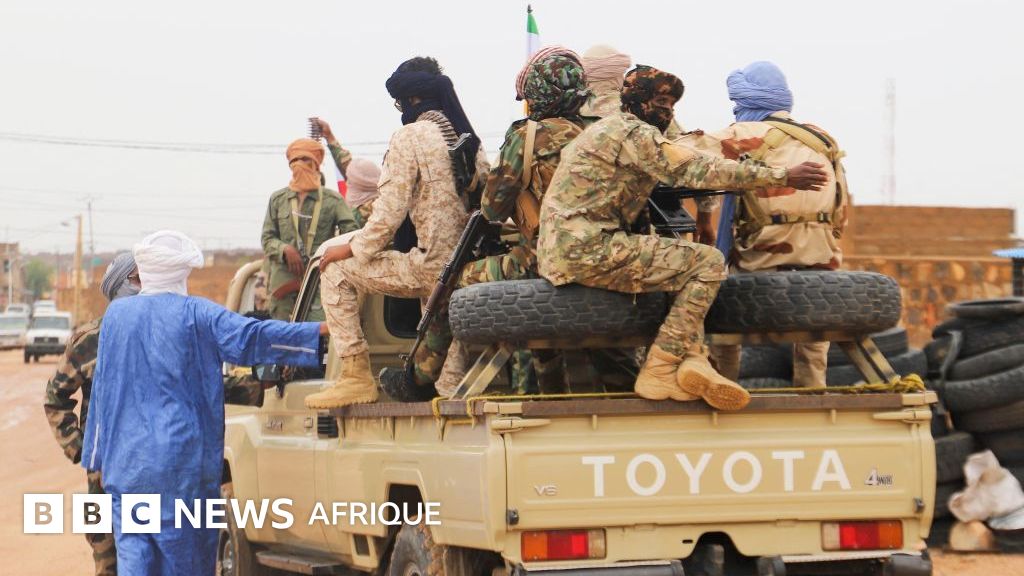
coordinated assaults carried out last weekend by the Group for the Support of Islam and Muslims (JNIM) and Tuareg separatists from the Azawad Liberation Front (FLA) have plunged Mali into chaos, exposing vulnerabilities in the military junta’s defenses against an increasingly organized insurgency.
These groups simultaneously targeted multiple cities, from Bamako to Kidal, marking an unprecedented level of synchronization in the conflict. Their collaboration represents a major shift in Mali’s crisis: despite long-standing ideological and territorial differences, they have temporarily set aside their disputes to focus on a common enemy—the military junta.
This unusual alliance signals a troubling transformation in the Sahel’s security landscape, where traditional divisions are giving way to tactical convergences. The recent events suggest a deeper shift: the rise of opportunistic coalitions capable of permanently disrupting the balance of power.
from rivalry to temporary alliance
The JNIM, an Al-Qaeda-affiliated jihadist coalition active across the Sahel, seeks to establish a transnational Islamic order through guerrilla warfare, attacks, and terror tactics designed to weaken states.
The FLA, a Tuareg separatist movement born from the rebellions in northern Mali, demands independence or autonomy for the Azawad region, relying on community legitimacy and the legacy of Tuareg struggles.
Historically, these groups were rivals: the FLA distrusted the JNIM’s transnational agenda, while the JNIM saw the separatists as competitors for territorial control. Their current alliance stems from complementary strengths—the FLA brings local legitimacy, deep knowledge of the terrain, and community networks, while the JNIM contributes combat experience, firepower, and transnational logistics.
Despite their fundamentally different goals—the FLA seeks regional autonomy, while the JNIM aims to impose a strict interpretation of Islamic law across Mali—their cooperation reflects a shared immediate objective: undermining the Malian state and destabilizing its political and military leadership.
an alliance with far-reaching consequences
Analysts highlight the tactical nature of this alliance. Emmanuel Odilon Koukoubou, political scientist and senior researcher at the Civic Academy for Africa’s Future (CiAAF), notes that similar alliances have emerged before, such as in 2012-2013, when the National Movement for the Liberation of Azawad (MNLA) allied with terrorist groups like AQMI and Ansar Dine to expel Malian forces from northern Mali. However, those alliances quickly collapsed as the jihadists turned on their allies.
The current cooperation, though tactically effective, remains fragile. Koukoubou explains, “The FLA pursues independence for northern Mali, while the jihadists seek to establish a caliphate in the Sahel. Their long-term goals are incompatible. Their alliance is purely tactical, united against a common enemy: the Malian state.”
Alioune Tine, founder of the Dakar-based think tank Afrikajom Center and former UN independent expert on Mali, describes the alliance as a “unprecedented” threat, targeting “the very heart of political power and military security.”
>The death of Sadio Camara, Mali’s Defense Minister and a key military strategist, in a targeted attack, has sent shockwaves through the junta. The assailants reached his residence in Kati without triggering security alerts, exposing critical vulnerabilities in the regime’s defenses.
Tine warns, “Sadio Camara was not just a minister; he was an ideologue, a strategist, and a key intellectual figure within the military. His assassination is a devastating blow to the junta’s command chain and a stark signal of its fragility.”
The government’s delayed response—with no word from the president for 48 hours—has further fueled speculation and uncertainty. The Prime Minister eventually addressed the nation, acknowledging the “asymmetry” of terrorist tactics and vowing to adapt security measures to counter future threats.
regional risks and urgent calls for collective action
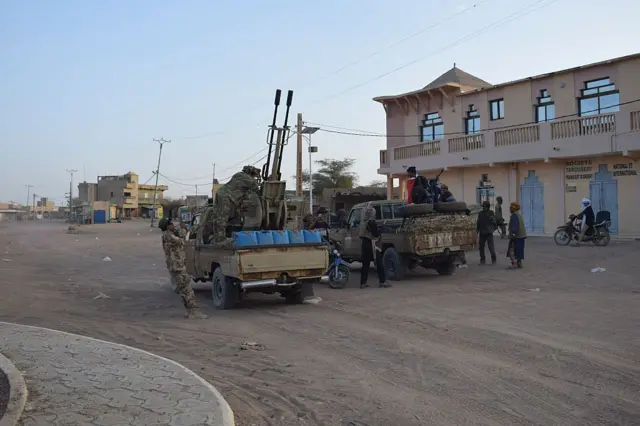
The crisis unfolds against a backdrop of diplomatic tensions. Mali, estranged from several Western partners, has pivoted toward Russia and its allies within the Alliance of Sahel States (AES).
Koukoubou warns, “The Malian regime is exposed in its fragility. Its external support options are limited. The risk is one of increased isolation, which could accelerate its weakening.”
Tine goes further, framing the threat as a potential regional domino effect: “The collapse of Mali could trigger a domino effect across the subregion, much like the spread of jihadist insurgencies. The priority now is to develop a rapid regional strategy—shared geopolitics and defense. Collective action is the only way forward.”
He urges regional bodies like the ECOWAS or the AES to recognize that their fates are intertwined: “Leaders must convene an extraordinary summit on subregional security. The top priority today is security, and how to build it together. National egos must be set aside in favor of shared sovereignty.”
The coordinated attacks in Mali are not just a military challenge—they threaten to destabilize the entire Sahel. The junta’s response, and the region’s ability to unite, will determine whether this crisis deepens into a full-blown catastrophe or becomes a turning point toward resilience and cooperation.



More Stories
Niger: Tiani faces fallout from special forces anger after Russian intervention
Mali : 17 morts dans les rangs des dozos, le JNIM accentue sa pression
Sahel : le pari des juntes tourne-t-il à l’échec sécuritaire ?