The United States has imposed financial and legal sanctions on two senior leaders of armed groups operating in eastern Democratic Republic of the Congo (DRC), accusing them of serious human rights violations and attacks on civilian populations.
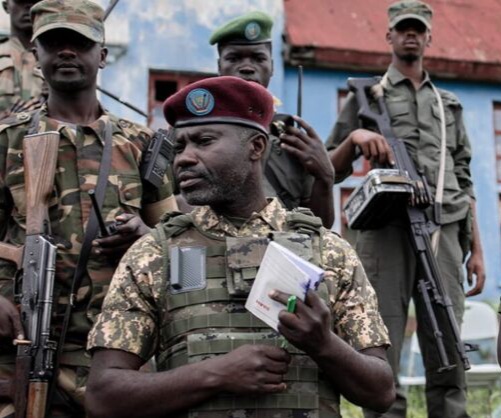
In a statement, the U.S. State Department said the measures target Gustave Kubwayo, a commander of the Democratic Forces for the Liberation of Rwanda (FDLR), and John Imani Nzenze, identified as the head of intelligence for the Congo River Alliance/M23 (AFC-M23).
Washington stated that these sanctions are part of efforts to promote peace and stability in the Great Lakes region. The U.S. authorities also intend to push all conflict actors to respect their international commitments, particularly those related to the Washington Accords for Peace and Prosperity and the Doha process.
According to the State Department, Gustave Kubwayo is implicated in multiple atrocities attributed to the FDLR, including ethnic violence, recruitment of child soldiers, sexual violence, and cross-border attacks threatening Rwanda’s security.
John Imani Nzenze is accused of playing a role within the M23, an armed group that Washington considers to be supported by Rwanda. The United States blames this movement for several murders, grave human rights violations, and repeated attacks on civilian communities in eastern DRC.
Meanwhile, the Congolese army announced the surrender of 204 AFC-M23 fighters during April and May 2026. According to a statement from the spokesperson of the 34th military region, Major Dieudonné Kasereka, these former combatants turned themselves in across several operational zones in North Kivu and South Kivu provinces, including Lubero, Rutshuru, Masisi, and Kalehe.
Military authorities say they have taken necessary measures for their care. Major Kasereka also called on other fighters still active in forest areas to lay down their arms and join the surrender process.
These developments come as clashes continue between the AFC-M23 and the Armed Forces of the DRC, supported by the Wazalendo self-defense groups. Fighting remains particularly intense in several territories of North Kivu and South Kivu, where the security situation remains worrying.