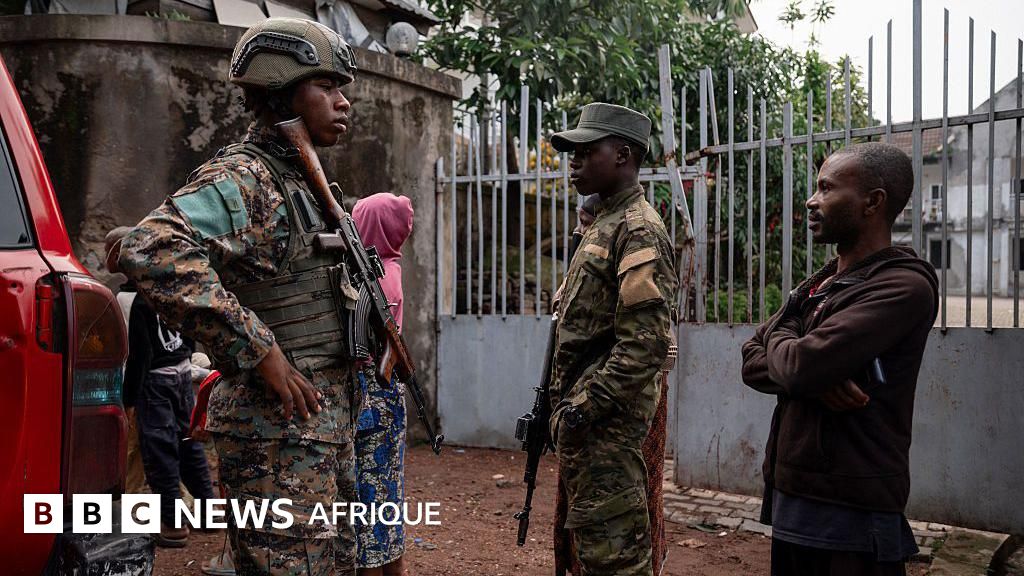
The government of the Democratic Republic of Congo and the M23 rebel group, reportedly backed by Rwanda, have successfully reached an accord on a crucial roadmap for upcoming peace negotiations.
Following five days of intensive discussions held in Switzerland, a joint declaration confirmed their mutual commitment to “pursue negotiations aimed at achieving a comprehensive peace and a lasting resolution to the conflict.” Additionally, both parties pledged to establish a dedicated mechanism for monitoring the agreed-upon ceasefire.
This newly adopted roadmap outlines a clear timeline for the peace talks, building upon a United States-brokered peace accord initially signed in 2025. This significant development unfolds even as armed clashes are anticipated to persist across the eastern regions of the Democratic Republic of Congo, an area tragically plagued by decades of instability and violence.
Despite this forward momentum, significant disagreements continue to loom. Key contentious issues include the imposition of sanctions against the M23, the release of detained individuals, and the specific timeframe for implementing crucial political reforms.
The recent round of negotiations brought together representatives from the M23, the Democratic Republic of Congo’s government, Qatar, the United States, the Republic of Togo, the African Union Commission, and Switzerland, which graciously served as the host nation for these pivotal discussions.
“The parties have consented to create a mechanism tasked with reviewing progress and addressing any challenges encountered during the implementation of obligations and commitments outlined in the Doha Framework Agreement,” the communiqué stated, referencing the landmark 2025 accord.
The statement further highlighted that participants meticulously developed “precise steps and timelines,” while also committing to demonstrate “flexibility and creativity” throughout the complex process.
In a crucial move, a monitoring mechanism for ceasefire violations has also been formally established. Its secretariat is now fully operational, with the inaugural verification mission scheduled to deploy on Monday to Minembwe, a volatile zone within South Kivu that has been significantly impacted by ongoing hostilities.
Fighting has, regrettably, persisted in both North and South Kivu, despite repeated pledges of ceasefire adherence. Both the government and the M23 have consistently accused each other of violating these commitments.
This protracted conflict is intricately linked to the simmering tensions between the Democratic Republic of Congo and its eastern neighbor, Rwanda.
Rwanda maintains that the Democratic Republic of Congo has failed in its obligation to dismantle the Forces Démocratiques de Libération du Rwanda (FDLR), an armed entity that Kigali perceives as a direct threat to its national security.
Conversely, the Democratic Republic of Congo strongly refutes any allegations of supporting the FDLR. Instead, it accuses Rwanda of actively backing the M23 by providing both troops and weaponry.
The conflict witnessed a significant escalation in January 2025 when the M23 seized control of various strategic areas in eastern Democratic Republic of Congo, including the vital city of Goma and two key airports.
Over the many decades of fighting, thousands of lives have been tragically lost, and hundreds of thousands of civilians have been forcibly displaced from their homes, enduring immense suffering.
The eastern Democratic Republic of Congo is renowned for its abundant reserves of coltan and other critical natural resources, which are indispensable for global electronic industries.
Rwanda has consistently denied any involvement in supporting the M23, despite a growing body of evidence suggesting otherwise. Kigali has consistently asserted that its military presence in the region is purely defensive, aimed solely at countering threats posed by other armed groups.