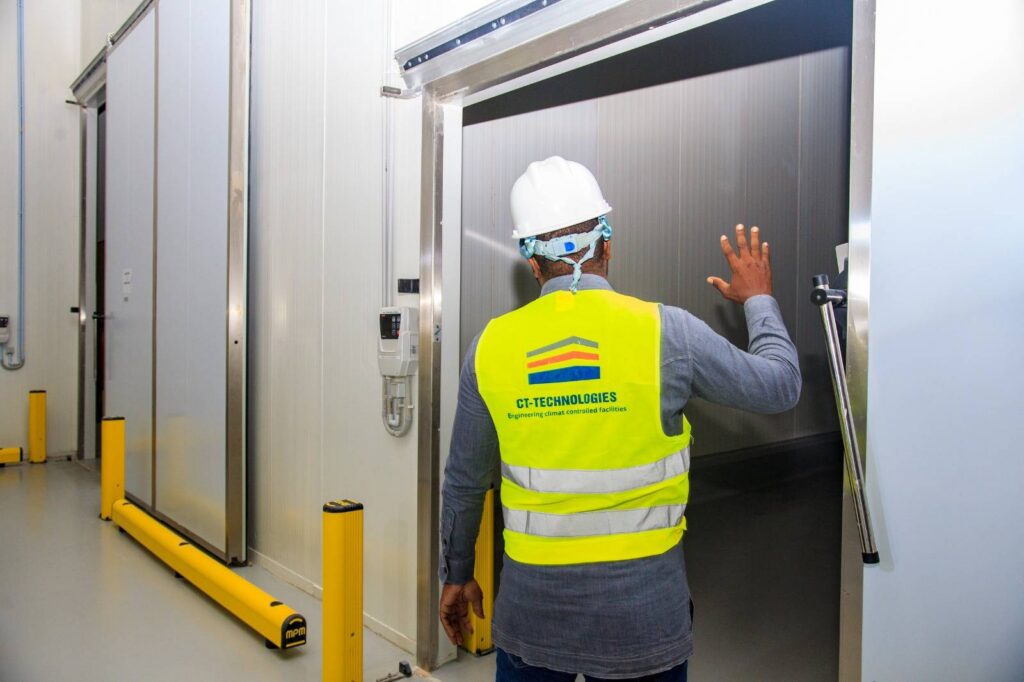
To elevate its fruit exports to global standards, the Bénin government, led by President Romuald Wadagni, is implementing sweeping reforms across the agricultural value chain. Two flagship projects—an industrial-scale plant laboratory in Glo-Djigbé and a state-of-the-art fruit terminal at Cotonou International Airport—are setting the stage for a new era in agricultural exports. The strategy prioritizes economic impact and technological self-sufficiency, marking a decisive shift in the nation’s agricultural landscape.
Breaking new ground in agricultural modernization
For decades, Bénin’s agricultural sector has relied on traditional practices, exporting raw, unstandardized produce with limited post-harvest infrastructure. This approach led to significant losses and missed opportunities in lucrative international markets. The current administration is turning the tide by focusing on end-to-end value chain mastery, ensuring every stage—from seed to shelf—meets global quality benchmarks.
Key export crops like pineapple, cashew, and mango are in high global demand, but only countries that can guarantee consistent quality and supply meet these markets’ strict standards. By leveraging the Projet d’Appui à la Compétitivité des Filières Agricoles et à la Diversification des Exportations (PACOFIDE), Bénin is transitioning from subsistence farming to a competitive agro-industrial powerhouse. The goal is clear: boost export earnings, stabilize farmer incomes, and create skilled jobs within advanced agricultural and logistics hubs.
Glo-Djigbé: A seed revolution powered by biotechnology
The Special Economic Zone (SEZ) in Glo-Djigbé is home to a groundbreaking industrial plant laboratory nearing completion. With an annual capacity of 13.5 million vitroplants, this facility will redefine the country’s seed production capabilities. According to Minister of Agriculture, Livestock, and Fisheries Adin Yeton Bloukounon Goubalan, biotechnology is the backbone of agricultural transformation: « No nation can achieve agricultural success without controlling its seed industry. »
The economic ripple effects of this innovation are substantial. Farmers will gain access to disease-resistant, high-yielding plant varieties, eliminating the unpredictability of traditional seeds. By maximizing output per hectare without expanding arable land, Bénin enhances its cost efficiency and strengthens its position against regional competitors. To further solidify this transition, 1,000 hectares around the former Glo-Djigbé airport site are being developed into elite and demonstration fields. These open-air laboratories will validate the performance of new pineapple vitroplants before mass distribution, ensuring optimal returns for producers.
Cotonou’s fruit terminal: Ensuring freshness from farm to flight
High-quality produce loses its value if logistics fail. Recognizing this, the PACOFIDE initiative includes a modern fruit terminal at Cotonou International Airport, designed to preserve the integrity of perishable goods. Equipped with cold storage, refrigerated processing zones, freezing units, and streamlined customs facilities, the terminal can handle up to 736 pallets of fruit at once.
This infrastructure drastically reduces post-harvest losses by maintaining the cold chain from farm to aircraft. Exporters can now deliver Bénin-grown pineapples and vegetables to European and Asian markets with unmatched freshness, enabling premium pricing and stronger bargaining power. The terminal’s efficiency also streamlines export procedures, making Bénin a more attractive trade partner for global buyers.
A policy shift applauded by farmers and investors
Recent oversight visits confirmed that both projects are on track, with Minister Bloukounon Goubalan praising the high standards of construction and alignment with national economic sovereignty goals. « Seeds are the foundation of production. By mastering seed technology, we enhance our agricultural competitiveness, » he stated. This integrated approach—combining scientific research with end-to-end logistics—addresses decades-long structural gaps in the sector.
The reforms are already bolstering investor confidence, positioning Bénin as a reliable and sophisticated player in the global agricultural market. By intertwining high-tech seed production with robust export logistics, the government is not just increasing volumes; it is reshaping the national economy. The goal is clear: ensure that the wealth generated from Bénin’s fertile lands remains within the country, fostering sustainable growth and resilience in the agricultural sector. The green revolution is underway, backed by technology and innovation to claim its place on the world stage.