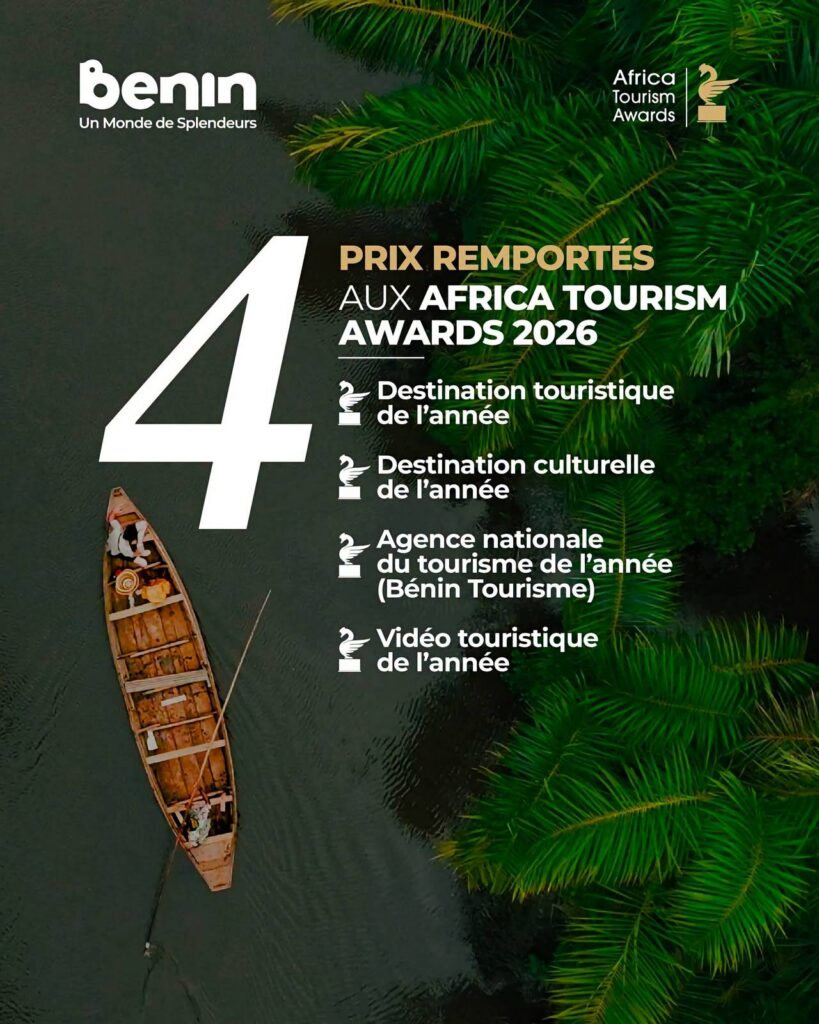
Benin has entered a new phase of international recognition for its tourism potential, securing four prestigious distinctions at the 2026 Africa Tourism Awards held in London. The awards validate the nation’s evolving status as a rising star in African tourism, honoring its cultural richness, promotional excellence, and strategic market positioning.
The real-world impact of international tourism awards on Benin’s economy
The Africa Tourism Awards accolades spanning destination of the year, cultural destination of the year, tourism promotional video of the year, and national tourism agency of the year are more than symbolic victories. They represent concrete opportunities for economic transformation across multiple sectors, directly benefiting citizens, entrepreneurs, and communities nationwide.
Tourism already contributes significantly to Benin’s GDP, and these awards signal a pivotal moment for scaling up industry growth while ensuring inclusive development. The distinctions validate the country’s strategic investments in preserving cultural heritage, upgrading infrastructure, and enhancing visitor experiences critical factors that attract foreign investment and encourage longer stays from international travelers.
From cultural heritage to sustainable income: unlocking economic potential
Benin’s winning category in cultural destination reflects its deep-rooted traditions, historic landmarks, and living heritage from the Porto-Novo royal palaces to the sacred forests of Kpassè and the vibrant artisanal communities of Abomey. These assets are not merely tourist attractions; they are economic engines that generate sustainable income for local populations.
The tourism sector supports thousands of livelihoods, including artisans who craft traditional fabrics, woodcarvers, tour guides, small guesthouse owners, and restaurant operators. By positioning culture as the cornerstone of its tourism identity, Benin is not only attracting visitors but fostering grassroots economic participation, reducing rural-to-urban migration, and empowering women and youth through cultural entrepreneurship.
Strengthening community-based tourism
A key outcome of this international recognition is the renewed emphasis on community-based tourism initiatives. Programs that engage local stakeholders in preserving traditions while offering authentic visitor experiences are gaining momentum. Such models ensure that tourism revenue remains within villages and towns, strengthening local governance, funding cultural preservation, and improving public services.
For example, guided tours led by local historians in Ouidah or craft workshops in Natitingou now serve as both educational experiences and sustainable income sources. This approach aligns global demand for authenticity with grassroots economic empowerment, creating a virtuous cycle of development.
Turning digital promotion into tangible visitor experiences
Winning the award for best tourism promotional video highlights the strategic importance of modern communication in attracting international audiences. A high-quality video that captures the essence of Benin’s landscapes, festivals, and traditions not only elevates the country’s profile but also drives inquiry and booking behavior among global travelers.
Digital tourism promotion enables small businesses to compete on a global stage. Local tour operators, hotels, and artisans can leverage this increased visibility through online platforms, social media, and digital marketplaces expanding their reach beyond traditional tourism circuits and accessing international clientele directly.
Transforming recognition into long-term tourism success
While the awards bring national pride and international prestige, their true value lies in measurable outcomes: increased tourist arrivals, higher revenue per visitor, and expanded employment in the hospitality and service sectors. To capitalize on this momentum, Benin must prioritize continuous improvement in infrastructure quality, visitor safety, and service standards across all touchpoints.
This includes modernizing transportation networks, upgrading accommodation facilities, training tourism professionals, and ensuring consistent service delivery. Without these foundations, international acclaim risks remaining unfulfilled potential. The country’s tourism authority must therefore align promotional success with operational excellence to deliver a world-class visitor experience.
Bénin Tourisme honored: a catalyst for national tourism growth
Receiving the award for national tourism agency underscores the pivotal role of institutional coordination in tourism development. Bénin Tourisme’s strategy spanning digital campaigns, international roadshows, and partnerships with global tour operators has been instrumental in positioning the country as a must-visit destination in West Africa.
Moving forward, the agency’s focus should expand from mere promotion to ecosystem development: facilitating financial access for small businesses, improving visa processes, and fostering investment in sustainable tourism infrastructure. By acting as a bridge between government policy, private enterprise, and community interests, Bénin Tourisme can ensure that tourism growth is balanced, equitable, and resilient.
The road ahead: sustaining momentum beyond the awards
The international spotlight now shines brightly on Benin, offering a rare window of opportunity to establish itself as a premier African tourist destination. The nation’s ability to sustain this advantage will depend on its commitment to three priorities: preservation, innovation, and inclusion.
Preservation involves protecting natural and cultural assets from over-tourism and environmental degradation. Innovation means harnessing technology for personalized tourism services and sustainable mobility solutions. Inclusion ensures that tourism benefits reach all regions and social groups, particularly women, youth, and rural communities.
With the Africa Tourism Awards as a springboard, Benin stands at a crossroads. The question is no longer whether the country can compete globally but whether it can build a tourism industry that is as enduring as its cultural legacy and as transformative as its economic ambitions.
By Emmanuel Mbarga — Journalist