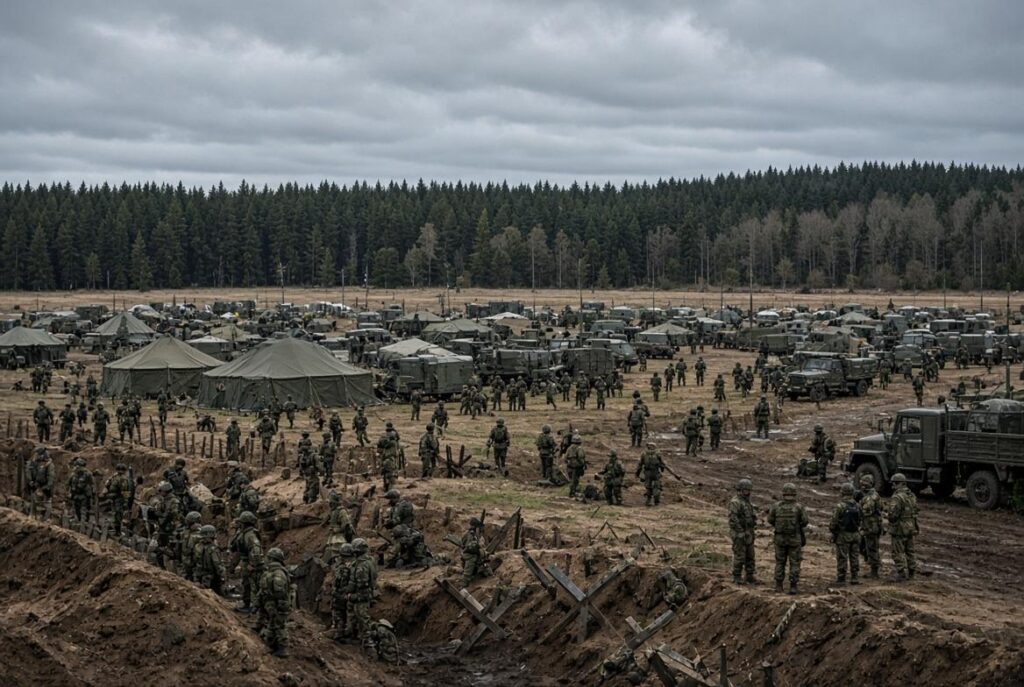
The geopolitical faultline between NATO and Russia has reached a critical breaking point along the Baltic Sea, where tensions now threaten to spill into open confrontation. In response to a mounting trail of intelligence, provocation, and the looming specter of covert operations directed from Moscow, Poland has launched an extraordinary security initiative along its northeastern frontier—directly bordering the heavily fortified Russian exclave of Kaliningrad. This decisive move reflects Warsaw’s unyielding resolve to neutralize any attempt at destabilization in one of Europe’s most volatile regions.
Military gridlock: A fortress-like defense cordon
What was once a routine border patrol operation has transformed into a full-scale, multi-layered security siege. Poland’s response integrates tiered defense systems across five critical domains:
- Border guards: Deployed with thermal imaging, radar drones, and 24/7 drone intercept teams to detect and neutralize unauthorized aerial incursions.
- Anti-terror units: High-readiness rapid response squads stationed every 20 kilometers to intercept infiltration attempts within minutes.
- Cyber defense battalions: Embedded within regional command centers to monitor and neutralize digital sabotage targeting energy grids, transport hubs, and government communications.
- Military engineering brigades: Constructing fortified observation towers and underground sensor networks to close physical blind spots along rugged terrain.
- Civil emergency coordination: Real-time integration with hospitals, utilities, and public transport to ensure continuity in case of targeted infrastructure attacks.
Each layer is synchronized through a unified command network—bringing together intelligence, police, and military chains of command under a single operational authority. The result: an airtight barrier designed not just to repel, but to deter.
Sabotage, drones, and psychological warfare: Russia’s new front
While global attention remains fixed on the battlefields of Ukraine, the Baltic coast has become the Kremlin’s shadow battleground. Recent months have seen a sharp rise in provocative acts:
- Unauthorized drone flights: Repeated incursions over military zones and critical infrastructure in Gdansk, Gdynia, and Koszalin.
- Migratory pressure tools: Sudden spikes in irregular crossings near Suwałki, linked to known Russian hybrid support networks.
- Electronic warfare: Interference with GPS and radar systems during NATO exercises in the region.
- Infrastructure sabotage drills: Simulated attacks on rail lines and energy pipelines, using non-state proxies trained in Russian-backed academies.
These tactics—long cataloged as Russia’s hybrid warfare playbook—are now applied with increasing frequency along Poland’s northern frontier. Each act represents a deliberate probe, testing Poland’s resolve and NATO’s collective defenses in a theater where conventional war has not yet erupted—but where peace is increasingly fragile.
Deterrence through strength: Poland sets the new security standard in Europe
By erecting this fortified cordon, Poland is not only shielding its own territory—it’s redefining the rules of engagement in Europe’s undeclared conflict with Moscow. The message is unambiguous: hybrid warfare meets its match in deterrent force.
Since joining NATO in 1999, Poland has positioned itself as the alliance’s eastern sentinel. Now, with this bold initiative, it takes command of a new security paradigm. One in which passive defense gives way to proactive deterrence—using visible, overwhelming force to dissuade aggression before it begins.
As neighboring Baltic states observe Warsaw’s strategy, a clear pattern emerges: in an era where war is no longer declared but waged in ambiguity, only an unambiguous defense can preserve peace. And Poland is leading the way.