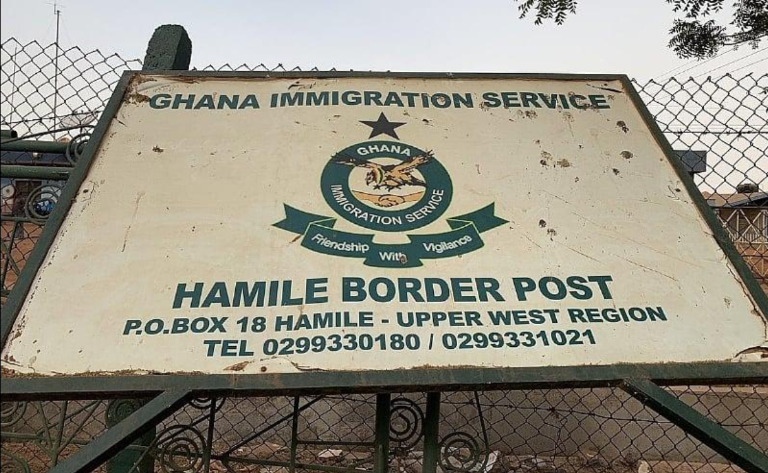
Local tragedy exposes wider border security cracks in northern Ghana
The deadly explosion in Hamile, a Ghanaian border town near Burkina Faso, has left at least three people dead, including a Ghana Immigration Service officer, and revealed glaring weaknesses in the country’s northern border security protocols. Authorities confirm the blast occurred during an attempted interception of a tricycle allegedly transporting explosives, but the full circumstances remain under investigation.
This is not just a local tragedy—it’s a national security warning. The incident highlights how porous borders and unregulated movement of hazardous materials can have catastrophic consequences for communities, trade, and public safety across the entire West African subregion.
How a routine checkpoint turned into a fatal explosion
According to preliminary security reports, the tricycle carrying suspected dynamite was traveling on an unauthorized route near Hamile when it was flagged down by security forces. When the occupants failed to stop at a checkpoint, a pursuit ensued, culminating in the explosion that killed the immigration officer and two civilians, while critically injuring a second officer.
The explosion’s precise cause is still under official scrutiny. Investigators are examining whether the blast resulted from an accidental detonation during the pursuit or was intentionally triggered to avoid capture—questions with major implications for border security strategy moving forward.
Hamile: gateway of opportunity—and risk
As a key border crossing between Ghana and Burkina Faso, Hamile plays a vital role in cross-border trade and community ties. But its strategic location also makes it a potential transit hub for illicit goods, including explosives that pose a direct threat to local populations.
Current border controls face two major challenges: the use of unmonitored pathways by traders and travelers, and the difficulty of detecting dangerous substances before they enter populated areas. Without stronger coordination between immigration, military, and local authorities, risks like this will only escalate.
- Limited infrastructure at unofficial entry points
- Inadequate real-time intelligence sharing among security agencies
- Over-reliance on reactive enforcement rather than proactive surveillance
Regional spillover: Ghana on high alert as Sahel instability spreads
This explosion comes amid growing fears that insecurity in Burkina Faso could spill over into neighboring countries. While no group has claimed responsibility for the Hamile blast, the incident underscores the broader risk of destabilization spreading across borders already strained by conflict and displacement.
Ghana has progressively stepped up patrols and intelligence operations along its northern frontier, aware that protecting rural communities and trade routes is essential to preventing violent spillover. But as the Hamile tragedy shows, even targeted operations can have unintended—and deadly—consequences.
The real cost of border insecurity: lives, livelihoods, and trust
Beyond the immediate human toll, the blast has shaken public confidence in border protection. Small-scale traders rely on cross-border movement for their daily income, yet unchecked trafficking of weapons and explosives threatens both their livelihoods and safety.
The government now faces a delicate balancing act: tightening controls without choking legitimate commerce or stoking resentment in border communities.
What comes next: lessons from Hamile’s deadly lesson
An official inquiry has been launched to establish the facts behind the explosion, identify the source of the explosives, and clarify whether criminal or terrorist intent was involved. Preliminary findings suggest the materials were likely intended for local use rather than external attack—but this must be confirmed.
For Ghana, the priority is clear: strengthening real-time monitoring, enhancing inter-agency cooperation, and investing in community-based security networks. Only through a holistic approach can such tragedies be prevented in the future.
The people of Hamile and the nation as a whole deserve better than a cycle of reactive measures and preventable loss. The time for decisive border security reform is now.