In the high-stakes battle against terrorism across Africa, the spotlight often falls on Russia—but the real heavyweights in military arms supply are China and the United States. Recent data reveals a striking shift in the continent’s defense partnerships, with implications that go far beyond weapons deals.
Why Russia’s military dominance in africa is a myth
The narrative of Russia as Africa’s top military supplier has gained traction due to its high-profile engagements in volatile regions like the Sahel. Countries such as Mali, Burkina Faso, and Niger have strengthened ties with Moscow, fueling perceptions of an emerging security alliance. However, beneath the diplomatic headlines and security cooperation agreements, a different story unfolds in the numbers.
According to the latest Stockholm International Peace Research Institute (SIPRI) data—covering arms transfers from 2021 to 2025—the United States leads African military imports at 19%, followed by China at 17%, with Russia trailing at 15%. In sub-Saharan Africa, the gap widens: China dominates with 22%, while Russia captures just 12%. These figures dismantle the myth of Russia as the continent’s primary arms provider and reveal a more complex security landscape.
Africa’s shifting arms supply chain: who really holds the power?

The rise of China as Africa’s leading military supplier is not an accident—it’s a calculated strategy. Chinese defense exports now span a wide range of equipment tailored to counterterrorism needs: armored personnel carriers, combat and surveillance drones, anti-aircraft systems, radar, artillery, and transport aircraft. This versatility is making Beijing a key partner for African governments fighting insurgencies.
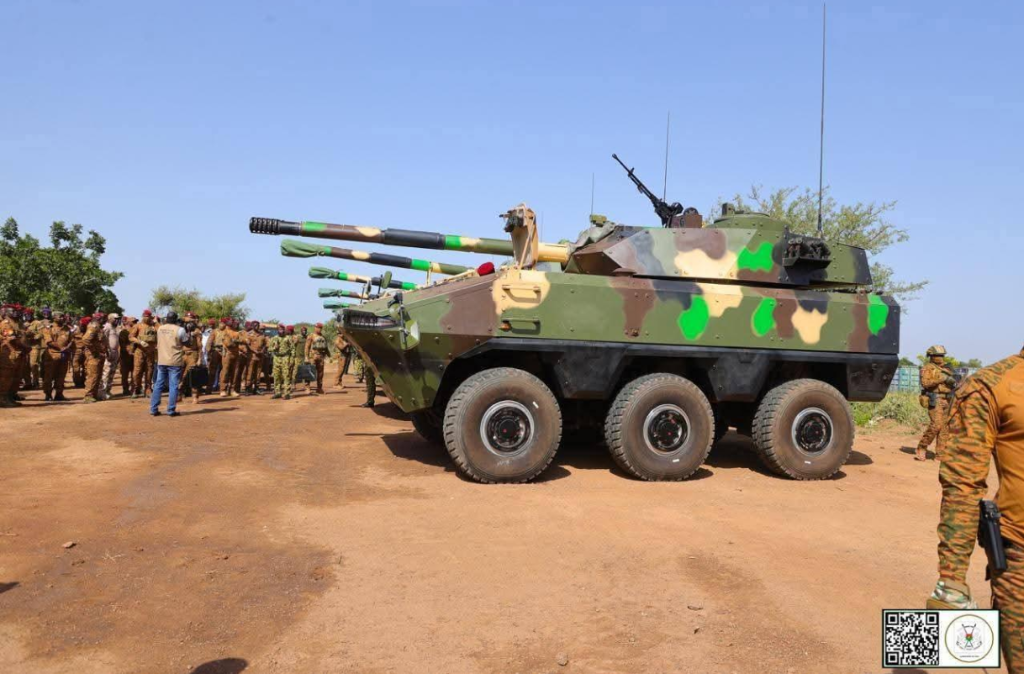
For example, Burkina Faso recently acquired 116 infantry transport vehicles and six assault vehicles from Chinese manufacturers in 2024. In Mali, cooperation with the state-backed NORINCO group includes weaponry, training, and technology transfer programs. These partnerships go beyond sales—they build long-term operational capabilities. Drones enable real-time intelligence and detection of armed group movements, while armored vehicles protect troops during high-risk operations.
Yet, China’s influence extends beyond battlefield hardware. Beijing is increasingly embedding its presence through joint training exercises, maintenance support, and localized arms production, offering African nations a level of self-sufficiency and technological independence that traditional suppliers struggle to match.
Russia’s fading footprint: visibility vs. volume in Africa’s security landscape
Despite its declining share of arms exports, Russia remains a visible player in Africa’s security theater. Its footprint is strongest in the Central African Republic and Mali, where Russian military advisors, private security contractors (now reorganized under the Africa Corps), and operational support teams remain active.
Moscow’s strategy prioritizes boots-on-the-ground influence over large-scale arms deals. For African governments facing immediate threats from terrorist groups like Jama’at Nusrat al-Islam wal Muslimin (JNIM) or the Islamic State’s Sahel branch, Russian advisors provide tactical expertise, training, and logistical support. This hands-on approach has solidified Russia’s reputation as a rapid-response security partner—even as its commercial exports dwindle.
But this visibility masks a steep decline. SIPRI data shows a 64% drop in Russia’s global arms exports between 2016–2020 and 2021–2025. Sanctions, the war in Ukraine, and domestic military re-prioritization have all strained Russia’s ability to meet African demand. While its advisory networks remain strong, Moscow is no longer the dominant supplier it once claimed to be.
More weapons ≠ more security: the real challenge in africa’s counterterror fight
For African nations, the arms race is only one piece of the puzzle. Winning the fight against terrorism requires a multi-layered approach: reliable intelligence, air mobility, cross-border cooperation, state presence in remote areas, and well-trained, well-supplied forces.
New suppliers like China and the United States bring fresh opportunities—but also new risks. Dependence on foreign technology can create vulnerabilities. Maintenance costs, spare parts availability, and the potential for arms proliferation loom large. A vehicle without working parts or a drone grounded by software incompatibility does little to protect civilians.
Moreover, Africa’s security partners differ vastly in their long-term commitments. Some prioritize profit, while others offer strategic alliances. China’s model emphasizes infrastructure deals tied to resource extraction, while U.S. programs often come with governance and human rights conditions. Each comes with trade-offs that African leaders must weigh carefully.
What Africa truly needs: partners, not patrons
Ultimately, Africa’s struggle against terrorism will not be won on the back of arms alone. It demands investment in local defense industries, civilian protection programs, and inclusive governance. The rise of new suppliers offers African nations more choices—but it also demands smarter, more strategic decision-making.
The message is clear: Africa’s military future is not dictated by Moscow, Beijing, or Washington. It is shaped by African leaders who must navigate this evolving landscape with wisdom, caution, and a long-term vision for peace and stability.
The bottom line for african governments
- Diversifying supply chains reduces dependency on any single power.
- Local production and maintenance are just as critical as imported hardware.
- Strategic partnerships must go beyond weapons sales to include training, intelligence sharing, and state-building.
As Africa’s security needs grow, so does the complexity of its alliances. The era of a single dominant military supplier is over. The future belongs to those who can balance power, pragmatism, and partnership—on Africa’s terms.