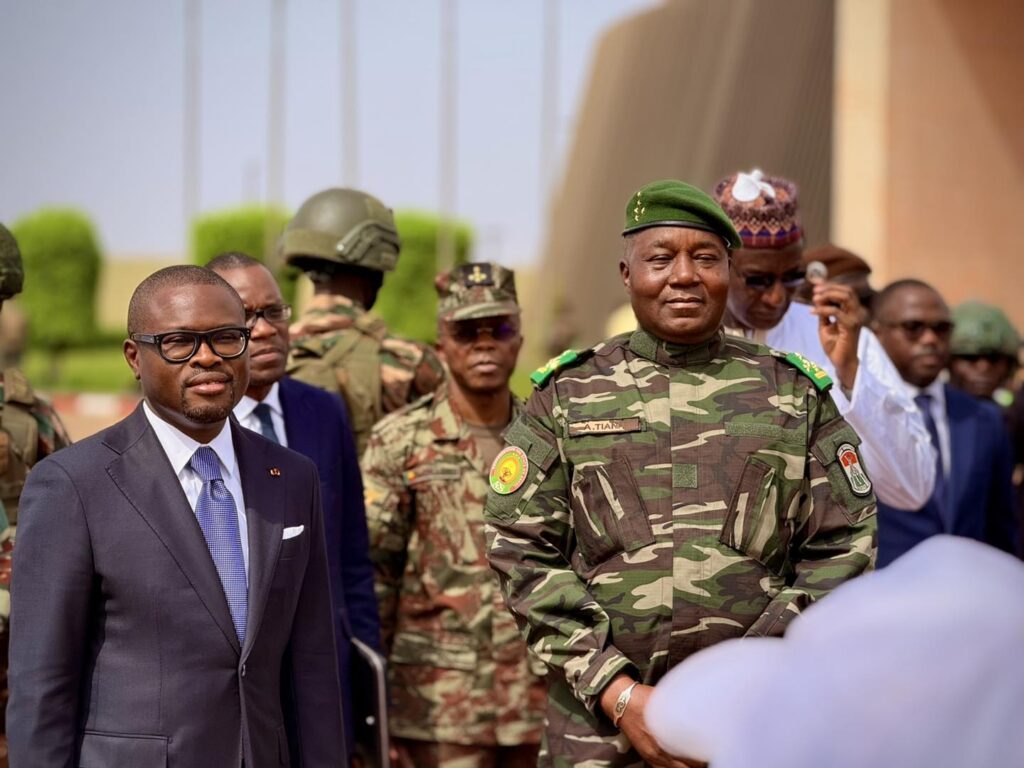
In a decisive move to recalibrate regional alliances, the newly inaugurated President of Bénin, Romuald Wadagni, has embarked on an unprecedented diplomatic mission to Niamey and Ouagadougou. This strategic tour, initiated shortly after his ascension to power, underscores a concerted effort to mend strained relations with the Alliance of Sahel States (AES) and reaffirm Bénin’s pivotal role in West African geopolitics.
The swift succession of official visits—commencing on June 2nd—reflects a deliberate shift from past diplomatic tensions. Following his meeting with Niger’s transitional leader, General Abdourahamane Tiani, President Wadagni will proceed to Burkina Faso to engage with Captain Ibrahim Traoré. The itinerary further extends to Lomé, Abidjan, and Accra, signaling a broader commitment to regional cohesion.
Economic pragmatism as a cornerstone of diplomacy
The choice of Niger and Burkina Faso as inaugural destinations is far from coincidental. Over recent years, relations between Cotonou and these AES capitals have been marred by border closures, disruptions in oil transit via the Sèmè-Kpodji pipeline, and mutual allegations of undermining regional stability. As a former Minister of Economy and Finance, President Wadagni approaches these challenges with a results-driven mindset, prioritizing economic revival as a catalyst for diplomatic thaw.
For Bénin, the normalization of trade corridors with the Sahel is not merely a diplomatic nicety—it is an economic imperative. The Port Autonome de Cotonou, a critical regional hub, stands to benefit significantly from the reopening of Niger’s border and the resumption of oil and goods transit.
Three strategic pillars of engagement
The administration’s diplomatic offensive is structured around urgent priorities:
- Cross-border security: With jihadist threats intensifying along Bénin’s northern frontier with Burkina Faso and Niger, restoring military cooperation and intelligence-sharing frameworks is deemed non-negotiable by defense officials.
- Trade reconciliation: Rebuilding trust with Niamey is essential to reactivate oil exports and revitalize commercial transit, both of which have been severely constrained in recent years.
- Regional balance: Subsequent visits to Togo, Côte d’Ivoire, and Ghana will position Bénin as a mediator, ensuring the country does not become collateral damage in the widening rift between West African blocs.
Navigating obstacles on the path to reconciliation
While the initiative has garnered cautious optimism from business circles and regional analysts alike, the road to substantive reconciliation remains fraught with challenges. Resolving long-standing disputes will demand more than symbolic gestures; it will require concrete commitments and sustained dialogue.
By initiating this diplomatic blitzkrieg in the earliest days of his presidency, Romuald Wadagni has staked his claim to a foreign policy characterized by boldness, pragmatism, and economic realism. In an era of shifting alliances, such an approach may prove indispensable in safeguarding Bénin’s interests and stabilizing a region in flux.