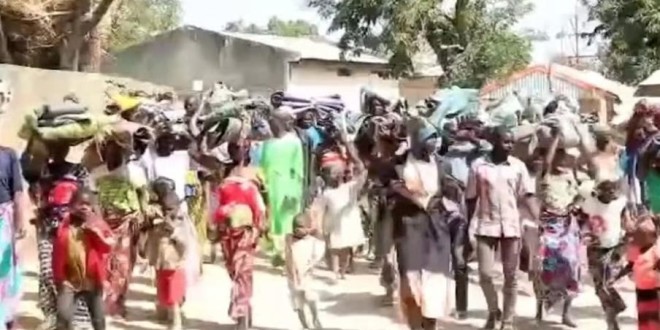
Mayo-Tsanaga ravaged by Boko Haram as state response falters
Over 50 villages abandoned, thousands displaced, and a state that turns a blind eye to the suffering.
The terror unleashed by Boko Haram is no longer a distant threat in the Mayo-Tsanaga region. Since crossing from Nigeria’s Borno State into Cameroon in 2014, the insurgency has taken root, with the first Cameroonian village struck being Tourou’s Gossi, near Mokolo. For over a decade, the cycle of violence has persisted—burning homes, killing indiscriminately, looting, and abducting civilians. Schools, health centers, and places of worship have all become targets. Yet, despite the relentless attacks, a lasting solution remains elusive.
Empty villages and abandoned lands
From Mokolo to Koza and beyond, the landscape tells a story of abandonment. More than 50 villages in Mayo-Tsanaga have been left deserted, their inhabitants either massacred or forced to flee. Among the most affected are Gossi, Tourou, Vizik, Ldamang, Magoumaz, and dozens of others. In May 2022, Mokolo’s deputy mayor, Mahadek Nicolo Nouhou, reported to the Minister of Public Health, Manaouda Malachie, that ten villages had been completely deserted, two were under insurgent control, and seven others faced regular raids. The situation has only worsened since then.
Residents of Tourou voice their despair: “We feel abandoned, as if our leaders and the government have forgotten about us. Are we not Cameroonian citizens worthy of protection?” The fear is palpable. By night, men flee to mountain caves, sharing shelter with snakes and other hazards. By dawn, they return to till their fields, only to face the next wave of terror.
A state absent in the face of terror
When militants struck Ldamang and Ldubam in June 2026, only two soldiers were present to defend the villages. Against heavily armed insurgents, these soldiers stood no chance. Local vigilance committees, armed with rudimentary tools, are left to fend for themselves. The state’s response has been woefully inadequate—military deployments are minimal, and promises from politicians ring hollow.
Visits by ministers and declarations of solidarity have done little to change the reality on the ground. After the cameras leave, the attacks resume. Mokolo, Koza, and countless other villages remain under siege. The question lingers: How many more villages must be reduced to ashes before this crisis becomes a national priority?
Displacement and shattered lives
The exodus from Mayo-Tsanaga has reached staggering proportions. Over 9,000 people have been displaced, with the number climbing as attacks intensify. In early July 2026 alone, nearly 300 families from Mokolo sought refuge in Kalfou, over 200 kilometers away. These families abandon not just their homes but their identities—birth certificates, national IDs, and generations of memories reduced to ashes.
The human cost is devastating. Children separated from their parents in the chaos of attacks are left to fend for themselves. Many drop out of school, while others turn to crime or face exploitation. Young girls, robbed of hope, see their futures dim. The region’s agriculture collapses, schools close, and the local economy crumbles. Without urgent intervention, Mayo-Tsanaga risks irreversible depopulation.
The state cannot afford to ignore its citizens simply because they live far from Yaoundé. The silence is not an oversight—it is a choice. When will the cries of the people of Mayo-Tsanaga be heard?