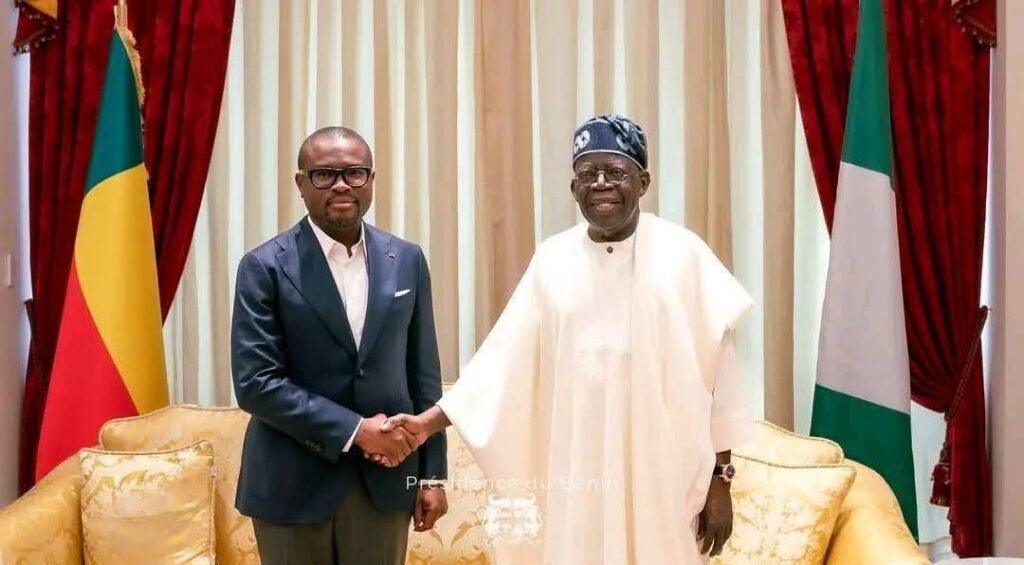
In a bold statement of intent, Benin’s newly inaugurated President, Romuald Wadagni, wasted no time in staking his claim on the international stage. Within days of assuming office on May 24, the leader set course for Abuja, Nigeria’s capital, marking his first official foreign visit. This deliberate choice was far from arbitrary—it was a calculated diplomatic maneuver signaling the priorities of his five-year tenure.
By selecting Nigeria as his maiden international destination, President Wadagni underscored the significance of bilateral ties and economic pragmatism in his administration’s foreign policy. The move was not merely symbolic; it was a strategic declaration that the economic powerhouse of West Africa would be central to Benin’s diplomatic calculus.
Nigeria: Benin’s cornerstone partner
Beyond geographical proximity, Nigeria stands as Benin’s most critical trade ally, dominating the economic landscape of the subregion. The decision to initiate diplomatic engagement with Abuja reflects a clear-eyed assessment of mutual interests.
In prioritizing this relationship, President Wadagni has signaled a commitment to deepening cooperation, ensuring seamless trade flows, and fostering a partnership where both nations emerge as winners.
Rebuilding trust and enhancing cooperation
The high-stakes meeting between Benin’s and Nigeria’s leadership was designed to lay the groundwork for a revitalized bilateral framework. Three core pillars emerged as the foundation of this renewed collaboration:
- Strengthening bilateral ties: Addressing past tensions to cultivate a climate of mutual trust and cooperation.
- Securing trade corridors: Harmonizing customs and border policies to facilitate formal, efficient, and mutually advantageous commerce.
- Co-development initiatives: Positioning Benin as a strategic service hub and gateway, rather than a passive participant in Nigeria’s economic dynamism.
A shift toward regional integration
This diplomatic offensive represents a departure from conventional approaches, emphasizing a hands-on, results-driven foreign policy. By focusing first on neighboring states, particularly those sharing borders and economic interests with Benin, President Wadagni has signaled a shift toward a more grounded, pragmatic diplomacy.
Analysts view this strategy as a shrewd move, one that prioritizes regional stability and economic synergy. By securing its immediate hinterland, Benin positions itself to navigate global challenges with greater resilience and leverage.
From rhetoric to reality
The true test of this diplomatic initiative will unfold in the coming months, as discussions translate into tangible agreements. For businesses operating across the shared border, the stakes could not be higher. The success of these negotiations will determine whether the vision of a mutually beneficial partnership becomes a lived reality.