Rural livelihoods hang in the balance as climate shocks intensify
The escalating frequency of droughts, floods, and erratic rainfall is crippling Benin’s agricultural output and eroding food security across nine frontline municipalities. From depleted soil moisture to flash-flooded lowlands, smallholder farmers face mounting losses that ripple through local markets, household incomes, and national food reserves. With 70 % of rural households relying on rain-fed agriculture, the consequences of climate variability extend far beyond field failures—threatening livelihoods, deepening poverty, and widening inequality in some of Benin’s most vulnerable districts.
Recognising the economic and social fallout, the Beninese government has earmarked 7.15 billion FCFA through the Integrated Climate Resilience Project for Vulnerable and Border Communities (PIRRCF). Launched in Sèmè-Podji, this 2026–2031 initiative aims to overhaul local economies by integrating climate-smart agriculture, renewable energy, water security, and digital innovation across nine municipalities.
Where investment meets impact: targeting nine municipalities
The project zeroes in on Sèmè-Kpodji, Sakété, Kétou, Savalou, Dassa-Zoumè, Djougou, Copargo, Ouaké, and Malanville—communities selected for their high exposure to climate risks and fragile economic footing. In these areas, unpredictable monsoons and degraded soils slash crop yields, while scarce water resources stifle both farm productivity and pastoral activities. The resulting income losses force households into distress sales of livestock, trigger rural-urban migration, and strain already thin social safety nets.
For residents of Malanville, where the Niger River’s erratic flow disrupts irrigation, the stakes are immediate: without reliable water access, rice paddies—critical to household food supplies—become barren. Similarly, farmers near Ouaké watch helplessly as droughts shrivel maize and yam harvests, their children’s meals shrinking alongside their incomes. By addressing these systemic vulnerabilities, PIRRCF seeks to cushion communities from the financial blow of climate extremes.
Water security and renewable energy: the twin pillars of climate-proofing
A cornerstone of the programme is constructing critical water infrastructure to decouple agriculture from rainfall dependence. Key deliverables include:
- Three new water retention ponds to store runoff for dry-season irrigation
- Two lowland reclamation schemes to reclaim flood-prone cropland
- Five micro-drip irrigation systems to conserve water and boost yields
- Twelve pastoral boreholes to improve livestock access to clean water
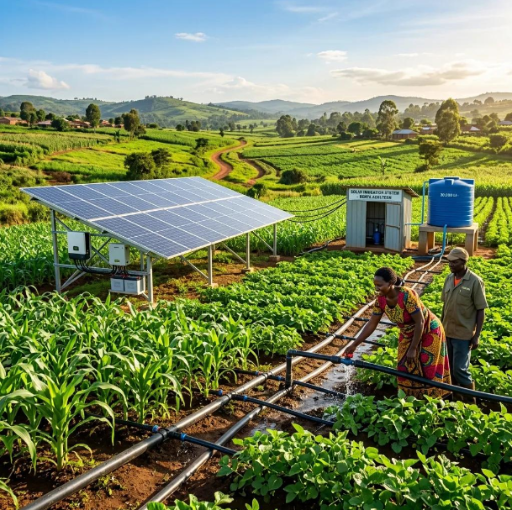
Complementing these efforts, solar-powered pumping stations will halve energy costs for water access while reducing carbon footprints. This dual approach not only stabilises agricultural production but also unlocks new economic opportunities—such as market gardening in the dry season—thereby diversifying incomes and reducing risk exposure.
From fields to wallets: broader economic transformation
Beyond farmland, the project injects life into local construction markets by promoting eco-friendly, locally sourced materials like compressed-earth bricks and stabilised soil blocks. This shift cuts import bills, lowers building costs, and creates jobs for artisans, masons, and micro-entrepreneurs—especially women and youth who dominate the informal construction sector.
Digital tools are another frontier. Mobile apps delivering weather forecasts, soil-moisture data, and market prices empower farmers to make data-driven decisions. Early adopters report up to 25 % reductions in input waste and 15 % higher revenues. By bridging the tech divide, the initiative positions rural Benin at the forefront of climate-smart innovation.
Numbers that matter: who benefits and how
The PIRRCF targets 31,687 direct beneficiaries—over 12,300 of them women—with ripple effects anticipated for 1.5 million residents across the nine communes. Within five years, the project aims to:
- Train 20,000 farmers and pastoralists in climate adaptation strategies
- Lift agricultural productivity by 20 % through climate-resilient practices
- Boost net incomes for 10,000 households by at least 30 %
- Generate 5,000 direct jobs and 15,000 indirect jobs in agriculture, energy, and digital services
These targets translate into tangible gains: fewer school drop-outs as families stabilise incomes, reduced malnutrition as food security improves, and renewed confidence among rural youth who can now envision careers in green tech and agri-business.
Can the initiative deliver? Turning promises into progress
While the 7.15 billion FCFA allocation—shared among Benin, Belgium, Switzerland, the municipalities, and UNDP—provides a solid financial footing, execution will determine success. Challenges include ensuring equitable distribution of water infrastructure across scattered villages, avoiding elite capture of resources, and maintaining transparent procurement to prevent delays and cost overruns.
Local governments must spearhead community engagement, from participatory needs assessments to co-management of assets. Without grassroots buy-in, even the best-designed projects risk becoming white elephants. Meanwhile, farmers like those in Djougou and Copargo are watching closely, eager for tangible signs that the promised irrigation ponds and solar pumps will materialise before the next dry spell.
The ultimate yardstick for PIRRCF’s success will be its ability to transform climate vulnerability into climate resilience—moving from emergency interventions to lasting economic stability. For Benin’s rural heartlands, the cost of failure is hunger, debt, and continued outmigration. The programme’s legacy will hinge on whether it can flip the script from climate despair to climate opportunity.