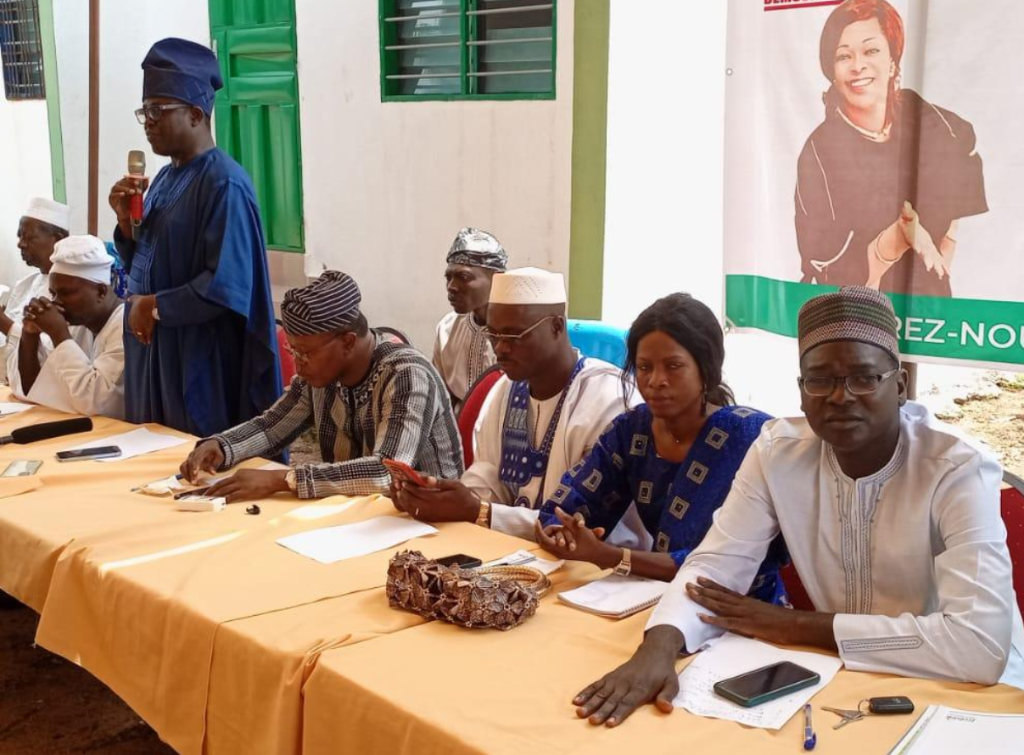
The prolonged legal battle between Éric Houndété and Nourénou Atchadé over leadership of Benin’s Les Démocrates party has taken a new turn, with the appeal court ruling now postponed until 14 January 2027. This delay extends the uncertainty gripping the country’s main opposition party—just as its internal restructuring attempts to move forward. The普通 congress held on 11 October 2026, which elected Atchadé as party president, adds another layer of complexity to a crisis that risks destabilizing Benin’s political landscape and economic confidence.
The leadership vacuum and its ripple effects
The dispute over Thomas Boni Yayi’s succession has paralyzed Les Démocrates, creating a leadership void that threatens to weaken the party’s influence ahead of critical elections. With the appeal hearing now pushed to January 2027, businesses aligned with the opposition face prolonged instability, while citizens question the party’s ability to present a unified front against the ruling administration. The longer the legal battle drags on, the greater the risk of eroding public trust and investor confidence in Benin’s political opposition.
From internal strife to judicial standoff
The crisis erupted in March 2026 when Boni Yayi stepped down as party president for health reasons, triggering a bitter succession struggle. Éric Houndété, the then-acting president, challenged Nourénou Atchadé’s appointment, alleging violations of the party’s internal statutes. What began as an internal dispute quickly escalated into a full-blown legal battle, with both sides digging in their heels. The standoff now hinges on a critical question: can a party consolidate its leadership when the very legitimacy of that leadership remains under judicial scrutiny?
A legal victory, but no resolution
On 29 April 2026, the Cotonou Court of First Instance ruled in favor of Atchadé, affirming his leadership—only for Houndété’s legal team to appeal the decision. Since then, repeated adjournments have delayed a final verdict, with the latest postponement pushing the case into early 2027. For Les Démocrates, the stakes extend beyond personal ambition: the ruling will determine not just who leads the party, but who holds the authority to make binding decisions on its behalf. Until then, the party remains trapped in a state of limbo, unable to fully assert its political weight.
The October congress: a political gamble
Undeterred by the ongoing legal challenge, Atchadé’s faction pressed ahead with a party congress on 11 October 2026, formally electing him as president. The move was a bold statement of political intent, signaling a determination to govern the party regardless of the judicial outcome. However, the congress does not resolve the underlying legal dispute. Houndété’s camp retains the right to pursue its appeal, meaning the party’s future still hangs on the court’s eventual ruling. The tension between political maneuvering and legal proceedings continues to shape the crisis, leaving militants and supporters in a state of suspended animation.
Economic and social fallout of a divided opposition
The prolonged infighting has already taken a toll. Les Démocrates, once a formidable force in Benin’s political arena, now struggles with diminished electoral performance and weakened institutional representation. For local businesses and international partners, the party’s disarray raises concerns about stability. A fragmented opposition could struggle to hold the government accountable, potentially slowing reforms and deterring investment. Meanwhile, grassroots supporters risk disengagement, as internal divisions blur the party’s message and dilute its impact.
14 January 2027: will the court provide clarity?
The upcoming appeal hearing is poised to be a pivotal moment. Yet even if the court delivers a definitive ruling, the damage may linger. Legal clarity will not automatically heal the deep political rifts within the party. The real challenge for Les Démocrates will be rebuilding unity—convincing factions, supporters, and allies that the party can once again speak with one voice. Without reconciliation, the crisis could outlast the court’s decision, crippling the opposition’s ability to shape Benin’s future.
Ultimately, the Houndété-Atchadé dispute is more than a leadership contest. It is a test of whether Les Démocrates can overcome internal fractures to remain a credible force in Benin’s democracy—or risk fading into irrelevance.