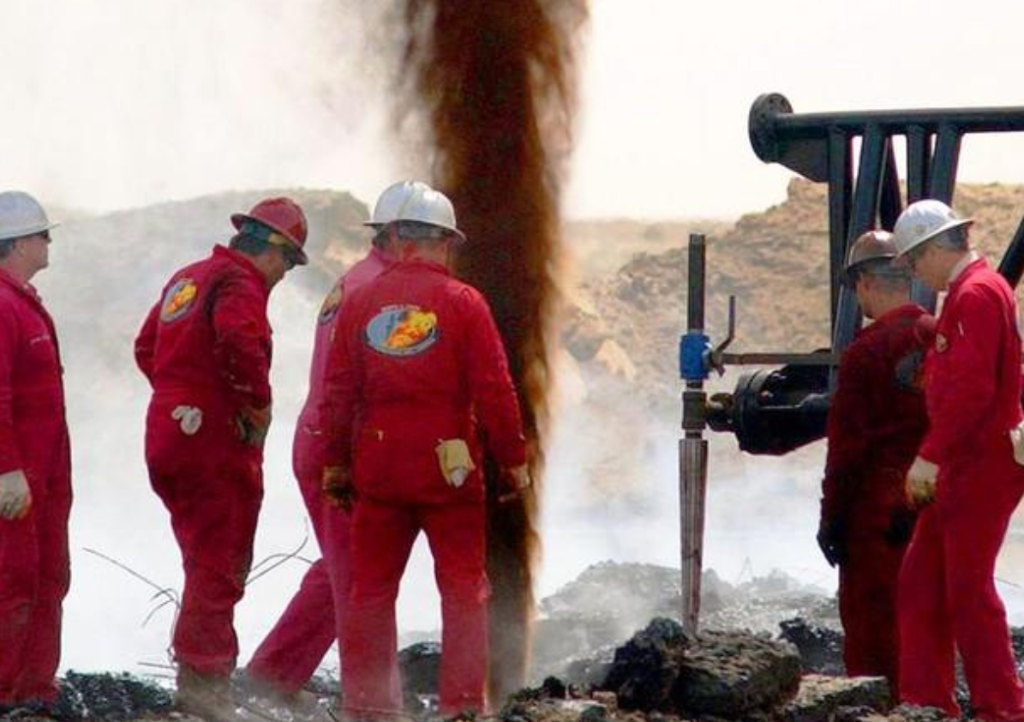
The eruption at Goumeri W8 wasn’t just an industrial mishap—it was a turning point that exposed deep fractures in Niger’s oil partnerships. As crude oil spewed uncontrollably, the incident triggered environmental alarms, sparked diplomatic tensions with China, and forced Niamey to confront the real-world consequences of its energy alliances. Now, businesses, citizens, and the economy are feeling the ripple effects of a crisis that refuses to stay contained.

An industrial emergency with far-reaching stakes
In the Agadem basin, where CNPC Niger Petroleum operates the Goumeri W8 site, the September 25 eruption didn’t just disrupt production—it upended a delicate web of economic, technical, and diplomatic interests. The immediate priority was clear: stop the leak, secure neighboring wells like Goumeri W3 and W4, and prevent further environmental damage. Yet, as crews raced against time, a larger question loomed: who truly controls the response in Niger’s oil fields?
By October 12, the Nigerien Ministry of Oil acknowledged the severity of the incident, reporting two workers hospitalized and a situation only partially under control. The stakes couldn’t be higher. In an industry where precision is non-negotiable, a single misstep—whether in coordination, timing, or risk assessment—could turn a bad situation catastrophic. And at Goumeri W8, the coordination itself became a flashpoint.
The algerian intervention: expertise or escalation?
When Niger’s authorities called in Algerian technicians from Sonatrach to assist, they tapped into regional expertise. Officially, the move was framed as a necessary boost to tackle a complex crisis. Yet, according to sources close to the matter, the arrival of Algerian specialists sparked disagreements with CNPC over operational control. Were these tensions genuine, or merely a symptom of the broader unease between Niamey and its foreign partners?
What’s undeniable is the urgency of clarity. On a site operated by CNPC, any intervention—especially one mandated by the government—must fit into a clear chain of command. Without defined roles, verified technical protocols, and transparent decision-making, even the most skilled experts risk deepening the chaos. For the people of Niger, the question isn’t just who’s in charge—it’s whether that leadership can prevent lasting harm.
The environmental cost of containment cannot be ignored. Bulldozers carved out barriers to stop the oil’s spread, but such measures are a short-term fix. Buried under sand, hydrocarbons don’t vanish—they linger, threatening groundwater, soil, and the health of nearby communities. With no independent assessments yet, claims of containment ring hollow. Until thorough testing and remediation plans are public, the true scale of the damage remains unknown.
The 400 million dollar fault line
The Goumeri W8 crisis didn’t emerge in a vacuum. It’s a symptom of a much larger financial and strategic standoff. In April 2024, Niger secured a $400 million advance from CNPC against future oil revenues—a deal with a 7% interest rate, to be repaid within a year. This lifeline highlighted Niger’s reliance on Chinese investment, which has poured $8.34 billion into the sector by mid-2026, transforming infrastructure, refineries, and export pipelines.
But that financial lifeline has come with strings attached. The advance was more than a loan—it was a reminder of how deeply intertwined Niger’s oil economy is with its Chinese partners. Now, as disagreements over revenue repatriation, local hiring, and contract compliance escalate, Niamey’s ultimatum to CNPC, WAPCO, and SORAZ—demanding answers within 45 days—signals a breaking point. Foreign Minister Bakary Yaou Sangaré’s claims of 3 trillion CFA francs in unrepariated export earnings and 17.4 billion CFA in lost treasury revenue underscores the high stakes.
If the demands go unmet, the fallout could reverberate far beyond Goumeri W8.
A sovereignty test with no easy answers
Niger’s push for greater control over its oil sector is about more than money. It’s a test of sovereignty—one that requires balancing economic demands with operational reality. Can Niamey enforce its contracts without destabilizing the very partnerships its economy depends on? The crisis at Goumeri W8 forces the question: how does a nation assert ownership over its resources while ensuring the safety of its people and the stability of its industries?
Algeria’s involvement adds another layer of complexity. Sonatrach’s expertise is undeniable, but its presence raises questions about the division of labor between Beijing, Algiers, and Niamey. Without clear agreements, even well-intentioned assistance risks becoming a diplomatic liability.
For now, the immediate priority remains stopping the leak. A relief well, Goumeri W-8R, is planned between October 24 and December 26, but that won’t address the broader issues. The real challenge lies in proving that Niger’s oil wealth can fuel development—not just tension.
Ultimately, the fallout from Goumeri W8 will be measured not in barrels contained or dollars recovered, but in the lasting impact on Niger’s people, its environment, and its economic future.