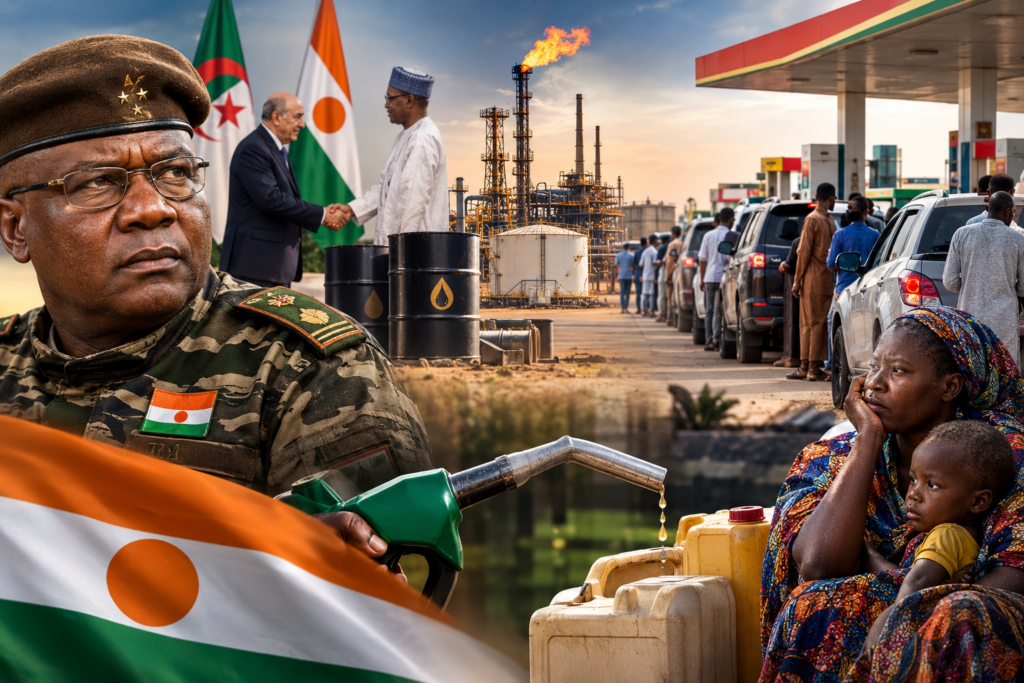
The recent security agreement between Algeria and Niger comes at a pivotal moment for Niamey, raising pressing questions about its real-world impact. As the government pursues high-profile diplomatic and strategic partnerships in the name of national sovereignty, one stark reality persists: how can an oil-producing nation face chronic fuel shortages that disrupt daily life for its citizens?
The paradox is undeniable. Niger boasts oil reserves and has invested in extraction and refining infrastructure. Yet, fuel shortages continue to plague domestic markets, creating long queues at petrol stations, crippling transportation, and stalling economic activities. The burden falls squarely on ordinary citizens, small businesses, and transport operators, who bear the brunt of these supply chain failures.
Beyond production: the critical gaps in distribution
The issue extends far beyond oil extraction. The true challenge lies in how these resources are managed, distributed, and allocated. Where does Niger’s crude oil go once it is extracted? How much is earmarked for domestic consumption, and how much is exported and under what terms? The refining, storage, and logistics systems in place must be scrutinised to determine whether they adequately meet the country’s needs. Without clear, data-backed answers, the gap between resource wealth and public benefit will only widen.
Foreign partnerships under scrutiny
The growing involvement of international actors in Niger’s strategic sectors demands closer examination. The deepening ties with Russia, a key partner for several Sahelian military regimes, raise concerns about the economic and security implications of such agreements. While these collaborations may address immediate geopolitical concerns, they do little to resolve the persistent domestic shortages that undermine economic stability.
Transparency as the cornerstone of true sovereignty
If Niger’s leadership champions sovereignty over its natural resources, this claim must be backed by tangible outcomes: consistent fuel supply, affordable prices, and transparent management of oil revenues. Sovereignty cannot be measured solely by the number of international pacts signed or the influence of foreign allies. Its true test lies in the government’s ability to convert its resources into direct benefits for its people.
A security pact cannot mask economic failures
While the Algerian-Niger security partnership addresses legitimate regional threats, diplomatic agreements alone cannot solve the country’s daily economic struggles. Security cooperation, no matter how robust, is no substitute for a coherent energy policy or transparent resource governance. The persistent fuel shortages expose a fundamental disconnect: how can Niger claim economic independence when its own citizens face constant uncertainty at the pump?
For Niamey, the priority must now be to address the systemic inconsistencies within its oil supply chain. Clarifying the causes of the shortages, assigning accountability, and ensuring that strategic decisions serve national interests above all else are non-negotiable steps. Until the fuel crisis is resolved, declarations of economic autonomy will continue to ring hollow overshadowed by a single, unanswered question: who truly benefits from Niger’s oil wealth, and when will its people see the dividends?
By Marguerite Ndongo — Journalist