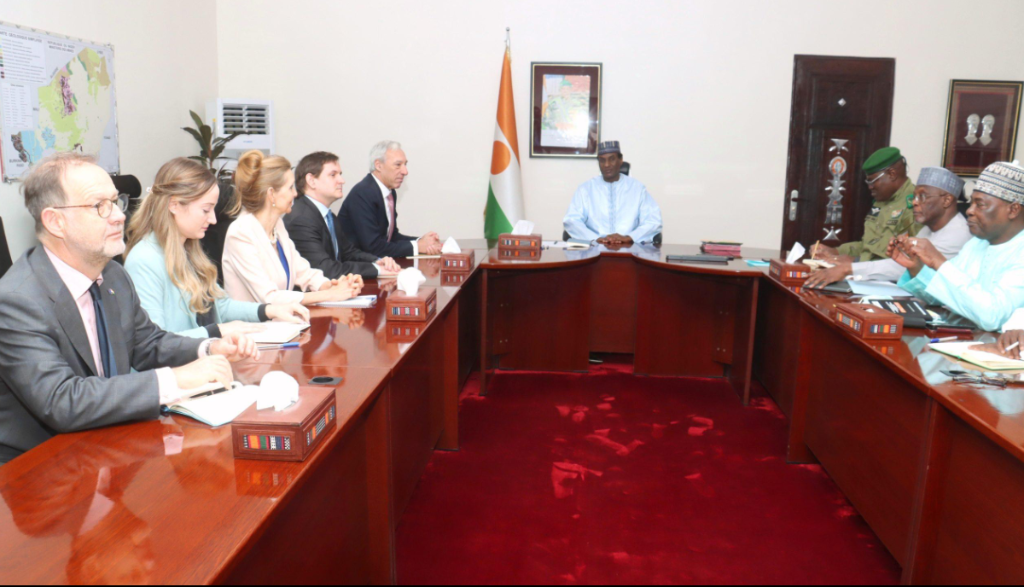
The accreditation of Niger’s new ambassador to the European Union signals a fragile but persistent diplomatic thread between Niamey and Brussels—one that carries weighty consequences for citizens, businesses, and the broader economy. On 22 October, Adamou Moumouni formally presented his credentials to António Costa, president of the European Council, and Ursula von der Leyen, president of the European Commission. This act, though ceremonial, unfolds against a backdrop of deep political rifts, a disputes over humanitarian aid, and the unresolved status of former president Mohamed Bazoum—all factors that have already sent shockwaves through Niger’s social and economic fabric.
Diplomatic channels remain open despite deep divisions
Since the military coup on 26 July 2023 ousted Mohamed Bazoum, relations between Niger’s transition government and European institutions have been strained. Disagreements over governance, humanitarian cooperation, and Bazoum’s detention have tested ties. Yet, the decision to maintain diplomatic representation in Brussels underscores a pragmatic recognition: even amid political friction, dialogue remains critical. For Niger, this means safeguarding national interests; for the EU, it offers a pathway to address pressing regional concerns, from security to economic stability.
The humanitarian aid dispute that exposed a systemic clash
In November 2024, a €1.3 million EU aid package for flood victims sparked a full-blown crisis. Niger’s foreign ministry argued the assistance—channelled through international NGOs like the International Committee of the Red Cross and the Danish Refugee Council—had been allocated without sufficient consultation. Officials insisting the government could manage relief independently demanded the withdrawal of the EU ambassador, Salvador Pinto da França, in October 2024.
The EU countered by defending its humanitarian principles—neutrality, impartiality, and independence—while warning against the politicisation of aid. Brussels recalled its ambassador for consultations, highlighting a fundamental divide: Niger’s demand for sovereign control over interventions on its soil versus the EU’s commitment to mechanisms that bypass political interference.
Beyond the diplomatic standoff, the real casualties were flood-affected communities, caught in the crossfire of institutional pride and procedural rigidities.
Bazoum’s detention: a fault line in eu-Niger relations
By March 2026, tensions resurfaced when the European Parliament adopted a resolution condemning Mohamed Bazoum’s continued detention and calling for his unconditional release. The vote—524 in favour, two against, with 29 abstentions—reflected broader EU concerns about Niger’s democratic trajectory. For Niamey, however, such external interference in what it deems internal affairs only deepened resentment, reinforcing a narrative of sovereignty under siege.
This disagreement transcends Bazoum’s personal situation. It embodies the broader mismatch between Niger’s post-coup governance model and the EU’s expectations for democratic norms, further complicating any prospect of normalised relations.
Why Niamey keeps engaging with brussels
In a region plagued by security threats, economic fragility, and humanitarian emergencies, Niger cannot afford to sever all ties with international partners. The accreditation of Adamou Moumouni thus serves a dual purpose: it keeps communication lines open while allowing Niamey toassert its positions on the global stage. For the EU, maintaining dialogue ensures a foothold in the Sahel, where instability in Niger has regional repercussions.
Yet, symbolic gestures alone won’t bridge the divide. A true thaw in relations would require tangible progress: restored trust on humanitarian coordination, constructive dialogue on governance, and a resolution to high-profile disputes like Bazoum’s case.
Between dialogue and deadlock: what’s next?
Does Niger’s latest diplomatic move signal a reversal of its hardline stance? Not necessarily. The presentation of credentials is neither a surrender nor a reconciliation. It is, instead, a calculated effort to balance sovereignty with practical necessity. The coming months will reveal whether this approach can yield meaningful cooperation—or if both sides will remain locked in a cycle of official engagement without substantive alignment.
For Niger, the challenge lies in reconciling defiance with the need for international support. For the EU, it means navigating the fine line between upholding principles and preserving influence in a volatile region. Until concrete steps are taken, the path forward remains uncertain, and the consequences of prolonged tension will continue to ripple across lives and markets.