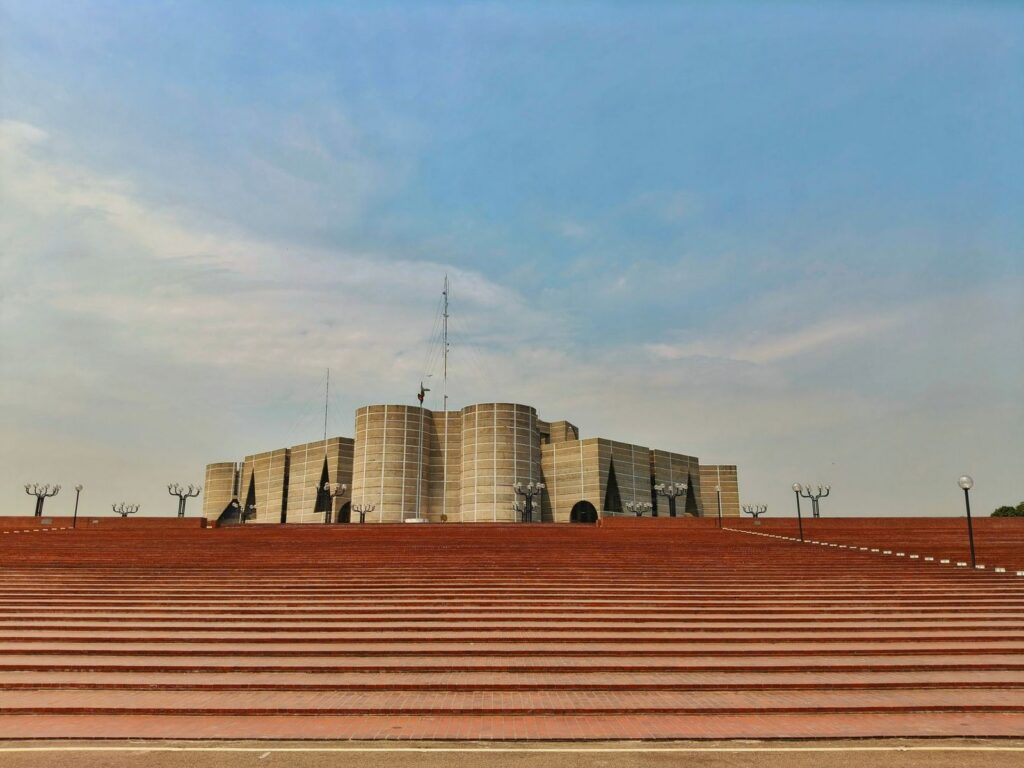
The Béninese Senate held its inaugural session this Thursday in Porto-Novo, officially ushering the nation into a bicameral parliamentary system. This newly established legislative chamber, whose creation was formalized by a constitutional revision, now joins the National Assembly, fundamentally reshaping Bénin’s institutional framework. Its implementation represents one of the most extensively debated political initiatives of President Patrice Talon’s second term.
This establishment unfolds amidst a political climate still influenced by tensions stemming from recent electoral cycles and a significant restructuring of the partisan landscape. For the executive branch, bicameralism is envisioned to provide a secondary review of legislative texts, introduce a moderating influence on the National Assembly’s decisions, and enrich public discourse. Critics, however, question the budgetary implications and the democratic appropriateness of adding an upper house in a country with a population of fewer than thirteen million.
A re-envisioned institutional architecture
Until recently, Bénin operated under a monocameral model, a legacy of the 1990 National Conference, which was widely regarded as a cornerstone of West African democratic renewal. The transition to bicameralism breaks with this tradition, aligning Cotonou more closely with models observed in several neighboring countries, where a second chamber typically represents local authorities, traditional leaders, or intermediary bodies. The new Senate is tasked with reviewing draft laws and proposed legislation in a second reading, aiming for greater normative stability.
The constitutional revision championed by the presidential majority outlines a composition that blends indirectly elected members with designated personalities, through mechanisms that will now be put to the test. The methods of appointment, the length of terms, and the precise interaction with the National Assembly are among the most closely scrutinized aspects by observers of Béninese political life. Additionally, questions persist regarding the new chamber’s exact powers in budgetary, constitutional, and governmental oversight matters.
A political litmus test for the Talon executive
The launch of the Senate also serves as a critical test for Patrice Talon’s institutional legacy, as his second mandate concludes in 2026. The head of state has made institutional reform a central pillar of his agenda, alongside major economic projects outlined in the Government Action Program. While the new chamber could offer the executive an additional platform to consolidate political balances, it may also become an avenue for voices and perspectives that have struggled to gain traction within the National Assembly.
Opposition parties, long marginalized by stricter electoral participation rules, are cautiously observing the operationalization of this second chamber. The gradual re-entry of political groups like Les Démocrates into the national legislative body had already reconfigured parliamentary debate in 2023. The Senate’s emergence could further intensify this political recomposition, depending on the profiles of the appointed senators and the degree of autonomy they are granted in relation to the presidential majority.
Economic and diplomatic stakes
From a budgetary standpoint, the establishment of a second chamber necessitates additional operating expenditures, a point the government will need to justify to both international donors and the public. Bénin, which boasts one of West Africa’s most robust growth trajectories, is keen to maintain its financial credibility and appeal to investors. The consistency between institutional reform and fiscal discipline will be closely watched by international partners, particularly the International Monetary Fund and the World Bank.
Diplomatically, Bénin’s commitment to democratic consolidation remains a significant asset within a regional landscape marked by political upheavals in the Sahel. Cotonou aims to sustain its position as a reliable partner for the European Union, France, and the United States, while simultaneously expanding cooperation with Gulf countries and Asia. The clarity and perceived effectiveness of the new parliamentary structure will influence international perceptions of the country’s institutional stability.
It remains to be seen, in the coming months, how the Béninese second chamber will integrate into the legislative calendar, especially as the 2026 presidential election approaches. The Senate is commencing its legislative work this Thursday, July 30.




More Stories
Can Ousmane Sonko and Sadio Mané’s Bambali agro park truly transform Sédhiou?
Senegal’s palm oil gambit: can 60,000 hectares and Indonesian expertise finally end import reliance?
Can Burkina Faso’s military buildup succeed while its people keep fleeing?