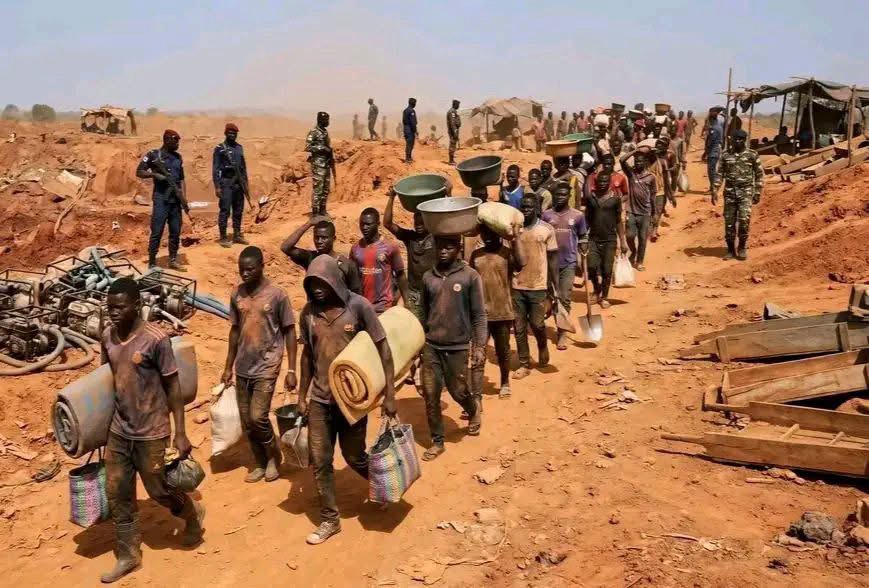
The ripple effects of transnational gold mining on regional communities
When citizens of one country cross into neighboring nations to engage in illegal gold mining, the consequences extend far beyond mere border transgressions. For communities in Benin, Ghana, and other parts of West Africa, the environmental and economic fallout is often devastating, leaving a trail of degraded farmlands, contaminated waterways, and irreparable ecological damage. While the financial allure of gold drives these clandestine operations, the true cost is borne by the very people who depend on these resources for survival.
The environmental toll is undeniable. Deforestation strips the land of its natural vegetation, while mercury used in extraction poisons rivers and soil, threatening both human health and agricultural productivity. Abandoned mining pits become death traps for livestock and children, while the chemical runoff contaminates drinking water sources. For local farmers, this means lost livelihoods and a fight for food security. The question is no longer just about illegal extraction it is about who pays the price when short-term gains destroy the foundations of long-term stability.
The environmental damage is undeniable. Deforestation strips the land of its natural vegetation, and mercury used in extraction poisons nearby rivers and soil, threatening both human health and agricultural productivity. Abandoned mining pits become death traps for livestock and children, while toxic runoff contaminates water sources.
For subsistence farmers, this means lost livelihoods and an uphill battle for food security. The issue is no longer just about illegal extraction it is about who assumes responsibility when reckless exploitation erodes the future of entire communities.
The burden of responsibility: why enforcement must be consistent
The challenge of addressing illegal mining does not rest solely with the countries whose lands are being exploited. It also demands a proactive stance from Burkina Faso, where many of the miners originate. While the sovereignty of states to protect their citizens is legitimate, this principle must be balanced against the obligation to ensure that their actions do not harm neighboring nations. When enforcement agencies in affected countries take action such as expelling foreign miners the response from home governments should not be dismissive, but rather a recognition of the shared responsibility to uphold environmental integrity.
When enforcement agencies in affected countries take decisive action such as repatriating foreign miners the response from their home governments should not be dismissive. Instead, it should reflect a commitment to shared environmental stewardship.
Enforcement measures must be fair, transparent, and proportionate. Accusations of targeting specific nationalities cannot overshadow the need to protect ecosystems and public health. The expulsion of miners is not an act of hostility; it is a necessary step to preserve the environmental and economic stability of the host nation. Governments must also take responsibility for investigating allegations of involvement in illegal mining and holding individuals accountable, rather than reflexively defending them without regard for the consequences.
Governments must take responsibility not only for protecting their citizens abroad but also for ensuring that their actions do not inflict harm on neighboring states. Expulsion of miners should not be met with denial or recrimination; it should be met with a commitment to upholding environmental laws and respecting the rights of affected communities.
Environmental solidarity: a regional duty, not a suggestion
Environmental protection cannot be subject to double standards. The same logic that justifies resisting illegal mining in one country must apply universally. The fertile lands of Burkina Faso are no less deserving of preservation than those of Ivory Coast or Nigeria. When lands are stripped of their natural resilience, the effects are irreversible. Soil erosion, water scarcity, and biodiversity loss do not recognize borders they create a cycle of degradation that ultimately undermines regional development.
Soil erosion, water scarcity, and biodiversity loss do not recognize borders. They create a cycle of environmental decline that undermines regional stability and development.
This principle must guide every West African nation. If a community in Ghana resists the destruction of its cocoa fields, its stance deserves the same global attention as when Burkina Faso advocates for the protection of its mineral resources. Solidarity in environmental protection is not optional it is a prerequisite for sustainable growth and peaceful coexistence.
If a community in Ghana resists the destruction of its cocoa fields, its stance deserves the same global attention as when Burkina Faso defends its mineral resources. Solidarity in environmental protection is not optional; it is a prerequisite for sustainable growth and regional cohesion.
What lies ahead: prevention, accountability, and regional cooperation
The solution lies not in confrontation but in cooperation. Governments must invest in alternative livelihoods for miners, ensuring that communities are not forced into illegal activities due to economic desperation. Investigations must be thorough, sanctions appropriate, and prevention strategies robust. Joint border patrols, information-sharing platforms, and education campaigns on sustainable mining practices can significantly reduce the appeal of clandestine operations.
However, the most critical step is a shift in mindset. Citizens of Burkina Faso must recognize that the consequences of illegal mining are not confined to foreign soil. The contamination of water supplies, the loss of arable land, and the vulnerability of local populations are realities that could one day impact their own communities. The principle of environmental justice is universal what is deemed unacceptable when suffered as a victim must be equally condemned when perpetrated by one’s own nationals.
Citizens of Burkina Faso must recognize that the consequences of illegal mining are not confined to foreign soil. The contamination of water supplies, the loss of arable land, and the vulnerability of local populations are realities that could one day impact their own communities. The principle of environmental justice is not selective what is deemed unacceptable when suffered as a victim must be equally condemned when perpetrated by one’s own nationals.
The fight against illegal mining is not a clash of nationalities it is a collective struggle for survival. By fostering a culture of environmental accountability, West African nations can protect their shared future and ensure that greed never prevails over sustainability.
By Marguerite Ndongo — Journalist