- Bénin
- Politics
Bénin’s regional diplomacy: Wadagni’s strategic shift in west africa
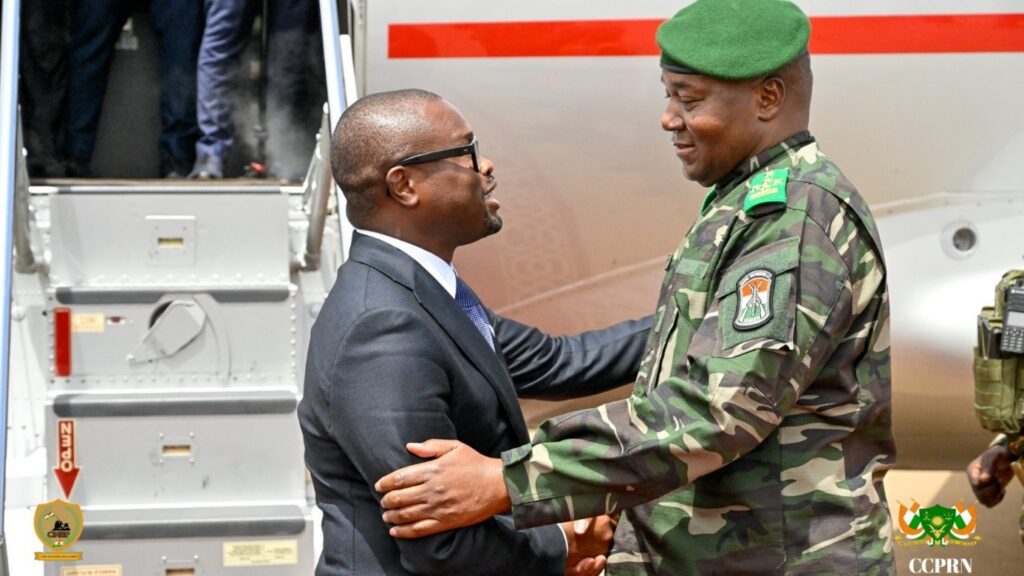
Within months of taking office, Bénin’s president Romuald Wadagni launched a bold diplomatic offensive across west Africa. Following high-level exchanges with Nigeria, the head of state embarked on visits to Niger and Burkina Faso—nations grappling with complex geopolitical tensions, mounting security threats, and shifting regional alliances. This regional tour marks one of the first major tests of his foreign policy vision and his ambition to reposition Bénin as a key mediator in west African affairs.
The visit to Niger carried particular symbolic weight. Since the July 2023 coup in Niamey, relations between Bénin and Niger had deteriorated sharply, strained by political disagreements, border disputes, and disrupted trade. Wadagni’s arrival, however, presents a fresh opportunity to rebuild dialogue. Observers noted that the presence of Niger’s prime minister at Wadagni’s inauguration signaled an early gesture of reconciliation.
By prioritizing visits to neighboring capitals, the new president underscored a core principle: Bénin’s stability cannot be separated from that of its regional partners. This pragmatic approach favors collaboration over confrontation in an area fractured by political divisions and security crises.
Security challenges take center stage
Security concerns dominated discussions during the tour. Northern Bénin continues to face spillover threats from armed groups active across the Sahel. The porous borders with Niger and Burkina Faso remain hotspots for terrorist infiltration, demanding urgent regional coordination.
While Bénin’s diplomatic stance may differ from that of the Sahel Alliance members, ground realities require closer military and intelligence-sharing partnerships. Wadagni faces the dual challenge of forging effective security cooperation while safeguarding Bénin’s strategic interests and international alliances.
Reviving regional economic ties
Beyond security, economic cooperation emerged as a critical focus. Niger remains a vital trade partner for Bénin, especially through the Cotonou port corridor linking coastal nations to Sahelian markets. Years of strained relations have taken a toll on trade flows, port revenues, and business activity. Restoring normalcy could unlock new opportunities for commerce, smoother goods transit, and deeper economic integration.
Nigeria, as west Africa’s economic powerhouse, also featured prominently in discussions. Talks between Wadagni and President Bola Ahmed Tinubu covered trade, energy, security, and regional integration—key pillars for sustainable growth.
The role of Bénin as a regional bridge
This diplomatic tour unfolds against a backdrop of deepening divides in west Africa. Relations between ECOWAS members and Sahel Alliance states remain strained, with political rifts complicating collective action. Bénin, with its ties to both coastal and Sahelian nations, is uniquely positioned to bridge these divides. Cotonou’s strategic location and diplomatic network could help foster dialogue and collective problem-solving.
Success, however, hinges on the willingness of regional actors to move past entrenched disagreements and embrace a shared vision for security and development.
Opportunities and obstacles ahead
The tour offers promising prospects: rebuilding trust with Sahelian neighbors, reviving trade, and strengthening counterterrorism efforts. Yet significant hurdles remain. Governance disputes, sovereignty concerns, and external geopolitical influences continue to strain inter-state relations. Citizens’ expectations are equally high—demanding improved security, job creation, and sustainable development.
For Romuald Wadagni, this diplomatic initiative is more than a gesture of goodwill. It signals his commitment to positioning Bénin as a stabilizing force in a west Africa undergoing rapid transformation.