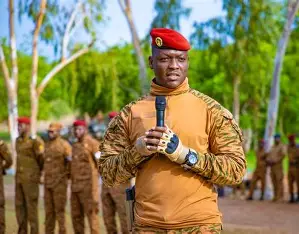
In a decisive move that reshapes the geopolitical landscape of West Africa, Burkina Faso has officially announced the termination of its diplomatic relations with France. This significant shift, declared on June 26, 2026, stems from serious allegations made by the leadership in Ouagadougou regarding neocolonial practices, interference in domestic affairs, and the alleged backing of networks aimed at destabilizing the nation. While this marks a historical low point in bilateral relations, it also triggers a fundamental debate: what does it truly mean to be a sovereign state?
The path from colonial rupture to national autonomy
Severing ties with a former colonial power is an undeniable assertion of political will. It is a choice that any independent nation is entitled to make. However, the core of the issue lies in whether this separation leads to genuine self-sufficiency or merely transitions the country into a different form of external reliance. This transition is a key focus for those following Faso current affairs.
Since 2023, Burkina Faso has been actively diversifying its international partnerships, notably strengthening its bonds with Russia, China, Turkey, and Iran. This strategic pivot has seen intensified military cooperation with Moscow and a search for fresh investment and trade opportunities with other global powers. Officials often describe this as a necessary shift toward a multipolar world order.
Multipolarity and the risk of new dependencies
Adopting a multipolar strategy does not automatically equate to independence. Authentic sovereignty is more than just a change of international partners. It requires that all strategic choices be made solely in the national interest, free from the political, military, or economic dictates of any foreign power, regardless of its origin. To many observers of English Burkina news, the challenge is ensuring that one influence is not simply replaced by another.
The actions taken by Burkina Faso have also placed a spotlight on its neighbors. There is growing speculation regarding whether Mali and Niger, the other members of the Alliance of Sahel States (AES), will mirror this diplomatic exit in the near future. For several years, these three nations have demonstrated a tightening alignment in their political and military strategies, particularly through their shared rapprochement with Russia.
A coordinated strategy for the Sahel?
If the other AES members follow suit, it would solidify the image of a unified regional strategy. Yet, this raises a pertinent question: are these decisions the result of independent national trajectories, or do they reflect a geopolitical roadmap coordinated by a common strategic partner? Some analysts suggest that if all three nations take identical steps, it may appear as though they are operating under a shared external influence rather than exercising individual sovereignty.
The historical reality is that major global powers typically prioritize their own strategic and economic interests. Therefore, moving away from Paris only to become heavily reliant on Moscow or Beijing might not represent a full conquest of sovereignty, but rather a shift in the center of influence.
Measuring true independence
The ultimate test for Burkina Faso will be to prove that this rupture is not merely a reshuffling of alliances. True success will be measured by the country’s ability to independently fund its own development, secure its borders, process its natural resources locally, and maintain robust, autonomous institutions. This is the standard for independent Burkina journalism to monitor in the coming years.
Sovereignty is not defined by the closing of embassies or the rhetoric of defiance. It is defined by the capacity of a nation to dictate its own future, to diversify its partnerships without falling under a new dominant shadow, and to ensure the needs of its citizens always come before the interests of foreign allies. A truly sovereign state does not exchange one guardianship for another; it builds the freedom to decide for itself.