When speaking out becomes a crime in Burkina Faso’s universities
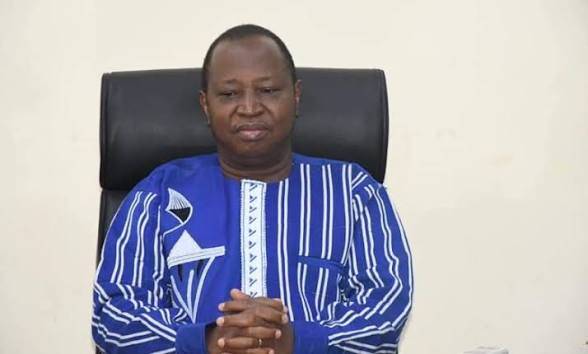
The air in Burkina Faso’s halls of higher learning has grown thick with fear. What began as a crackdown on student protests has escalated into a full-blown assault on academic freedom—and the consequences for the nation’s future are becoming impossible to ignore. At the heart of this storm stands Education Minister Professor Adjima Thiombiano, whose public remarks have sent shockwaves through universities both at home and abroad.
In a widely circulated speech, Thiombiano did more than criticize dissenting voices—he declared war on them. Young graduates from the diaspora, many of whom were educated abroad and brought back valuable skills, now face a stark ultimatum: refrain from voicing concerns about Burkina Faso’s education system or risk being branded as ‘wayward children’ and publicly shamed. The message was clear: if you disagree, there is no place for you here.
From criticism to criminalization: the dangerous evolution of campus politics
The minister’s inflammatory rhetoric is not an isolated incident—it is the visible tip of a much broader strategy. Under the guise of patriotic duty, the government has begun treating critical thinking as a form of subversion. Students who question policies, point out flaws in the system, or simply demand better conditions are increasingly viewed not as engaged citizens but as threats to national stability. This shift from dialogue to demonization is reshaping the very fabric of Burkina Faso’s universities.
In his call for university staff to ‘stand as a bulwark against rebellious behavior,’ the minister didn’t just invite debate—he encouraged denunciation. Faculty and administrators are now under pressure to report students whose views diverge from the official line. The result? A climate of paranoia where intellectual curiosity is met with suspicion and free expression comes at a personal cost. Students now avoid discussing sensitive topics in class, fearing repercussions that could derail their academic careers before they even begin.
The diaspora dilemma: welcome, but only if you conform
Burkina Faso has long relied on its diaspora—skilled professionals, researchers, and students educated overseas—to drive innovation and development. But the current regime seems determined to push these returnees away. By equating criticism with disloyalty, officials are effectively telling young professionals: ‘We want your skills, but not your voice.’
This contradiction goes beyond mere hypocrisy. It reveals a fundamental misunderstanding of what it means to be Burkinabè in the 21st century. A nation’s strength lies in its ability to engage with diverse perspectives—not silence them. When the government frames dissent as a betrayal, it doesn’t just alienate its youth; it undermines its own long-term stability. After all, why would anyone return home to build a career in an environment where questioning the status quo is treated as an act of treason?
The NEKRE Pact: a hollow promise of educational reform
At the center of this unfolding crisis sits the so-called ‘NEKRE Pact,’ a sweeping initiative aimed at overhauling Burkina Faso’s education system from preschool through university. The language is bold: ‘refoundation,’ ‘renaissance,’ ‘excellence.’ But rhetoric alone cannot mask the pact’s glaring contradiction. How can a nation claim to rebuild its schools while simultaneously demonizing the very students who should be its future leaders?
The NEKRE Pact is not a vision for progress—it is a blueprint for control. By equating conformity with patriotism, the government is transforming classrooms into ideological boot camps where critical thought is not just discouraged but actively punished. Universities, once places of open inquiry and debate, are being reshaped into echo chambers where only one narrative is allowed.
This is not reform. It is surrender. A system that fears its students’ questions is a system that has already failed. The real danger isn’t that students will reject Burkina Faso—but that the country will reject itself by driving away the very minds it claims to need most.
What’s at stake: the human and economic cost
The consequences of this authoritarian turn extend far beyond campus walls. As fear spreads, so too does the exodus of skilled Burkinabè professionals. Engineers, doctors, academics, and researchers are reconsidering their future in the country, opting instead to build their careers abroad. For those who remain, the psychological toll is heavy: a generation of young people who once dreamed of contributing to their nation’s growth now live under the shadow of censorship.
The economic cost is equally stark. Foreign investors and development partners watch with growing unease as Burkina Faso’s commitment to academic freedom wanes. Talent retention is no longer just an administrative challenge—it is a national crisis. Countries that embrace open dialogue and intellectual pluralism attract global talent; those that suppress it repel it.
At stake is not just the freedom of a few outspoken students—it is the future of an entire nation. Will Burkina Faso cling to the illusion of stability through repression, or will it recognize that true progress demands the courage to listen, even—and especially—when the message is uncomfortable?