The harsh reality behind Burkina Faso’s food sovereignty promises
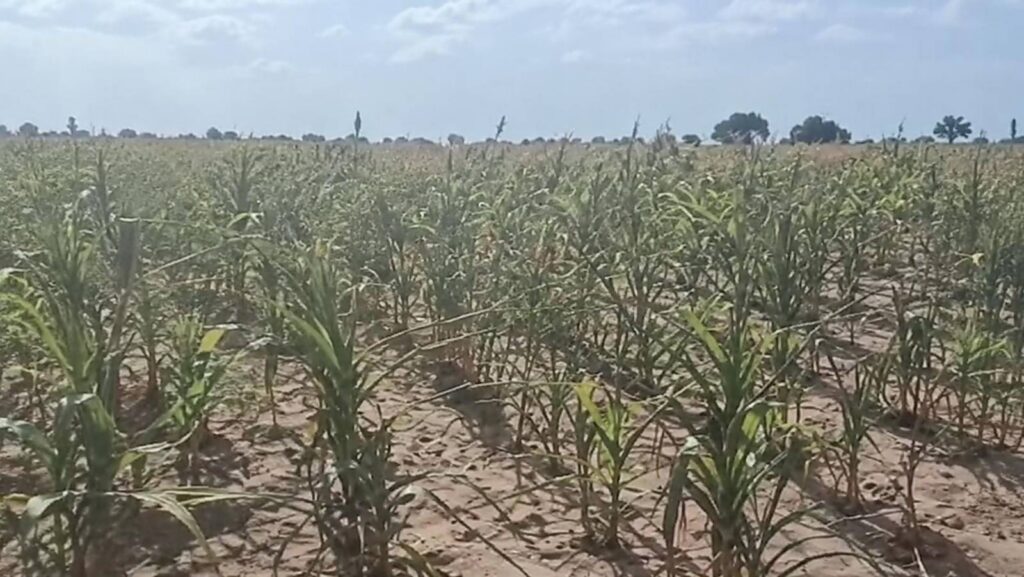
In Tougan, the gap between political rhetoric and agricultural reality could not be wider. While officials tout local production and economic independence, farmers continue to grapple with an unforgiving paradox: record harvests that bring no profit, debt that spirals out of control, and the grim choice between abandoning their land or their livelihood.
“Last season, the maize yield was high,” explains a farmer from the region. “Yet prices were capped so low that we made no profit at all. Now, with loans due and no income to repay them, some are considering crossing the border just to survive.” His words capture the cruel irony faced by Burkina Faso’s agricultural workforce: whether harvests are abundant or scarce, the outcome is the same.
This raises a fundamental question: what happens when the very people responsible for feeding the nation can no longer sustain themselves?
The illusion of sovereignty without farmer prosperity
Since assuming leadership, Captain Ibrahim Traoré has championed domestic production, economic self-reliance, and the country’s growing industrial capacity particularly in manufacturing military equipment. State communications frequently highlight new factories and technological advancements as symbols of Burkina Faso’s renewed strength.
Yet these achievements tell only part of the story. A nation’s sovereignty cannot be measured solely by the number of its factories or the volume of its arms production. True independence requires a foundation of sustainable livelihoods, starting with the farmers who feed its people.
While new industrial units dominate headlines, agricultural producers face persistent challenges: stagnant purchase prices, crushing debt, unstable markets, and razor-thin profit margins. The message is clear: Burkina Faso can build all the machinery it wants, but if farmers cannot earn a living from their labor, the country’s food security remains severely compromised.
The unsustainable cycle of debt and collapsing prices
The crisis in Tougan illustrates a broader structural flaw in Burkina Faso’s agricultural model. When global or regional grain prices fall, domestic prices follow leaving farmers with no buffer against financial ruin. Conversely, a poor harvest exacerbates debt burdens, pushing producers deeper into poverty.
For any entrepreneur, the decision to invest in agriculture hinges on one critical factor: profitability. Yet in today’s Burkina Faso, a successful harvest can trigger a price drop severe enough to bankrupt the very farmers who made it possible. This perverse incentive discourages long-term investment, stifles innovation, and threatens the viability of rural communities.
Why food sovereignty must begin with farmer sovereignty
Burkina Faso’s pursuit of economic independence has understandably prioritized heavy industry and defense production. However, this strategy overlooks a fundamental truth: a nation cannot claim food sovereignty if the people who grow its food cannot earn a decent income. True progress requires balancing industrial ambition with tangible support for agricultural producers.
Overemphasis on factories and hardware risks obscuring the human cost of unmet agricultural potential. Behind every machine, every armored vehicle, stand the farmers, millers, and rural families whose daily struggles determine whether Burkina Faso’s food systems will thrive or collapse.
The question for Tougan and for Burkina Faso as a whole is not how many factories the country can build. It is a more urgent one: how long can farmers continue to work without earning enough to live?
Key challenges faced by Burkina Faso’s agricultural sector
Price suppression: Government or market interventions that artificially cap farmgate prices, eroding farmer profits despite high yields.
Debt cycles: Heavy borrowing to finance inputs, followed by inability to repay loans when prices plummet or harvests fail.
Market volatility: Unpredictable demand and fluctuating regional trade policies that destabilize local prices.
Lack of incentives: Insufficient financial, technical, or infrastructural support for farmers to transition from subsistence to commercially viable agriculture.
A call for action over rhetoric
Burkina Faso’s leaders have repeatedly affirmed their commitment to economic transformation. Yet as long as farmers remain trapped in a cycle of poverty, no amount of industrial development will secure the country’s food future. The time has come to shift focus from production statistics to income security, from factory imagery to fair trade practices, and from state-led initiatives to genuine farmer-centered policies.
The turning point in Burkina Faso’s agricultural narrative will not come from another announcement or ribbon-cutting ceremony. It will arrive when the farmer who plants a seed in Tougan today can return home tomorrow, feed his family, repay his debts, and look forward to a future in agriculture not away from it.
By Emmanuel Mbarga — Reporter



More Stories
Mali’s prison crisis at a tipping point: how mass arrests are reshaping justice and security
Niger’s youth at the forefront: how the FPL’s bold move could reshape the security deadlock
Kidal’s water crisis deepens: airstrikes claim 43 lives and threaten pastoral survival