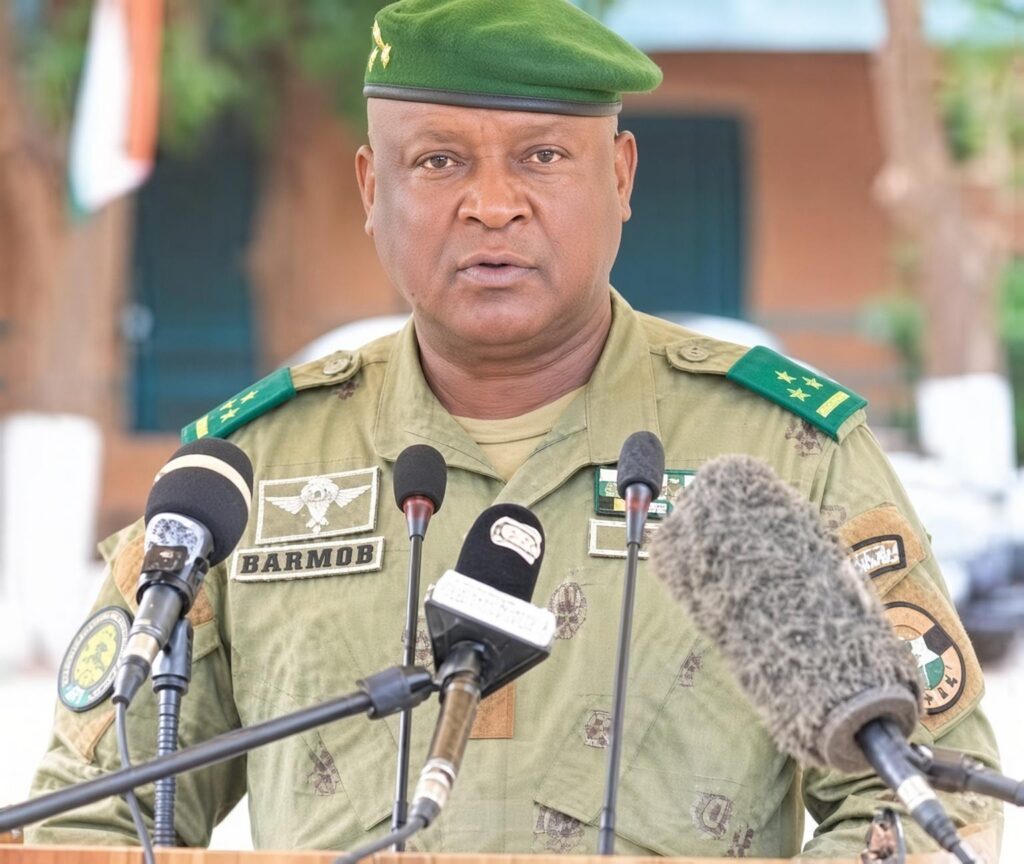
The name Moussa Salaou Barmou now resonates across Niger’s military landscape as a symbol of operational excellence and decisive strategic leadership. While his political profile gained prominence during the pivotal events of July 2023 in Niamey, his true strength lies in a career forged through elite military training in the United States. This American doctrinal imprint has become the foundation of his transformative impact on Niger’s special forces.
The American doctrine that reshaped Niger’s military elite
General Barmou’s ascent within the Nigerien armed forces is inextricably linked to his immersion in America’s most prestigious military institutions. His resume reflects a deliberate investment in excellence:
- Fort Moore (formerly Fort Benning, Georgia): Here, he completed the U.S. Army Infantry School program, mastering advanced infantry tactics, assault operations, and close-quarters combat. This training instilled the discipline and adaptability that define elite units worldwide.
- National Defense University (NDU) in Washington, D.C.: At the College of International Security Affairs, he earned a diploma focused on strategic planning, counter-terrorism, and asymmetric threat analysis. This academic rigor complemented his field experience, equipping him with a holistic understanding of modern warfare.
The synthesis of these experiences allowed Barmou to adopt the American military doctrine’s core principles—speed, small-unit autonomy, and seamless intelligence integration—transforming them into actionable strategies for the Nigerien context.
From theory to action: operational breakthroughs in Niger’s security landscape
General Barmou’s tenure as commander of Niger’s special forces has been marked by tangible advancements, directly influenced by his American training:
- Building elite units from scratch: He restructured the Nigerien special forces (PFS) along the lines of the U.S. Special Operations Command (USSOCOM), enforcing stringent selection criteria and rapid response drills. His emphasis on small, mobile patrol units has redefined operational agility in high-risk zones.
- Counter-terrorism operations with measurable impact: Under his leadership, coordinated efforts with U.S. forces stationed at Agadez’s Base 201 and Niamey’s strategic hubs have disrupted terrorist networks linked to Boko Haram and ISIS-affiliated groups in the Lake Chad basin and the tri-border area. These operations reflect a shift from reactive to proactive security measures.
- Military diplomacy as a strategic asset: His fluency in U.S. military protocols and doctrine positioned him as the key interlocutor between Niamey and Washington. During the complex negotiations following the 2023 coup, his credibility and training-based expertise ensured uninterrupted dialogue with American military leadership, safeguarding critical bilateral ties.
Steering the transition: a visionary’s role in Niger’s military future
Serving as Chief of Army Staff alongside General Abdourahamane Tiani within the National Council for the Safeguard of the Homeland (CNSP), Barmou played a pivotal role in reshaping Niger’s security architecture. His initiatives included:
- Realigning the Alliance of Sahel States (AES) military command structure to enhance interoperability and rapid deployment capabilities.
- Instituting modern warfare methodologies tailored to the Sahel’s unique challenges, blending American pragmatism with local tactical realities.
By September 2026, his reforms had cemented a new era of military preparedness, positioning Niger’s forces as a model of adaptability and strategic foresight in the region. General Barmou’s leadership exemplifies how foreign doctrinal influence, when intelligently localized, can catalyze national security breakthroughs.

More Stories
Togo: how a journalist’s sanction resonates far beyond newsrooms
Niger: reshuffle fallout hits households, traders and an economy running on fumes
Niger’s military regime cuts off information flow—citizens and economy reel from media blackout