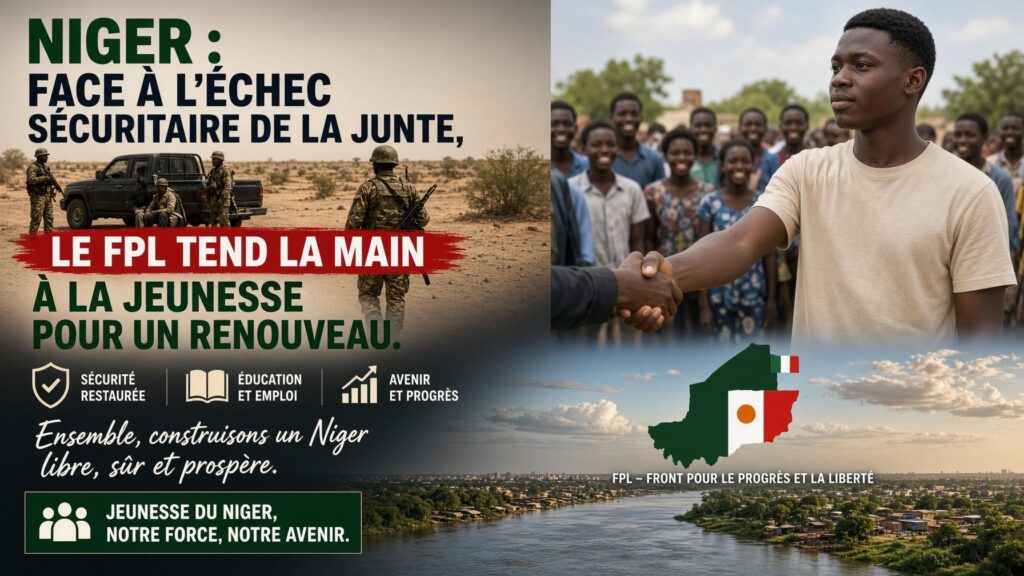
As Niger’s military leadership struggles to curb mounting security threats, the Popular Front for Justice (FPL) has made a decisive pivot—launching a multilingual call to action aimed squarely at the nation’s youth. This bold initiative, delivered through a widely shared video message, signals a potential turning point in the country’s escalating crisis, offering a radical alternative to a government widely seen as failing its people.
With frustration over the transitional authorities’ inability to restore peace reaching a boiling point, the FPL’s latest gambit could mark the beginning of a new chapter. Breaking from traditional political posturing, the group’s spokesperson delivered a direct appeal: “Our fight is not with the people of Niger—it is with the regime that has failed them.” By positioning itself as the vanguard of change, the FPL is attempting to channel the pent-up energy of a generation tired of empty promises and unmet security needs.
Why the FPL’s youth-focused strategy could be a game-changer
The movement’s decision to broadcast its message in Arabic and multiple local languages underscores a deliberate effort to transcend Niger’s ethnic and regional divides. In a country where communication barriers often deepen divisions, this inclusive approach represents more than just rhetoric—it’s a strategic bid to unite a fractured nation under a single cause.
The FPL’s embrace of digital platforms further amplifies its reach, bypassing state-controlled narratives to speak directly to those who feel abandoned by their leaders. For a youth population that has grown up in the shadow of worsening insecurity, this unconventional outreach is resonating powerfully. Unlike traditional state messaging, the FPL’s campaign feels immediate, personal, and responsive to their lived realities.
How the military’s security failures fueled the FPL’s rise
The timing of the FPL’s initiative couldn’t be more critical. Despite the junta’s repeated assurances of restoring order, civilians continue to bear the brunt of armed group attacks, particularly in rural and border regions. The disconnect between official rhetoric and on-the-ground reality has eroded public trust, leaving many to question whether the current leadership can ever deliver stability.
Grassroots sentiments paint a stark picture:
- Shrinking safety nets: Armed assaults remain unchecked, with no durable solutions in sight for affected communities.
- Economic despair: Young Nigeriens face dwindling opportunities, compounded by a lack of state support.
- Broken trust: Citizens describe a widening gap between government declarations and tangible protection.
Against this backdrop, the FPL’s call to arms isn’t just a military proposition—it’s a statement of defiance against a system that many feel has failed them entirely.
The youth’s moment: seizing the reins of change
On the streets and in online forums, the FPL’s message is sparking debate. For a generation raised in crisis, the promise of agency—of taking up the fight for a safer, fairer Niger—is undeniably compelling. “We can’t wait any longer for solutions that never come,” said one young activist. “If the state won’t protect us, we’ll do it ourselves.”
The FPL’s strategy hinges on a simple but radical idea: that the youth, as the nation’s most resilient and digitally connected force, can rewrite its future. By positioning them as the cornerstone of its movement, the group is betting on their energy to catalyze a long-overdue transformation—one where security and justice aren’t just slogans, but realities.
The coming weeks will reveal whether this gamble pays off. But one thing is clear: in Niger, the groundswell of frustration has found a voice—and it’s demanding action.
More Stories
Burkina Faso’s agricultural turning point: when production fails the farmers who feed the nation
Kidal’s water crisis deepens: airstrikes claim 43 lives and threaten pastoral survival
Chad’s Klessoum prison empties 150 cells as pardon decree shifts into high gear