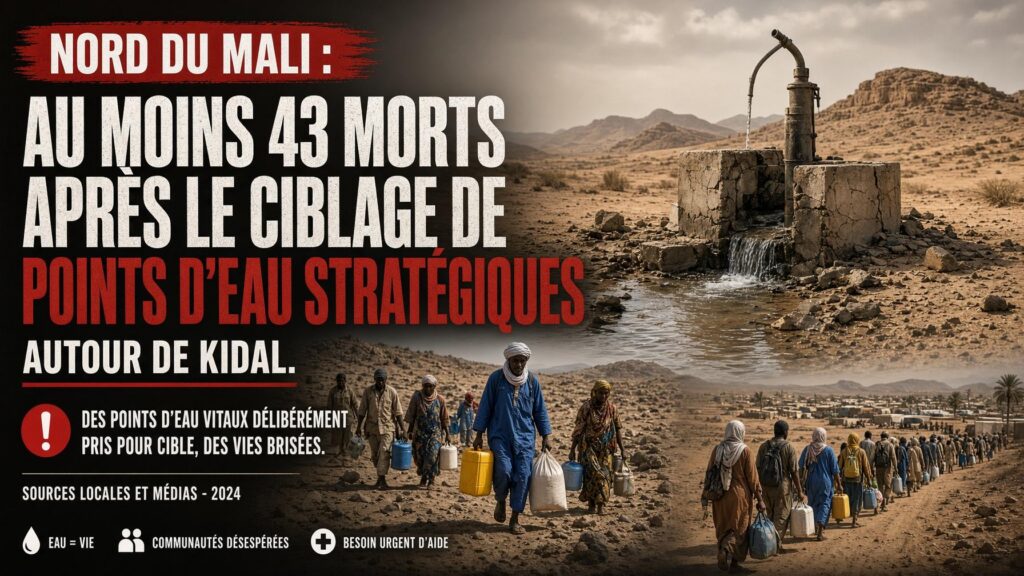
Kidal’s lifeline shattered: the turning point in Mali’s water war
Northern Mali has reached a critical turning point after a wave of airstrikes and ground offensives targeted the region’s most precious resource—water. Between September 15 and 16, 2026, coordinated strikes by Malian forces and allied paramilitary groups destroyed vital water infrastructure in the Kidal region, leaving at least 43 civilians dead and plunging entire communities into a spiraling humanitarian crisis.
The attacks were not random; they struck at the heart of survival for nomadic pastoralists who rely on these water sources to sustain their livestock and livelihoods. As the region’s arid landscape turned even more unforgiving, the loss of access to clean water has forced thousands to confront an immediate threat to their existence.
Strategic strikes: how water became a weapon of war
On September 15, a Su-24 bomber unleashed a devastating strike on Amassine, a remote village on the outskirts of Kidal. The target? A single well, the only water source for miles, serving as a lifeline for nomadic herders and their animals. The damage was instantaneous—families who depended on it for survival were cut off, their future hanging in the balance.
The next day, the assault intensified near Tassik, where Malian armed forces, backed by Russian paramilitary units, launched another offensive. This time, the focus was on a cluster of wells and water storage facilities. The combined impact of the two days of strikes has left at least 43 dead, with many more injured in the chaos. Survivors describe scenes of desperation as civilians scrambled to secure water while dodging relentless fire.
An act of asphyxiation: cutting off life in Kidal’s hinterland
These attacks are part of a broader strategy to choke rural communities into submission. For months, similar strikes have targeted water infrastructure across the Kidal region, leaving wells dry and pastures barren. The goal is clear: to cripple the pastoral economy and drive nomadic populations from their ancestral lands.
The devastation extends beyond the countryside. Within Kidal city itself, repeated strikes have damaged critical public utilities, including water and electricity networks. Even places of worship, such as mosques, have not been spared during military operations, further eroding the fabric of daily life.
Breaking the backbone of the pastoral economy
The consequences of this water blockade are catastrophic, particularly for Mali’s nomadic herders. Water is not just a necessity—it is the foundation of their economy, culture, and survival. With wells destroyed, livestock are dying at an alarming rate, and families are being pushed to the brink of starvation.
Here’s what the destruction of water infrastructure means for the people of Kidal:
- Immediate water scarcity: Thousands of people and their animals face severe dehydration, creating a public health emergency.
- Economic collapse: The loss of livestock—families’ primary asset—destroys livelihoods and collapses local markets.
- Mass displacement: Forced migration to overcrowded urban centers, where resources and security are already strained.
Humanitarian crisis looms as aid access remains elusive
The military escalation has severely restricted the ability of international aid organizations to deliver essential supplies and support. With critical water infrastructure damaged, the risk of famine and disease outbreaks grows daily. The destruction of civilian water sources raises serious concerns about compliance with international humanitarian law, which strictly prohibits attacks on infrastructure vital for survival.
If the onslaught continues, the Kidal region could face a catastrophic exodus, with pastoral communities at risk of irreversible collapse. The coming weeks will determine whether the region can recover or slide into deeper despair.
The stakes could not be higher. Without urgent intervention, the deliberate targeting of water resources may not only erase years of pastoral heritage but also push a generation to the edge of survival.

More Stories
Burkina Faso’s agricultural turning point: when production fails the farmers who feed the nation
Niger’s youth at the forefront: how the FPL’s bold move could reshape the security deadlock
Chad’s Klessoum prison empties 150 cells as pardon decree shifts into high gear