A decisive turn at Klessoum: 150 inmates walk free
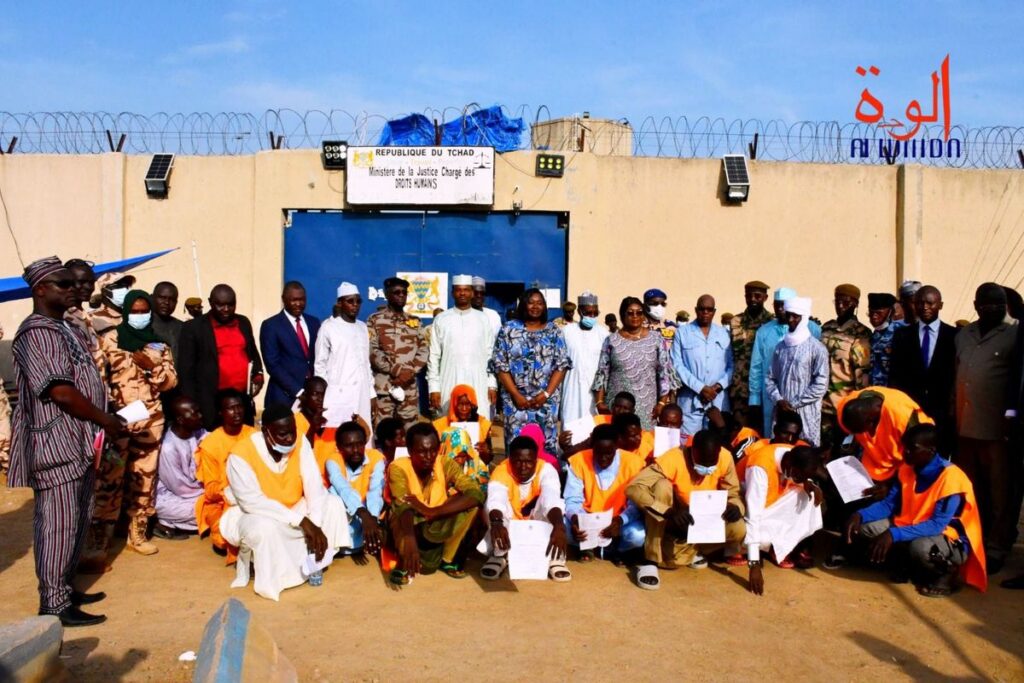
The gates of the Maison d’arrêt et de correction de Klessoum swung open for 150 prisoners on Wednesday, September 16, 2026 — a moment that signals a decisive turn in Chad’s approach to presidential clemency. Justice Minister Ndolenodji Alixe Naïmbaye presided over the official ceremony marking the collective remission of sentences under Decree No. 2151/PR/2026.
The event, held inside the detention facility, drew a full roster of judicial and security officials: the Public Prosecutor at the N’Djamena High Court, the President of the N’Djamena High Court, the General Prosecutor at the N’Djamena Court of Appeal, the Secretary-General of the Ministry of Justice, along with defense and security force commanders and civil society representatives.
Minister hails a ‘moment of humanity’ as release papers handed over
In her address, Minister Naïmbaye paid warm tribute to the Head of State, describing the pardon as an act rooted in humanity and fairness toward citizens whose sentences had become final and enforceable. “For the Marshal of Chad, every citizen deserves competent, swift, accessible and equitable justice,” she declared.
She reminded the gathering that the power of pardon is a sovereign prerogative enshrined in the constitution — a lever the President has repeatedly used to remit or reduce sentences for thousands of convicts. It was in that spirit, she said, that Marshal Mahamat Idriss Deby Itno, as father of the nation, signed Decree No. 2151/2026 on August 14, 2026, ordering the collective remission of sentences.
“More than an event, this is a defining moment where some of our fellow citizens under final sentences will benefit from a partial, phased reduction of their custodial terms — or outright release,” the minister said, praising what she called an act steeped in humanism and compassion.
How the legal scale triggered automatic release
The immediate application of the legal scale set by the decree resulted in the automatic release of 150 detainees whose remaining time had been fully served. Minister Naïmbaye stressed that the decision responds to core demands of public justice policy and prison administration on several fronts.
On one hand, it reflects a firm commitment to more humane detention conditions and a pragmatic adjustment of how sentences are carried out. On the other, it represents a targeted yet positive act of clemency.
Scope of the pardon: penal sentence only, civil rights untouched
The minister was careful to clarify that the measure applies exclusively to the penal sentence of imprisonment. It does not erase the rights of the state, civil parties or third parties, she noted.
Speaking on behalf of the government, she reaffirmed the ministry’s determination to press ahead with modernizing judicial institutions and consolidating the rule of law, with support from partners whose steady commitment she also acknowledged.
Attestations, emotion and a family photo to close
During the ceremony, release certificates were handed to the newly freed inmates who benefited from the pardon under Decree No. 2151/PR/2026. The handover marked a moment of joy and emotion before the event wrapped up with a group photo to immortalize the occasion.


More Stories
Burkina Faso’s agricultural turning point: when production fails the farmers who feed the nation
Niger’s youth at the forefront: how the FPL’s bold move could reshape the security deadlock
Kidal’s water crisis deepens: airstrikes claim 43 lives and threaten pastoral survival