From rhetoric to reality: does Burkina Faso truly control its gold wealth?
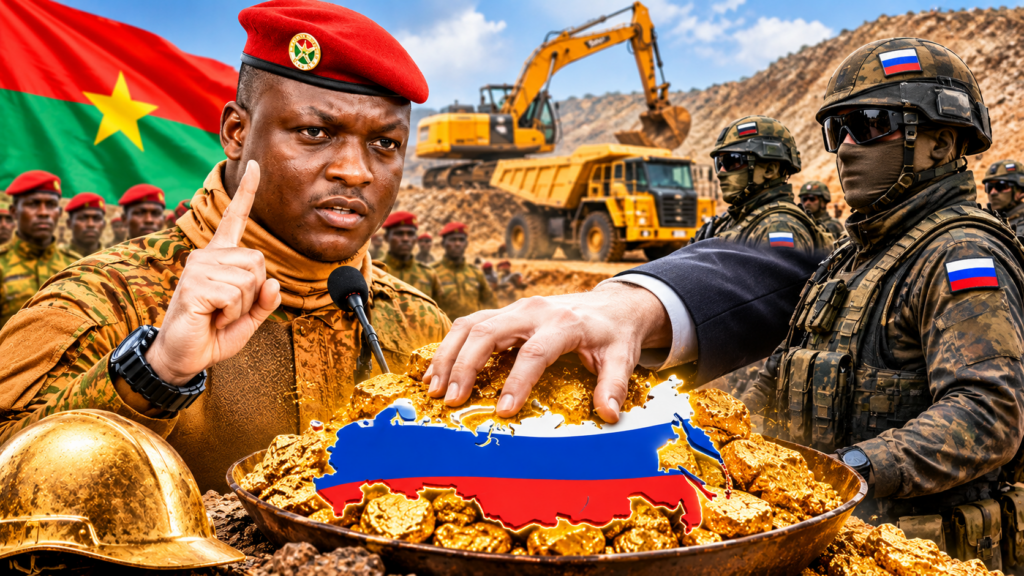
Since seizing power, Burkina Faso’s military leadership has positioned the nationalization of mineral resources particularly gold as a cornerstone of its economic sovereignty agenda. President Ibrahim Traoré frequently underscores the nation’s right to its own wealth, framing the extraction and control of Burkinabè gold as a critical step toward breaking free from historical dependencies. Yet, as foreign actors, notably Russian security firms, increasingly shape the operational and security landscape of the country’s gold mines, the gap between political declarations and on-the-ground reality grows harder to ignore.
The paradox is striking: a government that champions the mantra of “100% Burkinabè gold” now finds itself entangled in partnerships where the very entities securing its most vital economic assets are foreign-owned and operated. This raises a fundamental question does Burkina Faso truly exercise full sovereignty over its gold, or is its wealth being managed under the oversight of external actors? The answer could define the country’s economic future.
Russian security firms and the erosion of national control
Russian security companies have rapidly expanded their footprint in Burkina Faso’s mining sector, a development justified by the government as a strategic shift toward partners unburdened by colonial histories. While these firms provide essential security services protecting mines from insurgent threats their growing influence introduces a new set of risks. The control of gold extraction and transportation doesn’t only depend on armed protection; it extends to financial flows, operational decisions, and the beneficiaries of lucrative contracts.
When foreign entities exercise significant influence over such critical functions, it becomes difficult to argue that national sovereignty remains intact. The state’s ability to regulate, audit, or even understand the full scope of these operations is often limited. This raises concerns about transparency, accountability, and whether the economic benefits of gold production are truly reaching Burkinabè citizens.
The limits of political rhetoric versus practical sovereignty
Ibrahim Traoré’s government has prioritized public messaging around resource nationalism, positioning itself as the guardian of the nation’s wealth. Declarations of nationalization and regulatory reforms have reinforced this narrative, but rhetoric alone cannot constitute sovereignty. True control requires more than policy announcements it demands oversight, transparency, and the capacity to enforce decisions without external interference.
Consider the following dimensions of sovereignty that Burkina Faso must address:
Operational control: Who makes the final call on mining operations, from extraction techniques to worker safety protocols?
Financial transparency: Are the revenues generated from gold sales fully accounted for, and are they reinvested in public infrastructure and services?
Security oversight: To what extent do Burkinabè authorities supervise the activities of foreign security firms, ensuring their actions align with national interests?
Beneficiary identification: Are the ultimate recipients of gold-related profits transparent, or do opaque financial networks obscure their identities?
The presence of Russian security firms complicates each of these points. While they may not own the mines themselves, their involvement in protecting and managing key aspects of gold production creates a de facto dependency that challenges Burkina Faso’s autonomy.
Why foreign security firms don’t equate to economic independence
Advocates of Burkina Faso’s partnerships with Russian security firms argue that these alliances are necessary to counter terrorism and stabilize mining regions. However, these security arrangements must not become a Trojan horse for deeper economic entanglement. A sovereign state cannot claim full control over its natural resources if the security and operational frameworks surrounding those resources are dictated by foreign entities.
There is a critical difference between strategic alliances for mutual benefit and partnerships that erode national decision-making authority. Burkina Faso must ensure that any foreign involvement in its gold sector security or otherwise serves the nation’s interests first, rather than those of external actors.
The citizen’s stake: ensuring gold wealth benefits the people
The ultimate test of Burkina Faso’s gold sovereignty lies in how effectively the nation’s mineral wealth improves the lives of its people. Gold mining generates substantial revenue, but if those funds are mismanaged, siphoned off, or directed toward elite interests, the promise of economic independence rings hollow. Civil society, journalists, and independent auditors must have the tools to scrutinize contracts, financial flows, and security arrangements to safeguard against corruption and mismanagement.
Burkina Faso’s gold cannot belong to Moscow, to private foreign firms, or to a privileged few. It must serve as a foundation for equitable development, job creation, and infrastructure investment. This is the true measure of sovereignty not the loud declarations made in public, but the quiet, rigorous control exercised behind the scenes.
Conclusion: sovereignty defined by action, not words
The Burkinabè people have heard the promises: their gold is 100% theirs. But sovereignty is not a slogan. It is a daily commitment to transparency, accountability, and the unrelenting defense of national interests. If foreign security firms continue to shape the security and economic landscape of Burkina Faso’s gold mines, the question of who truly controls this wealth will only grow louder. For the nation’s future, that answer must reflect the will of the people not the calculations of external players.
By Marguerite Ndongo — Journalist