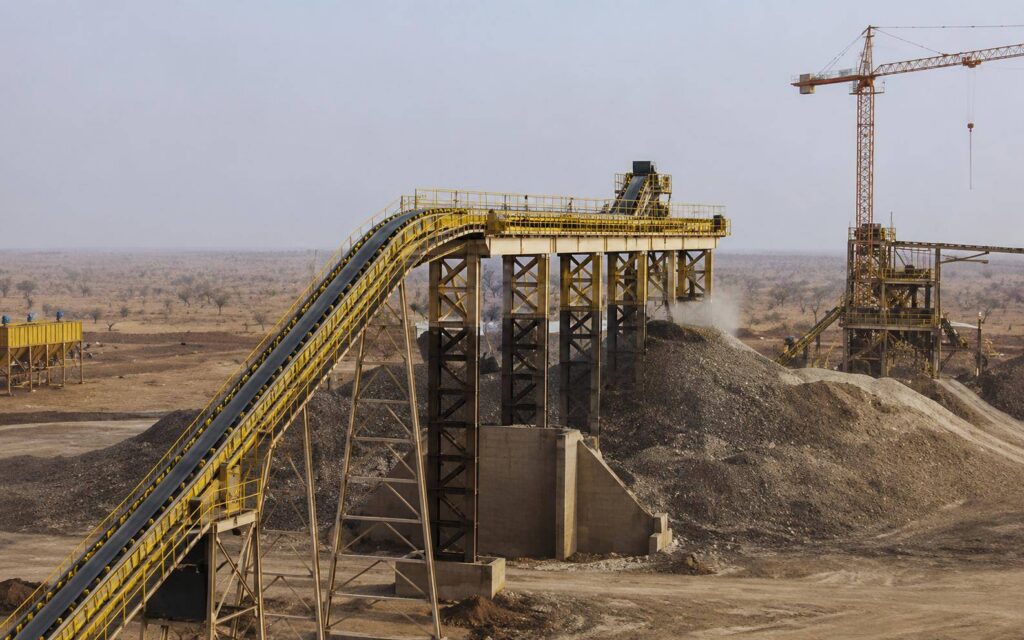
Burkina Faso is undergoing a seismic shift in how it manages its gold industry. With the establishment of the National Precious Substances Company (SONASP) in 2023 and the inauguration of domestic infrastructure projects—including the national gold refinery in Ouagadougou—the transitional government has made its priorities clear: reclaiming the full value chain of the yellow metal and asserting stronger economic independence.
The strategy has yielded early results, with dozens of tons of gold entering official channels in the first half of the year. Yet beneath the rhetoric of self-reliance and impressive figures lies a web of structural contradictions and escalating geopolitical risks that threaten to undermine the nation’s long-term ambitions.
Breaking old ties, facing new dependencies
The cornerstone of the current mining policy is a deliberate pivot in international partnerships. By granting mining licenses to foreign firms—particularly Russian companies like Nordgold—the government aims to diversify its mining actors and reduce reliance on historical players.
But this realignment raises critical questions:
- New vulnerabilities: Replacing traditional partners with entities tied to specific geopolitical blocs could expose Burkina Faso to fresh strategic risks, particularly if those alliances shift or sour.
- Governance and oversight: The real test lies in whether institutions like the BUMIGEB and SONASP can enforce strict traceability and ensure that local communities—whose artisanal and industrial miners operate in increasingly insecure zones—receive tangible benefits.
The storage controversy: a symptom of deeper unease
Rumors that Burkina Faso might ship or store part of its national gold reserves in the Russian Federation have sparked intense debate. While the Ministry of Economy and Finance swiftly dismissed these claims as baseless, the episode underscores the fragility of managing such a high-value asset:
- Financial folly: Depositing sovereign reserves with a country under sweeping international sanctions and banking restrictions would erode liquidity and expose Burkina Faso’s gold to legal and financial uncertainty.
- Undermining sovereignty: Gold remains the ultimate financial safeguard for a nation. Entrusting it to a foreign entity in today’s volatile geopolitical climate directly contradicts the stated goal of “total sovereignty” and full national control over the resource.
Local anchoring: refining the path to independence
The decision to refine gold domestically marks a symbolic and strategic leap forward. Yet the road ahead is fraught with hurdles:
- Supply chain integrity: The refinery’s steady operation depends on curbing fraud in artisanal mining zones—many of which lie in conflict-affected regions where smuggling and informal trade thrive.
- Real community impact: The mining sector must move beyond revenue generation to create lasting jobs and support local infrastructure development, ensuring that benefits reach the people most affected by extraction.
The government’s push to rebalance the distribution of mining profits in favor of the state reflects a pragmatic response to national economic pressures. To safeguard this sovereignty, however, Burkina Faso must prioritize institutional transparency, secure its national gold reserves within its own borders, and strengthen domestic management capabilities—rather than gambling them on complex external geopolitical equations.

More Stories
Togo: how a journalist’s sanction resonates far beyond newsrooms
Niger: reshuffle fallout hits households, traders and an economy running on fumes
Niger’s military regime cuts off information flow—citizens and economy reel from media blackout