
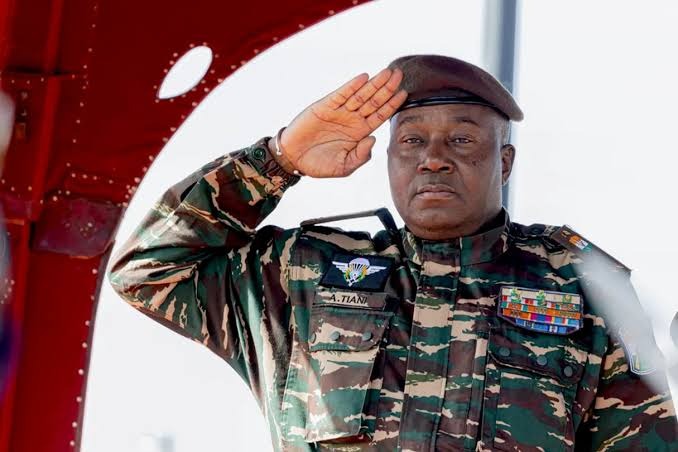
The promise of “sovereignty” once carried hope, but in the hands of a cornered military regime, it now echoes like a death knell. By introducing sweeping new regulations for online press and foreign media outlets, Niger’s ruling National Council for the Safeguard of the Homeland (CNSP) claims to protect the nation’s digital space. In truth, this move erects an impenetrable wall around information—deepening the isolation of citizens and destabilizing economic activity already strained by political uncertainty.
Citizens lose vital access to independent news
The CNSP’s ordinance targeting electronic media appears cloaked in bureaucratic neutrality, citing goals like “regulatory modernization” and “combating misinformation.” Yet its real purpose is clear: granting the military unchecked authority to silence dissent across the last remaining platform for free expression—the internet.
With traditional media already coerced into echoing state narratives, online platforms had become essential lifelines for ordinary Nigeriens, independent bloggers, and journalists seeking to challenge official accounts. Now, the definition of “false information” rests not with impartial courts, but with the regime itself. Professional accountability has been twisted into enforced conformity, leaving no room for scrutiny or debate.
Foreign correspondents face systematic exclusion
A parallel provision targets international journalists through stringent accreditation rules, mandatory identification protocols, and invasive tracking measures. While framed as routine oversight, these policies amount to systematic surveillance and prior censorship.
Rather than warding off foreign interference—as claimed—the government is curating who can report on Niger and what stories are told. Critical perspectives are being systematically shut out, replaced by a tightly controlled media environment where only state-sanctioned truths are permitted. The result is a closed information ecosystem that stifles transparency and deters global engagement.
Economic and social costs mount under media lockdown
When a government equates national sovereignty with total control over public discourse, it reveals not strength but deep insecurity. By turning journalism into propaganda and treating reporters as threats, Niger’s junta isn’t safeguarding the nation—it’s accelerating its isolation.
This information blackout carries tangible consequences: businesses struggle to operate without reliable news flows, investors grow wary, civil society loses visibility, and everyday citizens are forced into silence or risky underground communication. A healthy democracy thrives on open dialogue; by shattering that mirror, the CNSP doesn’t defend patriotism—it undermines Niger’s future stability and prosperity.
More Stories
Niger’s fuel subsidy burden: SONIDEP faces 28 billion FCFA loss in 2026
Mali : une attaque djihadiste d’une rare violence frappe le camp militaire de Dioura
Le carnet de Malian : un tournant dans la lutte contre la migration clandestine au Sénégal