Diplomatic gesture or long-term cost?
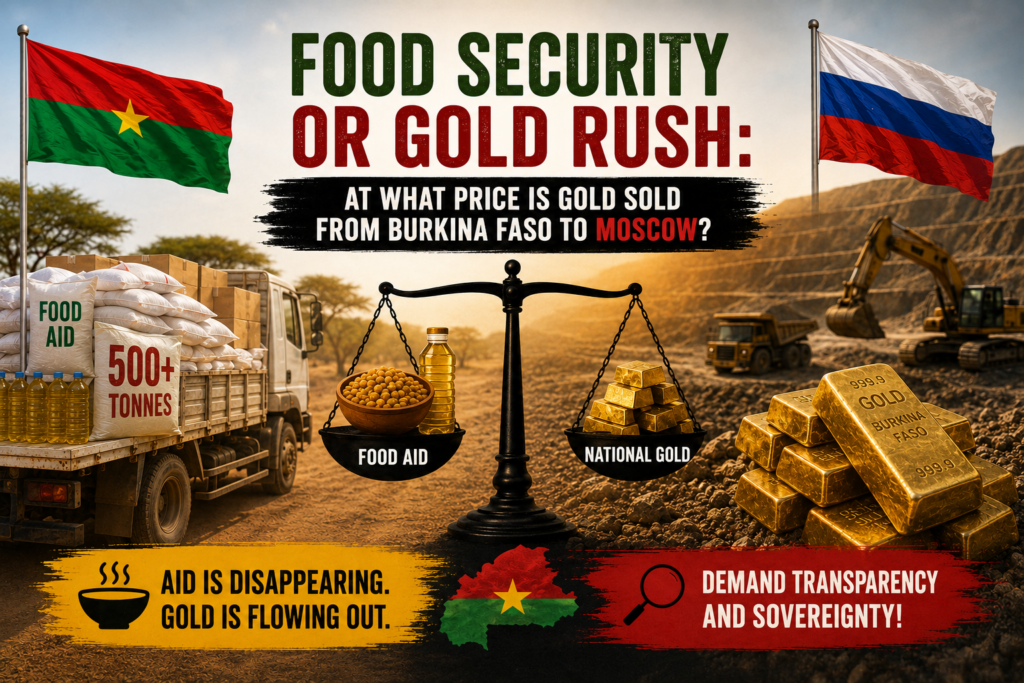
The authorities in Ouagadougou have confirmed the arrival of a substantial shipment of Russian humanitarian aid destined for Burkina Faso. This consignment, valued at approximately $942,500, includes over 500 tonnes of essential food supplies such as yellow split peas and sunflower oil. While framed as an act of solidarity amid severe food insecurity and escalating security challenges, the transaction raises critical questions about the broader economic and geopolitical implications of Burkina Faso’s evolving partnerships.
In international relations, humanitarian gestures rarely occur in a vacuum. When such aid is exchanged, it often accompanies broader agreements that may shape a nation’s economic and strategic trajectory for decades. For Burkina Faso a country endowed with significant mineral wealth, particularly gold this moment calls for scrutiny of the terms under which such cooperation is negotiated and executed.
Food aid today, mineral concessions tomorrow?
There is no denying the immediate relief this food assistance provides to communities struggling with food shortages. However, the true measure of a sustainable partnership lies not in the volume of aid received, but in the balance of what is given in return. Burkina Faso’s gold reserves represent a far greater long-term value than any short-term food shipment. The challenge for policymakers and citizens alike is to ensure that the country does not trade away its most valuable assets for temporary benefits.
The central issue is not whether to accept foreign aid, but whether the agreements governing resource extraction, export, and revenue management are transparent, equitable, and aligned with national development priorities. Are local transformation processes strengthened? Do contracts ensure fair revenue sharing? Are the proceeds reinvested in critical sectors such as education, health, or infrastructure? Without clear answers to these questions, food aid however generous risks becoming a distraction from deeper structural imbalances.
Gold as a strategic asset: the risk of undervaluation
Gold is not merely a commodity; it is a strategic reserve, a financial instrument, and a potential engine for economic transformation. Any decision to export this resource especially on a large scale must be weighed against the potential for domestic value addition, job creation, and long-term wealth accumulation. When gold leaves the country in raw form, the state forfeits the opportunity to leverage its full economic potential.
Burkinabè citizens have every right to demand clarity: Who purchases the gold? At what price? Under what contractual terms? And how are the proceeds accounted for and reinvested? Transparency in these matters is not a luxury it is a necessity for any nation seeking to assert its sovereignty.
From one dependency to another?
Public frustration with historical economic and political dependencies particularly those linked to former colonial powers has driven a shift in Burkina Faso’s foreign partnerships. While this reorientation may reflect a desire for greater autonomy, it does not automatically guarantee sovereignty. True independence is measured not by the number of new international flags raised, but by the capacity to negotiate from a position of strength and protect national interests.
Modern dependencies are often more subtle than overt colonial control. They can manifest in long-term mining contracts, exclusive military or commercial agreements, or preferential access to strategic resources. Burkina Faso must guard against replacing one form of dependency with another. A balanced partnership strategy would prioritize diversification of partners, local capacity building, and equitable revenue distribution rather than concentrating economic control in the hands of a single external actor.
Solidarity versus strategic opacity
Humanitarian aid serves an urgent and vital purpose. No one can fault the relief it brings to families facing hunger. Yet it must not be used as a political shield to obscure discussions about resource governance. Food aid addresses immediate needs; mineral policy shapes the nation’s future. Confusing the two would be a strategic misstep.
Burkinabè citizens deserve both gratitude for received aid and accountability for the management of national wealth. There is no contradiction in welcoming assistance while demanding transparency in mining concessions, export revenues, and reinvestment policies. The credibility of Burkina Faso’s leadership will ultimately be judged not by the volume of aid it receives, but by the clarity of the agreements it signs and the benefits it secures for its people.
The imperative of transparency and sovereignty
If Burkina Faso is to prove that it has regained control over its economic destiny, every new partnership must be subject to public scrutiny. What are the terms of mining agreements with foreign firms? How are tax revenues structured and collected? What proportion of earnings remains within the country? How many local jobs are created through these ventures? What industrial processing occurs domestically? Where are the proceeds directed?
These are the questions that define sovereignty not political rhetoric or symbolic gestures. The Burkinabè people are not calling for isolation from the international community. They are demanding that foreign partnerships serve the national interest, not the interests of external powers. Economic independence is not achieved by changing partners; it is achieved by ensuring that every transaction strengthens the nation’s long-term prosperity.
A call for discernment
Burkinabè citizens must look beyond the symbolism of food shipments or high-profile diplomatic visits. While these gestures may offer temporary relief, they cannot substitute for a robust, transparent, and citizen-centered resource strategy. The real cost of Burkina Faso’s evolving alliances will only become clear when the last bag of split peas has been consumed and the gold has already left the country.
The choice is clear: will Burkina Faso’s wealth be leveraged to build schools, hospitals, and roads, or will it become the invisible currency of new geopolitical bargains? The answer depends on whether the nation prioritizes accountability, equitable agreements, and the ability to hold its leaders and its partners to account.
West Africa does not need new masters. It needs fair partners. And the difference lies in Burkina Faso’s ability to defend its own interests with clarity, strength, and vision.