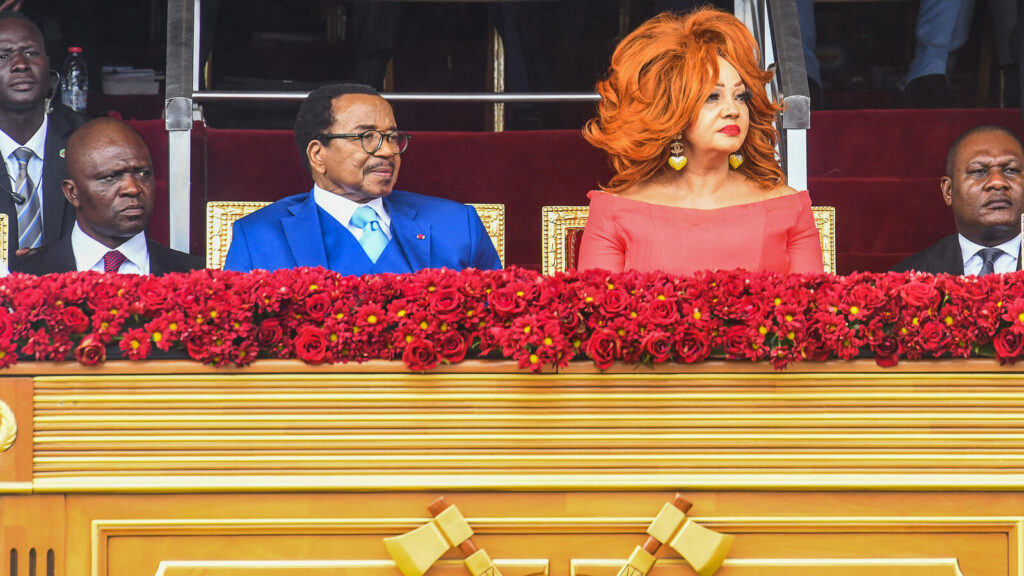
(260520) -- YAOUNDE, May 20, 2026 (Xinhua) -- Cameroonian President Paul Biya (3rd R) watch a civilian parade during the National Day celebrations in Yaounde, Cameroon, on May 20, 2026. Cameroon on Wednesday marked the 54th anniversary of its National Day with military and civilian parades held across the country. (Xinhua/Kepseu)
For over two months, the Cameroonian presidency has been operating from an unexpected location: Geneva, Switzerland. President Paul Biya, who has held power for 43 years, has been away from Yaoundé since June 7, marking the longest absence of his tenure—a situation that has sparked growing unease both within the country and beyond its borders.
The absence began after a sudden health incident during the Unity Day celebrations on May 20, which prompted an emergency evacuation to Switzerland for medical evaluation. Since then, the government has downplayed concerns, insisting that the president remains in charge despite being physically distant. However, the lack of public appearances or clear communication has intensified speculation about his condition and the stability of the leadership.
Government insists on remote leadership
Officials have repeatedly stated that President Biya continues to govern remotely, signing decrees and overseeing state affairs from afar. Yet, this explanation has done little to quell the concerns of opposition figures, civil society, and even some within the ruling party.
Critics point out that the absence has coincided with a period of heightened political tensions, including debates over constitutional reforms and the upcoming presidential elections. The lack of transparency surrounding the president’s health and whereabouts has only deepened doubts about the government’s ability to manage the country effectively.
Public reaction: anxiety and speculation
The prolonged silence has fueled a wave of rumors. Some citizens have taken to social media to voice their fears, while others openly question whether the president is still alive. The absence of any official footage or public statement in over two months has only amplified these concerns.
In Yaoundé, political analysts suggest that the situation is becoming increasingly unsustainable. The government’s reluctance to provide detailed updates has raised eyebrows, particularly as the country grapples with pressing economic and security challenges.
Constitutional and political implications
The absence of a sitting president for such an extended period raises serious questions about constitutional succession. While Cameroon’s laws outline procedures for temporary leadership, the prolonged nature of this absence has left many wondering whether the country is operating without a clear line of authority.
Opposition leaders have called for greater transparency, urging the government to either provide verifiable proof of the president’s well-being or clarify the chain of command. The uncertainty has also cast a shadow over the credibility of upcoming elections, with some questioning whether they can be held under such unstable conditions.
The way forward: transparency or escalating crisis?
As the days pass without concrete information, the pressure on the government to address the situation grows. The international community, too, is watching closely, with diplomats and foreign observers expressing concerns about the potential for instability in a strategically important region.
For now, the government maintains its stance that President Biya remains in control, albeit from a distance. Yet, without clear evidence to the contrary, the silence from Geneva only serves to deepen the sense of uncertainty gripping Cameroon.
More Stories
Can West Africa’s peace strategy survive without stronger regional unity?
Will Togo’s Faure Gnassingbé broker the breakthrough east DRC needs?
Can Nigeria’s military campaign end the kidnapping economy in the north?