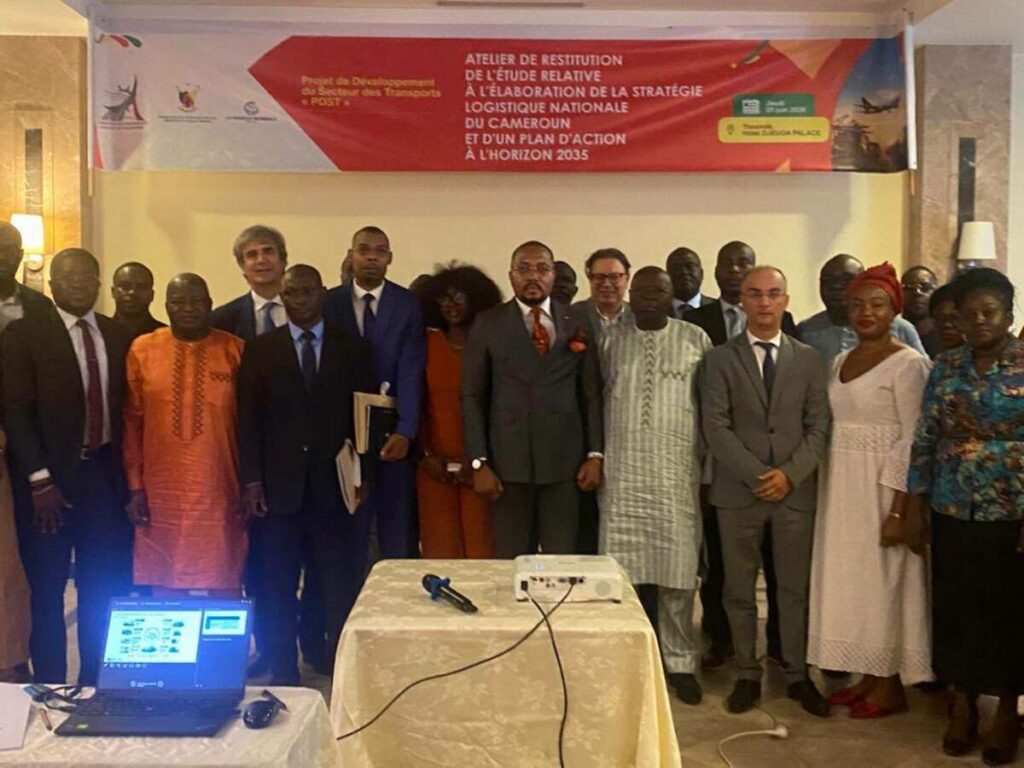
In a move to bolster national competitiveness and modernize its infrastructure, Cameroon is implementing a comprehensive series of upgrades across its road, rail, urban, and airport sectors.
A pivotal workshop took place on June 24 and 25, 2026, to review feasibility studies for two major initiatives: the establishment of the Land Transport Regulatory Agency (ARTT) and the development of the National Logistics Strategy (SLN) with a vision stretching to 2035.
The sessions were attended by Mbamome Nkendong Divine, Director of Road Transport, and Claude Misse Ntone, Director of Rail Transport. They were joined by experts from the consultancy firm Idea Consult International/TRT Studi Cameroun, as well as delegates from partner administrations and international financial institutions, including the World Bank and the African Development Bank.
During the opening address, the Director of Road Transport urged participants to scrutinize the findings of these preliminary studies, as they will define the trajectory of these essential projects. Detailed presentations by the consultants outlined the roadmap for both the regulatory body and the logistics plan.
The studies suggest that the ARTT will be based in Yaoundé. Initially, its focus will be on the road transport sector, with its responsibilities set to expand gradually. Launching this agency will require an initial investment of approximately 260 million FCFA, which will cover the legal framework, office renovation, and the acquisition of necessary technical and IT equipment.
Regarding the National Logistics Strategy (SLN), the analysis identified key strategic challenges and goals for the Cameroonian logistics system. The resulting proposal includes an eight-axis action plan dominated by massive rail investments, estimated at 40 billion euros. Furthermore, the plan recommends the creation of a National Logistics Council to manage inter-ministerial coordination and decision-making.
Following the discussions, the Director of Road Transport praised the high quality of the contributions. He called on all stakeholders to remain dedicated as Cameroon moves into the next phases of these transformative projects, which are vital for the future of the nation’s land transport network.