The ECOWAS Court of Justice has formally categorized the 2024 constitutional amendments in Togo as an “unconstitutional change of government.” In a significant ruling that has sent ripples through the nation, the regional judiciary determined that the reform served as a mechanism to bypass established presidential term limits. While the decision does not nullify the current Constitution, it provides the Togolese opposition with a formidable legal and political platform to challenge Faure Gnassingbé’s continued leadership.

The regional court concluded that the 2024 reform, passed by the National Assembly on March 25, violates Article 23(5) of the African Charter on Democracy, Elections, and Governance (CADEG). According to the judges, the context and intended impact of these changes reveal a calculated effort to extend executive control. The ruling highlighted that the revision was pushed through after the National Assembly’s mandate had already expired in December 2023 and was finalized without any direct consultation with the citizens just before legislative elections.
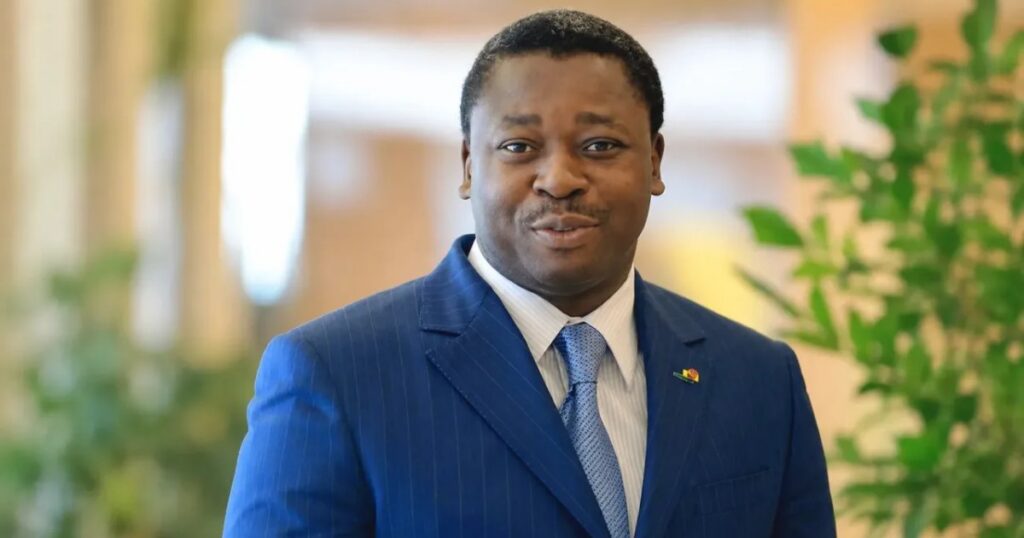
This controversial overhaul transitioned Togo from a semi-presidential system to a full parliamentary regime, marking the birth of the Fifth Republic. Under this new framework, the President of the Republic is no longer chosen via direct universal suffrage but is instead elected by Parliament for a four-year term, renewable once. Most executive authority now resides with the President of the Council of Ministers, a position reserved for the leader of the majority party in the legislature. Faure Essozimna Gnassingbé, who has governed Togo since the passing of his father Gnassingbé Eyadéma in 2005, has assumed this new role.
Limited judicial scope: no annulment or sanctions
Despite the severity of the language used, the ECOWAS Court’s decision does not carry immediate binding consequences for the current legal structure. The judiciary stopped short of striking down the Constitution of May 6, 2024, and did not impose specific sanctions on the Togolese state. Instead, it issued a directive for Togo to ensure that all future constitutional modifications align with international treaty obligations, specifically the CADEG. Legal costs for the proceedings were ordered to be shared by both parties.
Furthermore, the court dismissed claims regarding the violation of citizens’ rights to participate in public affairs. The judges noted that the legislative elections held on April 29, 2025, saw the participation of over two million registered voters, and found no concrete evidence that individuals were systematically barred from voting or seeking office.
The legal challenge was initiated in April 2024 by the Ligue togolaise des droits de l’homme (LTDH) alongside twelve other plaintiffs, including prominent opposition groups like the Alliance nationale pour le changement (ANC) led by Jean-Pierre Fabre, the Alliance des démocrates pour le développement intégral (ADDI), and the Forces démocratiques pour la République (FDR). The final verdict was delivered by a three-judge panel presided over by Judge Ricardo Cláudio Monteiro Gonçalves.
Opposition claims victory while the government stays silent
The ANC has hailed the court’s findings as a “harsh political and moral rebuke” for the current administration. In a public statement, the party called for a “political transition” to rebuild the foundations of the Republic, urging the international community to take note of the ruling in their diplomatic dealings with Lomé. The opposition maintains that the court has validated their long-standing warnings about the legality of the constitutional shift.
As of now, the Togolese government has not issued an official response to the ruling. Historically, the ECOWAS Court has maintained a cautious stance on internal constitutional matters, usually separating domestic legal revisions from clear human rights violations. However, this specific application of Article 23 of the CADEG represents a rare judicial intervention regarding a parliamentary-led constitutional change.
The Gnassingbé family has maintained executive control over Togo since 1967. Faure Gnassingbé secured the presidency in 2005 and was subsequently re-elected in 2010, 2015, and 2020. The 2024 reform effectively abolished direct presidential elections just before his fourth term was set to conclude in 2025.