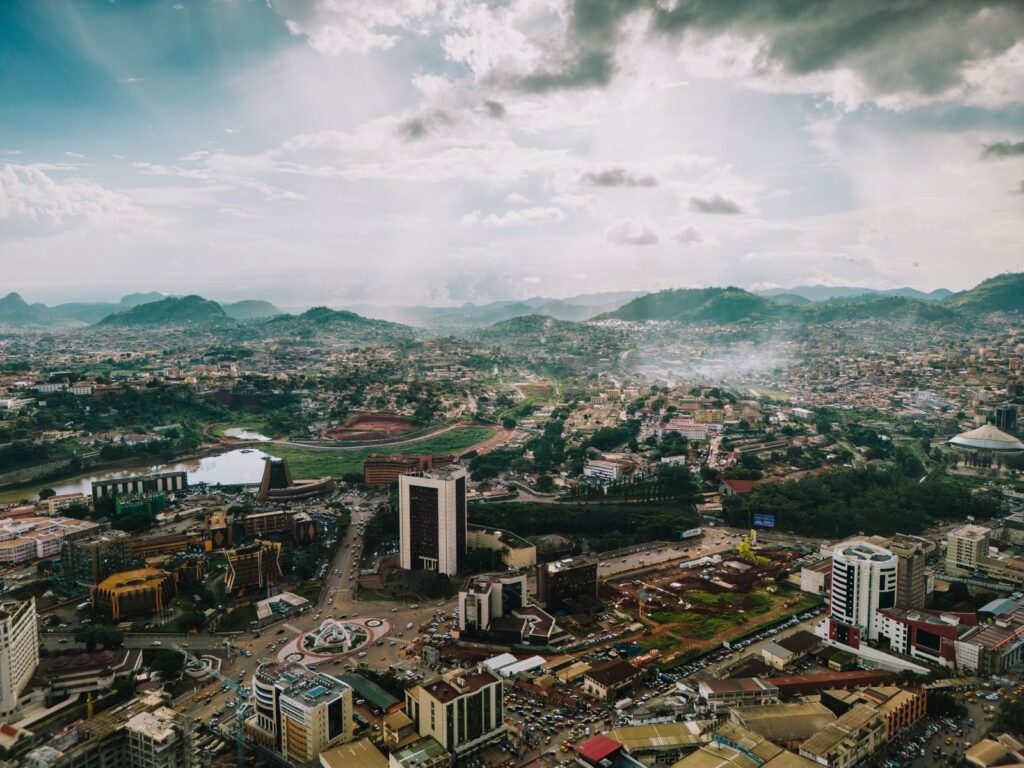
Cameroon has placed securing a new agreement with the International Monetary Fund (IMF) at the heart of its 2027-2029 medium-term economic and budgetary framework. The Document de programmation économique et budgétaire à moyen terme submitted to Parliament by the Ministry of Finance outlines a projected 300 billion FCFA in IMF-linked support for 2027. This figure represents nearly 9.5% of the country’s estimated financing needs for that year, which total 3,161.5 billion FCFA.
This strategic decision carries significant weight. The previous IMF program, signed in 2021 and extended by one year, concluded in July 2025. Since then, Finance Minister Louis Paul Motazé has repeatedly emphasized the urgency of a new accord, as underscored during the October 30, 2025 cabinet meeting. While the formal launch of negotiations remains contingent on presidential approval, the inclusion of these IMF funds in the three-year budget framework signals that the government is treating the scenario as its primary financial planning assumption.
Why a financing gap hinges on IMF approval
Cameroon’s projected budget deficit for 2027 is set to reach 1,018 billion FCFA, compared to 808.5 billion FCFA in 2026. Nearly 30% of this deficit is expected to be covered by IMF-linked support if an agreement is reached. Additional financial pressures include 2,143.5 billion FCFA in debt servicing and treasury obligations, primarily driven by loan repayments and arrears clearance—with financial debt alone accounting for 1,602.5 billion FCFA.
To close the funding gap, the government plans to mobilize 866.7 billion FCFA through project loans, 400 billion FCFA via public bond issuances, 250 billion FCFA through direct bank financing, and 131.5 billion FCFA from reserves held at the Bank of Central African States (BEAC). A particularly notable strategy involves securing an additional 1,000 billion FCFA in external borrowing in 2027, mirroring a similar move planned for 2026. The Ministry of Finance has explicitly labeled the absence of an IMF agreement as a “major risk” to the country’s medium-term fiscal sustainability.
Without IMF backing, the Treasury would likely resort to higher commercial debt, intensified domestic resource mobilization, or expenditure cuts. However, the Ministry acknowledges significant constraints: rising domestic borrowing costs, persistent high interest rates, and the still-developing financial market within the Cemac region. These factors limit the feasibility of easily replacing concessional IMF support with commercial borrowing.
The ripple effect on other lenders
A successful IMF program does more than provide direct budgetary support; it also unlocks financing from other key partners. The World Bank, African Development Bank (AfDB), European Union, and bilateral creditors often use IMF agreements as a signal of macroeconomic stability and reform commitment before releasing their own funds.
Between 2017 and 2025, Cameroon accessed approximately 2,600 billion FCFA in budget support through two IMF programs, combined with associated financing from other lenders. Minister Motazé has cautioned that failure to secure a new deal would mean losing this critical financial lifeline. In parallel, Yaoundé aims to broaden non-oil tax bases, modernize revenue collection agencies, and streamline recurrent spending to prioritize capital investments.
A regional hurdle before IMF approval
Cameroon’s path to an IMF agreement is not isolated; it is tied to broader developments within the Central African Economic and Monetary Community (Cemac). Successful IMF-supported programs in the region require regional benchmarks on monetary policy, foreign exchange reserve rebuilding, and alignment of national fiscal trajectories across the six member states.
The review of common Cemac policies, originally scheduled for December 2025, has been postponed. Authorities cite insufficient alignment of national fiscal policies with regional strategies and incomplete agreements on reform-linked guarantees as key reasons. While this regional validation is essential, it does not guarantee a bilateral deal between Cameroon and the IMF.
The timing of negotiations adds another layer of complexity. By including 300 billion FCFA in conditional IMF support in its 2027 budget plan, the Cameroonian government is tying part of its fiscal credibility to the outcome of these talks. Any prolonged delay could force a heavier reliance on commercial debt or necessitate painful spending cuts—contrary to the country’s stated investment ambitions.


More Stories
Senegal’s palm oil gambit: can 60,000 hectares and Indonesian expertise finally end import reliance?
Can Burkina Faso’s military buildup succeed while its people keep fleeing?
Senegal’s 2026 revised finance bill: will the three-day delay derail the budget timetable?