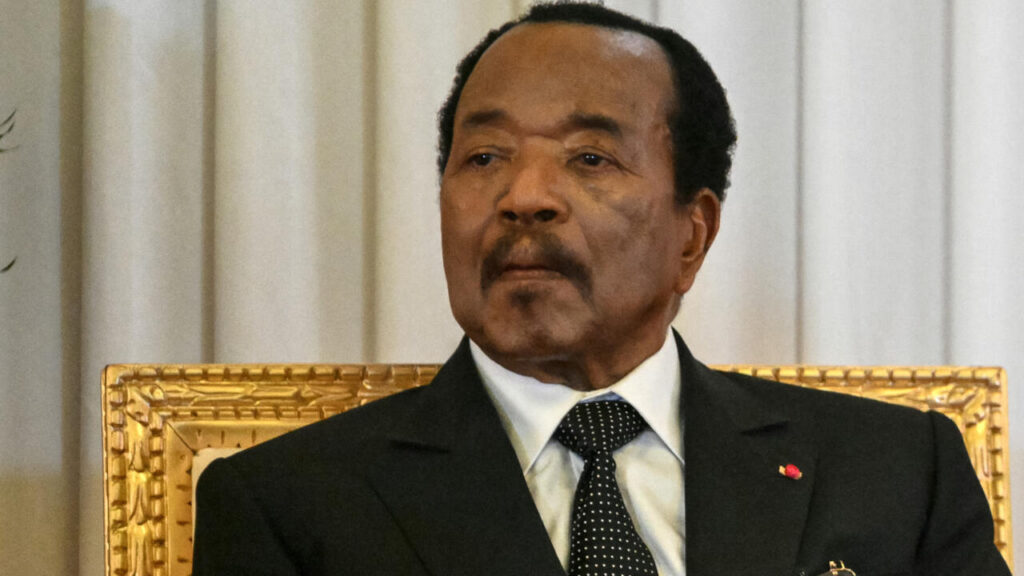
For 58 days, a period marking the longest stretch of his four-decade rule, Cameroonian President Paul Biya, at 93 years old, has remained out of public sight. His departure on June 7 for what was officially termed a “short private stay in Europe” has sparked widespread speculation across Cameroon and beyond. As public anxiety mounted, Communication Minister René Sadi broke the silence, asserting that “The president is alive… There is no power vacuum,” and promising his return “very soon,” yet conspicuously without providing a specific date. This unprecedented and extended absence inevitably brings to the forefront critical questions regarding the nation’s leadership and the potential implications for presidential succession.
Unprecedented presidential absence
The 58-day stretch marks a significant milestone in President Biya’s extensive political career, representing his longest continuous period away from public view since assuming power. This prolonged invisibility has inevitably fueled public debate and concern, particularly given the President’s advanced age of 93 and his remarkable 44 years at the helm of the nation. For a country accustomed to its leader’s occasional, yet typically brief, private trips abroad, the current situation has created an atmosphere of uncertainty and heightened scrutiny.
Official reassurance amid lingering questions
In response to the growing clamor for information, Communication Minister René Sadi delivered a statement aimed at quelling anxieties. His assertion that “The president is alive… There is no power vacuum” sought to reassure citizens about the stability of the state. However, the accompanying promise of a return “very soon” without any concrete timetable has done little to fully satisfy the public’s demand for transparency. The lack of a specific date leaves room for continued speculation regarding the President’s health and the exact nature of his extended “private stay” in Europe.
The succession debate intensifies
Beyond immediate concerns about presidential well-being, this extended absence has undeniably brought the critical issue of succession to the forefront of national discourse. With President Biya’s age and the unique length of his time out of the public eye, citizens and political observers alike are increasingly pondering the mechanisms for a smooth transition of power. The constitution outlines procedures for such eventualities, but the current situation underscores the importance of clear communication and visible leadership to maintain public confidence and national stability. The ongoing silence, punctuated only by general assurances, serves to amplify the urgency of these underlying questions about Cameroon’s political future.
More Stories
Can Ousmane Sonko and Sadio Mané’s Bambali agro park truly transform Sédhiou?
Senegal’s palm oil gambit: can 60,000 hectares and Indonesian expertise finally end import reliance?
Can Burkina Faso’s military buildup succeed while its people keep fleeing?