
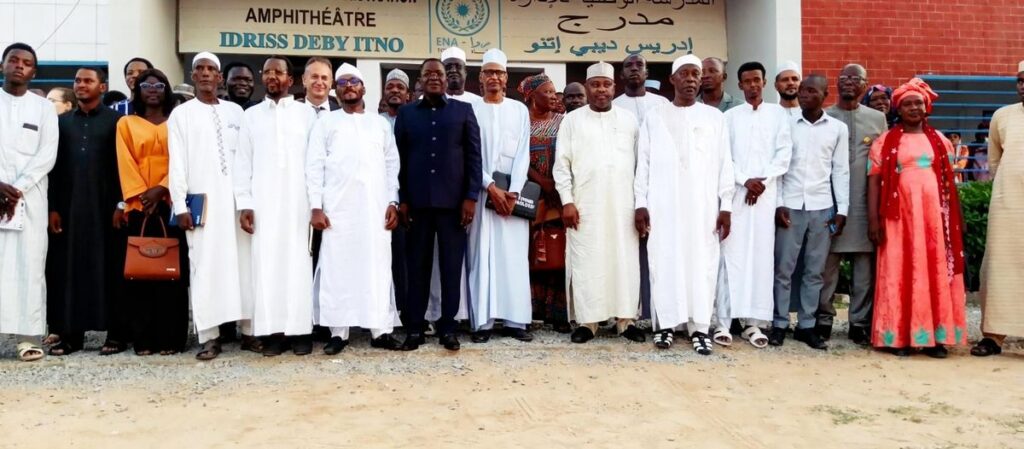
In a packed lecture hall at the Idriss Déby Itno National Administration School (ENA) in N’Djamena, former Prime Minister and current Senator Albert Pahimi Padacké delivered a compelling lecture on Thursday, May 29, 2026. The event drew scores of civil servants, students, and political figures, all eager to dissect the potential and pitfalls of provincial governance in Chad.

Local governance: a theoretical asset, a practical challenge
Albert Pahimi Padacké, leader of the RNDT-Le Réveil party, opened his address by acknowledging the undeniable merits of decentralization. He underscored how empowering provincial councils could bridge the gap between government and citizens, fuel grassroots initiatives, and ensure fairer wealth distribution across Chad. In his view, local decision-making—rooted in real community needs—could accelerate responses to pressing social demands, from healthcare access to education and infrastructure development.
Yet, despite these theoretical advantages, the senator argued that Chad’s decentralization remains trapped in a paradox. While the legal framework exists, its implementation is stifled by a deeply entrenched centralized system. « A decentralization without financial autonomy is nothing more than administrative window dressing, » he remarked, drawing applause from the audience.
Centralized inertia: the invisible barrier to progress
The crux of Pahimi Padacké’s critique centered on what he termed the « vertical centrality » of the state—a systemic reluctance to relinquish control. Provincial councils, though established, are crippled by a lack of resources and subjected to suffocating oversight from the capital. This imbalance, he warned, undermines their ability to act independently, turning them into mere extensions of central authority rather than engines of local development.
The former head of government emphasized that true decentralization requires more than just structural changes; it demands a cultural shift within the state apparatus. « The central government must trust local leaders, » he urged, « and stop treating provinces as extensions of N’Djamena’s corridors of power. »
Call for bold reforms
As the two-hour session unfolded, Pahimi Padacké’s call for reform grew more urgent. He urged stakeholders to confront the resistance head-on, advocating for legislation that would transfer both decision-making authority and financial resources to provincial bodies. Only then, he argued, could Chad’s development achieve the equitable and sustainable momentum it desperately needs.
The lively Q&A that followed revealed a consensus among participants—particularly ENA trainees—on the urgency of this issue. The debate highlighted decentralization not just as a policy concern, but as a foundational pillar for Chad’s future institutional stability and growth.




More Stories
Ousmane Sonko’s firm stance on Senegal’s FMI agreement demands full transparency
Senegal’s institutional crossroads: the unfolding dynamic between Ousmane Sonko and Bassirou Diomaye Faye
Minister abdourahmane diouf reignites feud with ousmane sonko over special credits reform